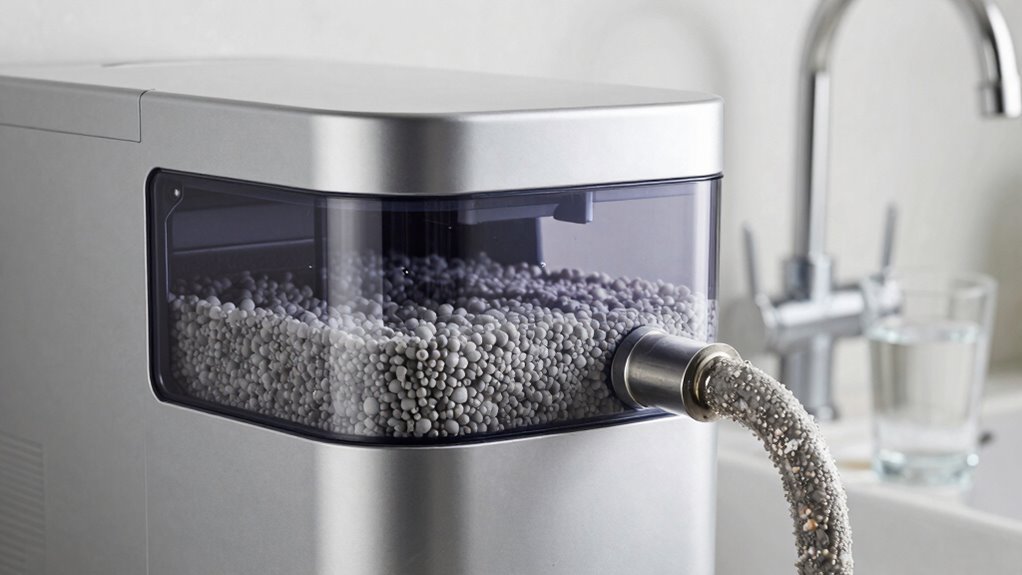

Hard water contains high levels of minerals like calcium and magnesium, which can cause limescale buildup on your plunge gear and appliances over time. This mineral accumulation reduces efficiency, causes damage, and increases maintenance needs. Installing a water softener helps remove these minerals, protecting your gear and prolonging its lifespan. If you want to understand how water softeners work and how to choose the right one, keep exploring for more helpful details.

Get home appliances delivered free — and shop member deals
- Fast, free delivery on millions of items
- Access to Prime Big Deal Days deals on October 6–7
- Prime Video, Amazon Music and more included
Key Takeaways
- Hard water contains calcium and magnesium, causing mineral buildup that can damage plunge gear and other mechanical components.
- Water softeners use ion exchange to remove minerals, preventing scale formation on plunge gear and extending its lifespan.
- Regular regeneration and maintenance of water softeners ensure consistent removal of minerals, protecting plunge gear from mineral deposits.
- Softened water improves the efficiency and durability of plunge gear by reducing mineral-induced corrosion and clogging.
- Choosing the right water softening system depends on water mineral content and household water usage, ensuring optimal protection for plunge gear.
water softener for hard water protection
As an affiliate, we earn on qualifying purchases.
As an affiliate, we earn on qualifying purchases.
What Is Hard Water and Why Is It a Problem?
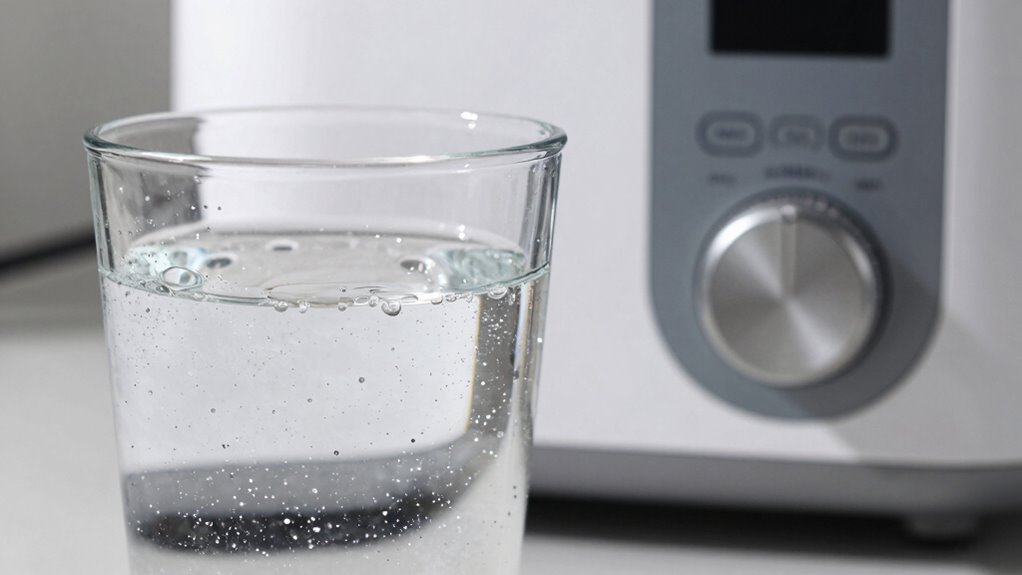
Hard water contains high levels of dissolved minerals, primarily calcium and magnesium. These minerals lead to water mineralization, which causes issues in your home. One major problem is limescale buildup, which forms on appliances, fixtures, and plumbing. This buildup can reduce efficiency, increase energy costs, and cause damage over time. Hard water also affects your daily routines, making soap less effective and leaving stubborn spots on dishes and glassware. Preventing limescale is essential to protect your appliances and extend their lifespan. Understanding what hard water is helps you recognize why it’s a problem and highlights the importance of solutions like water softening to keep your plumbing and appliances running smoothly. Addressing mineralization early can save you money and hassle in the long run, especially with smart water management systems that can monitor and optimize water quality automatically. Additionally, using appropriate water treatment methods can significantly improve water quality and reduce mineral buildup. Proper maintenance of water systems and understanding water hardness levels are crucial for effective water quality management, which can also involve Glycolic Acid Benefits for Skin to maintain appliance surfaces and prevent mineral adhesion, and to prevent costly repairs.
best water softener system for household
As an affiliate, we earn on qualifying purchases.
As an affiliate, we earn on qualifying purchases.
How Do Water Softeners Work to Fix Hard Water?
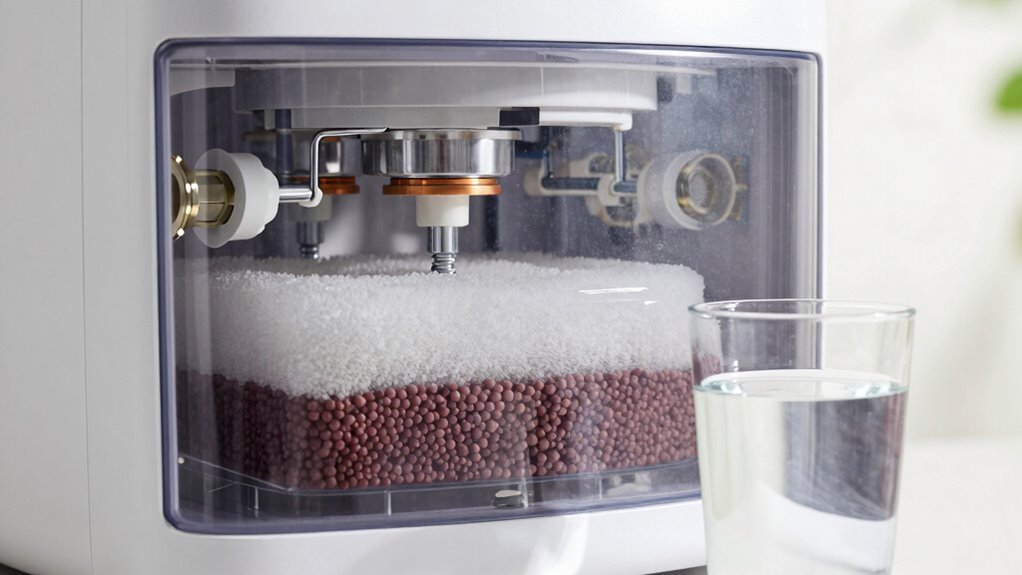
Water softeners use an ion exchange process to remove calcium and magnesium ions that cause hard water. Inside, a resin bed captures these minerals, replacing them with sodium ions. When the resin becomes saturated, a regeneration cycle flushes it clean, ready to soften your water again. To achieve optimal performance, maintaining the correct flow rate is essential to prevent resin channeling and ensure consistent water quality. Proper regeneration cycles are also crucial to maintain the resin’s effectiveness and longevity. Regular monitoring of the water pH can help identify potential issues with mineral removal efficiency and ensure the system functions properly. Incorporating energy-efficient systems can further enhance sustainability and reduce operational costs.
Ion Exchange Process
Ever wondered how water softeners remove minerals that cause toughening? The key is the ion exchange process. Inside the softener, resin beads are coated with sodium ions. When hard water passes through, calcium and magnesium ions swap places with sodium on the beads. This exchange effectively filters out the minerals responsible for scaling. Over time, the resin beads become saturated with calcium and magnesium, needing regeneration. Here’s a quick overview:
| Step | Process Description |
|---|---|
| 1 | Water flows through resin beads |
| 2 | Calcium & magnesium ions swap with sodium |
| 3 | Beads are regenerated with salt solution |
This process keeps your water soft, preventing scale buildup and protecting your plumbing.
Resin Bed Functionality
The resin bed in a water softener plays a crucial role in removing minerals that cause hardness. It contains small, bead-like resin particles charged with sodium ions. During operation, hard water passes through this resin bed, and ion exchange occurs: calcium and magnesium ions swap places with sodium ions on the resin. This process effectively traps the minerals responsible for limescale and soap scum. The resin bed acts as a filter, continuously capturing these hardness-causing ions while allowing softened water to flow out. Over time, the resin becomes saturated with calcium and magnesium, requiring regeneration. But during normal use, the resin bed ensures that hard water is transformed into soft, more manageable water, protecting your plumbing, appliances, and plumbing fixtures from mineral buildup. Resin bed functionality depends on proper maintenance and timely regeneration to maintain optimal performance. Proper regeneration process restores the resin’s capacity to exchange ions effectively, ensuring continued water softening efficiency. Regular maintenance and regeneration are essential to keep the resin bed functioning properly and prevent mineral breakthrough.
Regeneration Cycle Mechanism
When the resin bed becomes saturated with calcium and magnesium ions, the water softener initiates the regeneration cycle to restore its effectiveness. During this process, the system flushes the resin with a salt brine solution, which supplies sodium ions. Through ion exchange, the sodium ions displace the calcium and magnesium ions attached to the resin beads. This renewal allows the resin to continue removing hard water minerals from your water supply. The regeneration cycle typically occurs automatically after a set number of gallons or days, ensuring consistent softening. By continuously regenerating, the water softener maintains efficient operation and prevents mineral buildup. This cycle is essential for keeping your water soft and your plumbing in good shape. Proper maintenance and troubleshooting help ensure that the regeneration process functions correctly and prolongs the lifespan of your water softener. Regular monitoring of salt levels is also important to keep the regeneration process running smoothly. Additionally, understanding the regeneration cycle mechanism can help you optimize your softener’s performance. Knowing the timing and frequency of regeneration can help prevent unnecessary cycles and conserve salt and water. Familiarity with the water softening process can further improve the efficiency and longevity of your system.
resin water softener for appliances
As an affiliate, we earn on qualifying purchases.
As an affiliate, we earn on qualifying purchases.
How Hard Water Affects Your Plunge Gear and Daily Life?
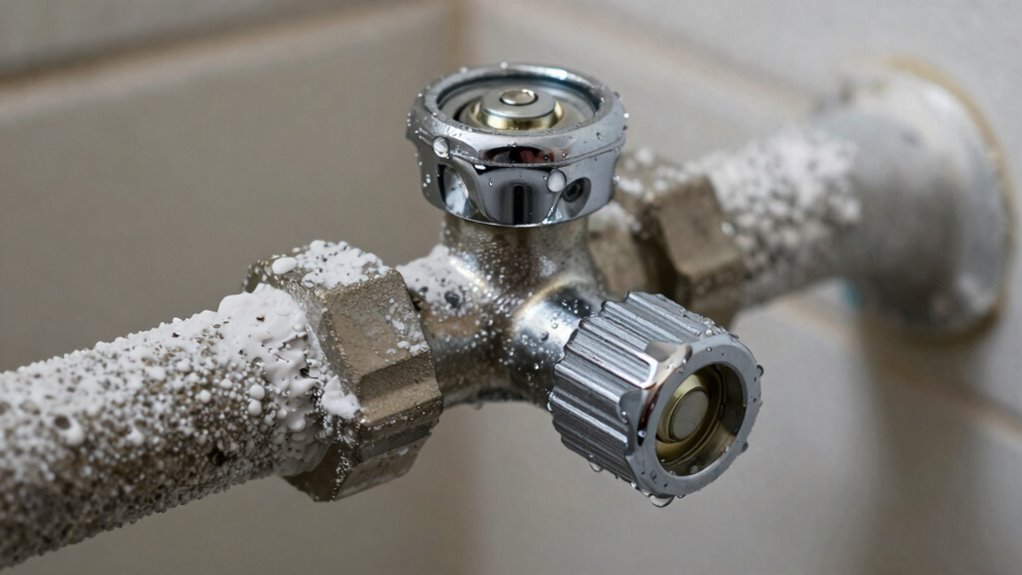
Hard water can cause scale buildup in your plumbing, leading to clogs and reduced water flow. You might also notice your water feeling less efficient, making showers and chores take longer. Plus, it can affect your skin and hair, leaving them dry and irritated over time. Understanding water chemistry can help you choose the right water treatment solutions to mitigate these effects. Additionally, water softening systems can effectively reduce mineral content, preventing further damage. Being aware of hard water minerals in your area can help you determine the most effective treatment approach. Recognizing the impact on appliances caused by mineral buildup can also guide you in selecting proper maintenance strategies.
Scale Buildup in Plumbing
Scale buildup from hard water can quickly clog your plumbing and reduce water flow, making everyday tasks more difficult. Mineral deposits from hard water settle inside pipes, leading to blockages and decreased efficiency. To combat this, scaling prevention methods are essential. Installing water softeners helps remove minerals like calcium and magnesium before they cause damage. Regular maintenance, such as flushing out mineral deposits, keeps your plumbing clear and functioning smoothly. Without proper scaling prevention, your pipes can become constricted, increasing pressure and risking leaks or bursts. Addressing scale buildup early ensures your plumbing stays reliable and efficient, saving you money on repairs and replacements. By controlling mineral deposits, you protect your entire plumbing system and maintain consistent water flow in your home. Additionally, utilizing natural filtration systems can further enhance water quality and reduce reliance on chemical treatments. Implementing preventive measures is crucial for long-term plumbing health. Proper maintenance and professional inspections can also help identify issues before they escalate into costly repairs.
Reduced Water Efficiency
Hard water can substantially reduce the efficiency of your plumbing and appliances, making everyday tasks more difficult. Poor water quality causes mineral buildup inside your water heater, dishwasher, and washing machine, decreasing their performance. When appliances work harder to heat or clean, they consume more energy and wear out faster. This means your appliances’ lifespan shortens, leading to costly replacements. Hard water also reduces water flow in pipes and fixtures, making showers, faucets, and appliances less effective. Over time, mineral deposits clog these systems, further decreasing water efficiency. To maintain excellent water quality and protect your appliances, consider installing a water softener. Doing so helps ensure your plumbing runs smoothly, saves energy, and prolongs the life of your household appliances.
Impact on Skin and Hair
Ever wondered how mineral-rich water can impact your skin and hair? Hard water contains minerals like calcium and magnesium, which can leave residues on your skin and scalp. This buildup may cause skin irritation, leading to dryness and itchiness. For your hair, these minerals can cause damage, making strands look dull and feeling rough. Over time, it can also lead to increased hair breakage. To illustrate, here’s how hard water affects your daily routine:
| Effect on Skin | Effect on Hair |
|---|---|
| Causes dryness | Makes hair brittle |
| Leads to irritation | Promotes hair damage |
| Clogs pores | Dulls hair shine |
Using soft water or water softeners helps reduce these issues, keeping your skin and hair healthier.
automatic water softener regeneration
As an affiliate, we earn on qualifying purchases.
As an affiliate, we earn on qualifying purchases.
Why Installing a Water Softener Will Save Your Gear and Time?
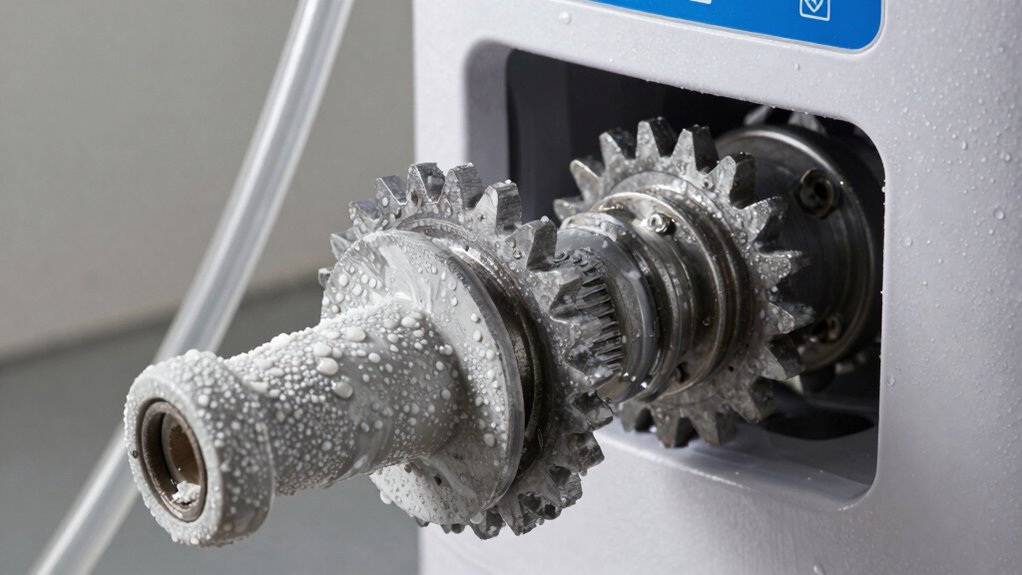
Installing a water softener can substantially extend the lifespan of your appliances and save you time on maintenance. Hard water causes mineral buildup, which leads to clogged pipes, reduced efficiency, and frequent repairs. By reducing water mineralization, a softener prevents these issues, keeping your plumbing and appliances running smoothly. Plus, softened water improves salt efficiency, meaning you use less salt over time, lowering operating costs. You’ll notice less soap scum and scale on fixtures, which means less scrubbing and cleaning. This not only preserves your gear but also cuts down on the time spent maintaining it. Ultimately, a water softener helps protect your investment, reduces repair bills, and keeps your home running efficiently with less hassle.
Which Type of Water Softener Is Best for Your Home?
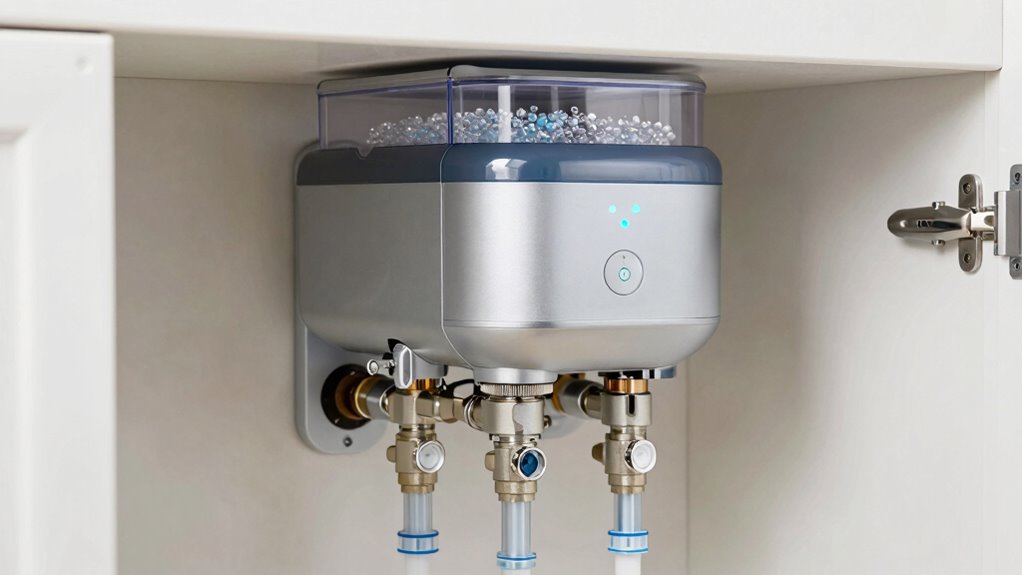
Choosing the right water softener depends on your home’s specific needs and water usage. Your water quality plays a key role, especially if mineral buildup is a concern. If you have high mineral content, a salt-based ion exchange softener might be best, as it effectively removes calcium and magnesium. For homes with softer water, a salt-free system could suffice, preventing scale without adding salt. Consider the volume of water your household uses daily—larger families may need a unit with higher capacity. Additionally, some softeners are more eco-friendly or require less maintenance. Think about your budget and local water conditions to select the most efficient option. The right choice will help reduce mineral buildup, protect your plumbing, and keep your water appliances functioning smoothly.
How to Install and Maintain Your Water Softener?
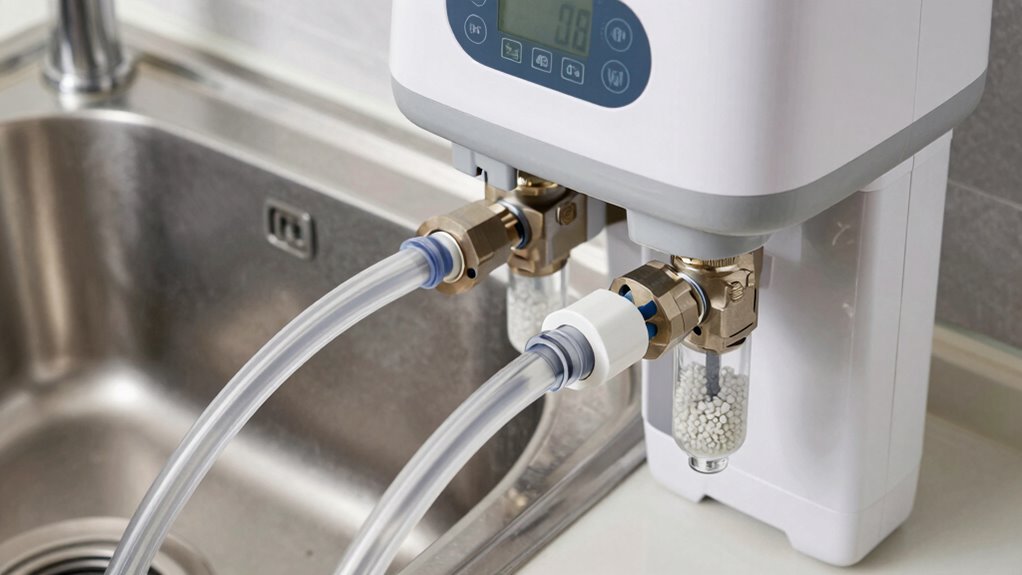
Proper installation and regular maintenance are key to guaranteeing your water softener works effectively and lasts longer. When installing, follow these installation tips: select a level, accessible spot near the main water line, ensure proper drainage, and connect to a power source if needed. For maintenance, stick to a maintenance checklist to keep your unit running smoothly. Regularly check salt levels, clean the brine tank, inspect for leaks, and replace filters as recommended. Doing so prevents buildup and extends the softener’s lifespan. Keeping your system well-maintained ensures it continues to soften water efficiently and protects your plumbing. By following these straightforward steps, you’ll enjoy consistently soft water without unexpected breakdowns or costly repairs.
Signs Your Water Softener Needs Repair or Replacement?
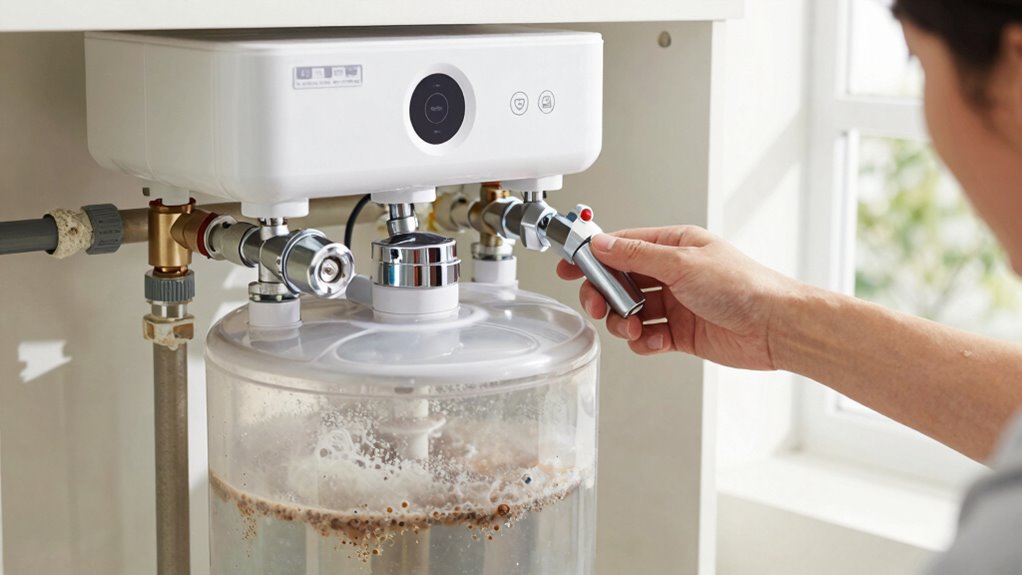
Wondering if your water softener is acting up? Poor water quality is a key sign, especially if you notice more mineral deposits around faucets, showers, or appliances. When your softener isn’t functioning properly, mineral buildup can increase, leading to hard water spots and soap scum. If your clothes feel dingy or your skin and hair are dry and itchy, it’s likely a sign your system needs attention. Additionally, a softener that makes strange noises, leaks, or fails to regenerate properly indicates mechanical issues or declining efficiency. These signs suggest it’s time to inspect, repair, or replace your unit to restore water quality and prevent further mineral deposit buildup that could damage plumbing or appliances.
What Are the Costs and Long-Term Savings of Water Softeners?
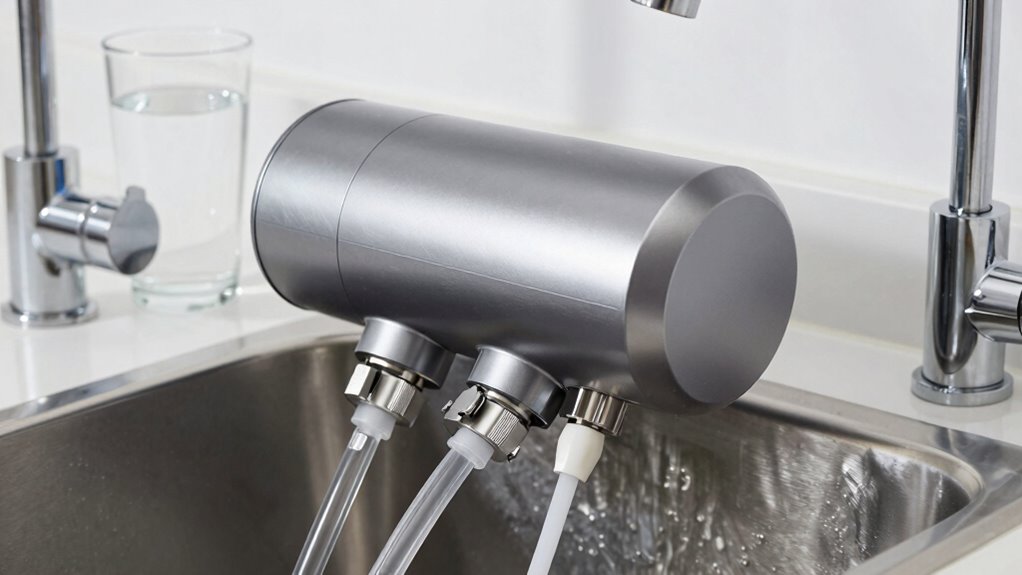
Investing in a water softener may seem like a significant upfront expense, but it often pays off in the long run through savings on repairs, cleaning, and energy costs. A thorough cost analysis shows that initial installation costs vary, but the savings estimate over time can be substantial. You’ll likely reduce expenses associated with soap, detergents, and appliance repairs. Additionally, softening water extends the lifespan of plumbing and appliances, lowering replacement costs. Here’s what you can expect:
- Decreased repair and maintenance costs
- Lower energy bills due to improved efficiency
- Reduced detergent and cleaning product expenses
- Extended lifespan of plumbing and appliances
Considering these factors, the long-term savings typically outweigh the initial investment, making a water softener a smart financial decision.
How to Keep Your Plumbing and Gear Protected From Hard Water Damage?
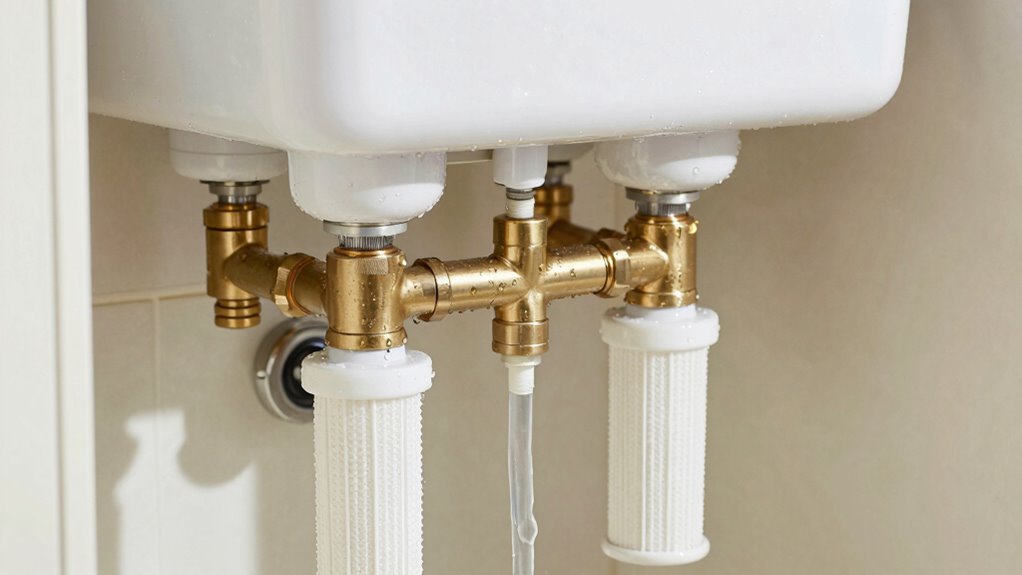
Hard water can cause significant damage to your plumbing and appliances if left unchecked. Poor water quality leads to mineral buildup, which can clog pipes, reduce flow, and damage gear over time. To protect your plumbing, consider installing a water softener to remove excess minerals and improve water quality. Regular maintenance of your plumbing system, such as flushing and inspecting for buildup, helps prevent damage. Using water-efficient fixtures reduces mineral deposits and prolongs equipment life. Additionally, installing filters on faucets and appliances filters out impurities, providing extra plumbing protection. By addressing hard water issues early, you extend the lifespan of your plumbing and gear, saving you money on repairs and replacements. Proper water management ensures your system stays efficient and durable.
Frequently Asked Questions
Can Hard Water Affect Appliances Besides Plunge Gear?
Hard water can definitely affect your appliances beyond plunge gear. It causes mineral buildup inside appliances like dishwashers, washing machines, and water heaters, reducing efficiency and lifespan. Additionally, the minerals in hard water can lead to appliance corrosion over time, resulting in costly repairs or replacements. Installing a water softener helps prevent these issues by reducing mineral deposits and protecting your appliances, ensuring they work smoothly and last longer.
Are There Eco-Friendly Water Softener Options Available?
Yes, you can choose eco-friendly softening options. Look for salt-free solutions, which don’t use harmful chemicals or salt, making them better for the environment. Eco-friendly softening systems often use template-assisted crystallization or other modern technologies that reduce waste and energy use. These options still effectively soften water without the negative impact of traditional salt-based softeners, helping you protect your appliances and the planet simultaneously.
How Often Should I Test My Water Hardness Levels?
Think of testing your water hardness levels as tuning a musical instrument—you want perfect harmony. You should test your water quality every 1 to 3 months, especially if you notice changes in soap lather or mineral buildup. Regular testing guarantees your water softener works efficiently, protecting your plumbing and appliances. Staying vigilant with testing frequency helps keep your water soft and your home running smoothly, like a well-conducted symphony.
Do Water Softeners Eliminate All Mineral Content From Water?
Water softeners don’t eliminate all mineral content from your water. Instead, they primarily remove minerals like calcium and magnesium that cause hardness, improving water taste and reducing scale buildup. You still get other minerals like potassium or trace elements, but the main goal is mineral removal of hard water-causing compounds. This process helps your appliances last longer, and your water tastes better, without stripping it completely of all mineral content.
What Are the Health Implications of Using Softened Water?
Softened water’s subtle side effects can sometimes cause health hazards. You might worry about mineral depletion, as water softeners remove essential minerals like calcium and magnesium. While generally safe, long-term consumption could pose risks for those with specific health issues or mineral deficiencies. However, for most people, using softened water doesn’t markedly threaten health, but it’s wise to consult your healthcare provider if you have concerns about mineral intake or underlying health risks.
Conclusion
By installing a water softener, you can prevent costly damage to your plunge gear—imagine avoiding a costly repair after neglecting hard water buildup. For example, a homeowner who added a softener saved hundreds on gear replacements and maintenance. Don’t wait until hard water causes irreversible damage; take action now to protect your equipment, save money, and enjoy better water quality every day. Your gear and wallet will thank you.
Fall yard work Picks
leaf blowers
As an affiliate, we earn on qualifying purchases.