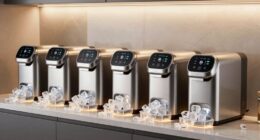
Cold water alone doesn’t keep it safe longer because bacteria can still grow even at low temperatures. Ice or cold conditions can slow microbial growth temporarily, but they don’t stop it entirely. Fluctuations in temperature or melting ice can create opportunities for bacteria to thrive. Maintaining a consistent, properly regulated cold temperature is key to safety. To understand why temperature control matters more than just coldness, keep exploring these important storage principles.
Open a free Amazon Business account
Business pricing, bulk buying and tax-exempt orders.
As an affiliate, we earn on qualifying purchases.
Key Takeaways
- Cold water’s perceived safety is a misconception; bacteria can still thrive at low temperatures.
- Ice and cold temperatures do not eliminate pathogens; melting ice can allow bacterial growth.
- Fluctuations in temperature promote microbial growth and increase contamination risk.
- Proper, consistent cooling is necessary; cold alone doesn’t prevent microbial proliferation.
- Condensation from temperature changes can foster bacterial growth on container surfaces.

Many people assume that cold water remains safer longer than warm water, but this isn’t always true. While the perception is that colder water slows down bacterial growth and delays spoilage, the reality is more complex. Ice formation plays a significant role in this misconception. When water is cold enough, ice can form on the surface or throughout the water, creating a false sense of security. Ice may seem to preserve water, but it doesn’t prevent bacteria or other pathogens from thriving once the ice melts or if the water temperature fluctuates. This is why simply relying on cold temperatures isn’t enough to guarantee safety.
Cold water doesn’t always mean safety; ice formation and temperature fluctuations can still promote bacterial growth.
Temperature regulation is crucial in understanding water safety. Cold water can sometimes seem more stable, but without proper temperature control, it can become a breeding ground for bacteria once the temperature rises. For instance, water stored just above freezing can sometimes enter a “danger zone” (between 40°F and 140°F), where bacteria multiply rapidly. If water is kept in a cold environment, it might initially appear safe, but if the temperature fluctuates or the water warms up, harmful microorganisms can develop quickly. That’s why maintaining a consistent, appropriately cold temperature is critical. Additionally, temperature fluctuations can accelerate microbial growth, making proper regulation even more essential. Proper temperature management can help prevent the formation of conditions that favor bacterial proliferation. Furthermore, monitoring storage conditions**** is vital to detect and prevent dangerous temperature changes early.
Another factor to contemplate is that ice formation isn’t a foolproof method of preservation. Ice can insulate water, slowing down the rate of temperature change, but it doesn’t stop microbial growth entirely. As the ice melts, the water inside can warm up, especially if the storage conditions aren’t ideal. This means that water stored in icy conditions isn’t necessarily safer than warmer water stored properly at a consistent cold temperature. Proper temperature regulation—keeping water at a steady, safe cold temperature—is far more effective than relying solely on ice or perceived coldness. Moreover, temperature stability plays a vital role in inhibiting bacterial growth and ensuring safety over extended periods.
Additionally, exposure to fluctuating temperatures can cause condensation and promote contamination. If water is stored in a cold environment with temperature swings, it can lead to condensation that encourages bacterial growth on container surfaces and inside the water itself. It’s also important to recognize that proper storage conditions are essential for maintaining water safety. This contradicts the common assumption that simply keeping water cold ensures safety. Instead, you need consistent, regulated cooling to inhibit bacteria and maintain safety over time. Proper storage, including avoiding frequent opening and closing, can help prevent contamination and temperature fluctuations that promote microbial growth.
temperature regulated water storage container
As an affiliate, we earn on qualifying purchases.
As an affiliate, we earn on qualifying purchases.
Frequently Asked Questions
How Quickly Can Cold Water Become Unsafe After Exposure?
Cold water can become unsafe within minutes after exposure due to chemical reactions that alter its quality. As temperature drops, pH stability can shift, making the water more prone to contamination or bacterial growth. You should monitor cold water regularly, especially if it’s stored for extended periods, because these chemical changes happen quickly and can compromise safety sooner than you might expect. Always test water before use to verify safety.
Does Water Temperature Affect Bacterial Growth Rates?
Sure, because who wouldn’t want their water to turn into a microbial petri dish? Temperature fluctuations influence bacterial growth rates; warmer water accelerates microbes, while colder water induces microbial dormancy. However, even icy water isn’t foolproof—bacteria can adapt or survive in dormancy, waiting for better conditions. So, yes, water temperature impacts bacterial activity, but it’s no guarantee against microbial mischief. Stay vigilant, even in the cold.
Are There Specific Contaminants That Persist Longer in Cold Water?
Certain contaminants, like heavy metals and some chemical residues, persist longer in cold water because of contaminant stability and cold water chemistry. Cold temperatures slow down chemical reactions, making these contaminants less likely to break down or disperse quickly. This stability means they can remain in the water for extended periods, posing health risks. So, cold water can sometimes harbor persistent contaminants that require careful testing and treatment.
How Does Storage Container Influence Water Safety Over Time?
Your storage container is the gatekeeper of water safety. If it’s made from a material that’s porous or prone to corrosion, harmful bacteria and contaminants can sneak in, like uninvited guests. Seal integrity keeps these threats out and prevents oxygen or bacteria from entering, preserving water quality. Choose containers made of food-grade, sturdy materials, and guarantee seals are tight to keep your water safe and fresh over time.
Can Cold Water Hide Signs of Contamination Effectively?
Cold water can’t hide signs of contamination effectively because contamination detection often relies on visual cues like water clarity. Even if water looks clear, harmful bacteria or chemicals might still be present. You should never rely solely on appearance. To guarantee safety, test water regularly for contaminants, especially if storage conditions have changed. Cold temperatures can slow bacteria growth but don’t eliminate the risk of unseen contamination.
digital water temperature monitor
As an affiliate, we earn on qualifying purchases.
As an affiliate, we earn on qualifying purchases.
Conclusion
So, remember, cold water isn’t a magic shield that keeps you safe forever. Just like a snowman melting in the sun, your body’s safety can quickly diminish if you don’t act fast. Don’t assume that just because the water’s cold, you’re automatically safer. Always stay alert, keep an eye on your surroundings, and act quickly if you find yourself in trouble. Staying safe takes awareness and quick thinking, not just cold water.
insulated water bottle with temperature control
As an affiliate, we earn on qualifying purchases.
As an affiliate, we earn on qualifying purchases.
refrigerator temperature controller
As an affiliate, we earn on qualifying purchases.
As an affiliate, we earn on qualifying purchases.
NFL season / tailgating Picks
team gear
As an affiliate, we earn on qualifying purchases.