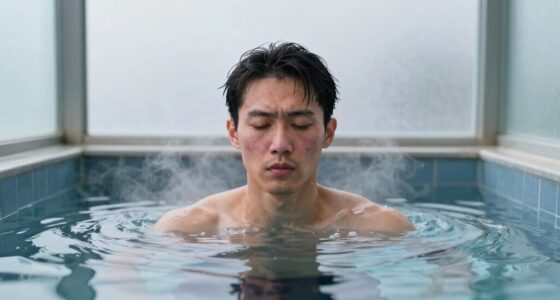


When you experience cold euphoria, your body reacts to sudden cold exposure by triggering your nervous system’s fight-or-flight response. This releases chemicals like adrenaline, norepinephrine, and endorphins, boosting your alertness, mood, and sense of being alive. It’s a natural, temporary high rooted in survival mechanisms that can build resilience over time. If you keep exploring, you’ll discover how these responses shape your mental and physical endurance.
Key Takeaways
- Cold euphoria is a temporary feeling caused by neurochemical reactions like endorphin and norepinephrine release during cold exposure.
- It triggers the body’s fight-or-flight response, increasing adrenaline, heart rate, and alertness.
- Psychologically, it enhances mood, focus, and feelings of vitality, often associated with resilience and achievement.
- The sensation stems from the brain interpreting cold as a stressor, activating survival pathways and emotional regulation centers.
- Repeated exposure can lead to adaptive neurochemical changes, reinforcing the euphoric response over time.

Have you ever experienced a sudden rush of exhilaration accompanied by a chilling sensation? That’s often what people refer to as the “cold euphoria” feeling. It’s that fleeting moment when your body responds intensely to cold exposure, triggering a cascade of neurochemical reactions that produce a mixture of awe and alertness. Your brain interprets the cold as a stressor, prompting the release of chemicals like endorphins and norepinephrine. These neurochemical reactions not only heighten your senses but also create a sense of well-being and even mild euphoria. The psychological effects of this response can be quite powerful—your mind might feel more alert, your mood may uplift, and you could experience a sense of achievement or resilience, especially if you intentionally seek out cold exposure as part of cold therapy or extreme sports.
When your body encounters cold temperatures, your nervous system kicks into gear. The sympathetic nervous system, responsible for your fight-or-flight response, signals your adrenal glands to release stress hormones like adrenaline and norepinephrine. These neurochemicals increase your heart rate, sharpen your focus, and give you that rush of energy. This flood of chemicals also influences your mood, often making you feel more alive and present. The psychological effects aren’t solely physical; they can influence your mental state, reinforcing feelings of endurance and mental toughness. That’s why some people chase after cold plunges or icy swims—they’re seeking that intense, almost euphoric state that can make everyday stress seem more manageable.
Interestingly, this reaction isn’t just about cold; it’s deeply rooted in your brain’s survival mechanisms. The sensation of cold triggers your hypothalamus to activate pathways that control your body temperature, but it also stimulates areas involved in emotional regulation. The result is a complex interplay between neurochemical reactions and psychological effects, creating that distinctive feeling of “cold euphoria.” It’s a temporary, natural high that’s often mistaken for pure joy, but in reality, it’s your brain’s way of rewarding you for enduring discomfort. Additionally, repeated exposure can lead to neurochemical adaptations, which may influence how your body responds over time. This response can be reinforced over time, which is why some individuals develop a craving for cold exposure—because it produces a reliable and intense neurochemical payoff.
In essence, that fleeting chill and rush of exhilaration are more than just physical sensations; they’re a tribute to your brain’s incredible ability to adapt and respond to environmental stressors. The neurochemical reactions set off during cold exposure generate those psychological effects, making you feel alive, empowered, and sometimes even euphoric. It’s a fascinating interplay that highlights just how deeply your mind and body are connected in moments of extreme sensation.

XXL Ice Bath Tub for Athletes, Compatible with Water Chillers, 216-Gallon Inflatable Cold Plunge Tub with Insulated Lid, Thermometer, Water-Absorbent Mat, Portable for Outdoor & Indoor Recovery
COMPATIBLE WITH CHILLERS: With the AudaciaGo cold plunge tub, you can easily connect to a water chiller through...
As an affiliate, we earn on qualifying purchases.
Frequently Asked Questions
Can Cold Euphoria Occur During Physical Exercise?
Yes, cold euphoria can occur during physical exercise. When you push yourself with high exercise intensity, your body releases endogenous neurochemicals like endorphins and dopamine, which can create feelings of pleasure and invigoration. These neurochemical responses, combined with physical exertion, may trigger a cold euphoria sensation, making you feel energized and euphoric even in cold environments. So, intense exercise can indeed induce this unique, uplifting experience.
How Long Does the Cold Euphoria Sensation Typically Last?
Think of cold euphoria as a fleeting storm, rolling through your mind quickly. It usually lasts just a few minutes, often triggered by rapid temperature fluctuations and the adrenaline response. As your body adjusts and your adrenaline drops, the sensation begins to fade. So, you’re experiencing a brief, intense rush that peaks quickly and then dissipates, leaving you grounded once again.
Are There Health Risks Associated With Experiencing Cold Euphoria?
Experiencing cold euphoria can pose health risks, especially if you have risk factors like heart issues or mental health concerns. It might cause sudden increases in blood pressure or stress your cardiovascular system. Additionally, the intense feelings could lead to risky behaviors or emotional instability. If you’re prone to mental health challenges, this sensation could worsen symptoms or trigger anxiety. Always approach cold euphoria carefully, and consult a healthcare professional if you’re worried.
Does Cold Euphoria Happen More in Certain Age Groups?
Like a spark igniting a firework, cold euphoria tends to light up more in younger people. You’re more likely to experience it in age groups with higher sensitivity and developmental differences, such as teenagers and young adults. As you age, your body’s response to cold and adrenaline changes, making cold euphoria less common. So, your age plays a key role in how intensely you might feel this icy rush.
Can Cold Euphoria Be Induced Intentionally?
Yes, you can intentionally induce cold euphoria by exposing yourself to specific environmental factors like cold water or winter air, which trigger psychological effects such as adrenaline release and heightened alertness. Techniques like cold plunges or cryotherapy leverage these effects, creating a sense of euphoria. However, it is crucial to approach this carefully, as extreme cold can have health risks. Always listen to your body and consult a professional if needed.

Wxtkkom New Upgrade XL 139-Gallon Oval Ice Bath Tub - 6 Layered Portable Bathtub, Drop-In Bathtubs Foldable with Cover Cold Plunge Tub for Athletes, Home Gym, Outdoor Recovery Use
【Upgraded 139-Gallon Capacity】:Spacious enough for full-body immersion, with dimensions of 46"L x 23"W x 23"H. This generous size...
As an affiliate, we earn on qualifying purchases.
Conclusion
Sometimes, that fleeting rush of cold euphoria reminds you how life’s little surprises can catch you off guard. It’s no accident that a sudden chill sparks a surge of joy—like life whispering, “Enjoy this moment.” These feelings, born from coincidence, teach you to embrace the unexpected. So, next time you feel that rush, remember: it’s a gentle reminder to stay present and find happiness in the unplanned. After all, life’s most memorable moments often come unexpectedly.

Upgrade XL Ice Bath Tub for Athletes, 119 Gallons Hot & Cold Plunge Tub with Cover for Recovery, Cold Water Therapy, Multiple Layered Portable Whirlpool Bathtubs for for Home, Gym & Outdoor
【Enhance Muscle Recovery】Ice baths present a natural, efficient method for expediting recovery following intense workouts or competitions. Our...
As an affiliate, we earn on qualifying purchases.

Bubplay Ice Bath Cold Plunge Tub with Cover for Indoor Outdoor for Recovery, Cold Water Therapy, Athletes & Adults -105 Gallons, Black, XL
【XL Full-Body Cold Plunge for Most Adults】 Designed for an immersive ice bath / cold plunge experience with...
As an affiliate, we earn on qualifying purchases.