Before installing a cold plunge on your balcony, check its weight capacity, as water-filled tubs can be heavy and may exceed support limits, risking damage or collapse. Confirm proper drainage to avoid water pooling and damage, and consider neighbor noise and water splash issues. Verify if permits are needed by consulting local building codes. To keep everything safe and legal, plan carefully—more tips follow to help you navigate these challenges smoothly.
Get ready for Prime Big Deal Days — try Prime free
Exclusive member deals on October 6–7, plus fast free delivery. Cancel anytime.
As an affiliate, we earn on qualifying purchases.
Key Takeaways
- Verify balcony weight capacity with structural assessments or consult a structural engineer before installing a cold plunge tub.
- Ensure proper drainage systems are installed, regularly maintained, and capable of handling overflow to prevent water damage.
- Choose a appropriately sized, weather-resistant cold plunge model to fit your space without overloading the balcony.
- Obtain necessary permits, including structural and safety assessments, to comply with local building codes and regulations.
- Minimize neighbor impact by managing noise, splashing, and water runoff, and consider privacy and safety measures.
As an affiliate, we earn on qualifying purchases.
Can Your Balcony Handle a Cold Plunge? Understanding Weight Limits
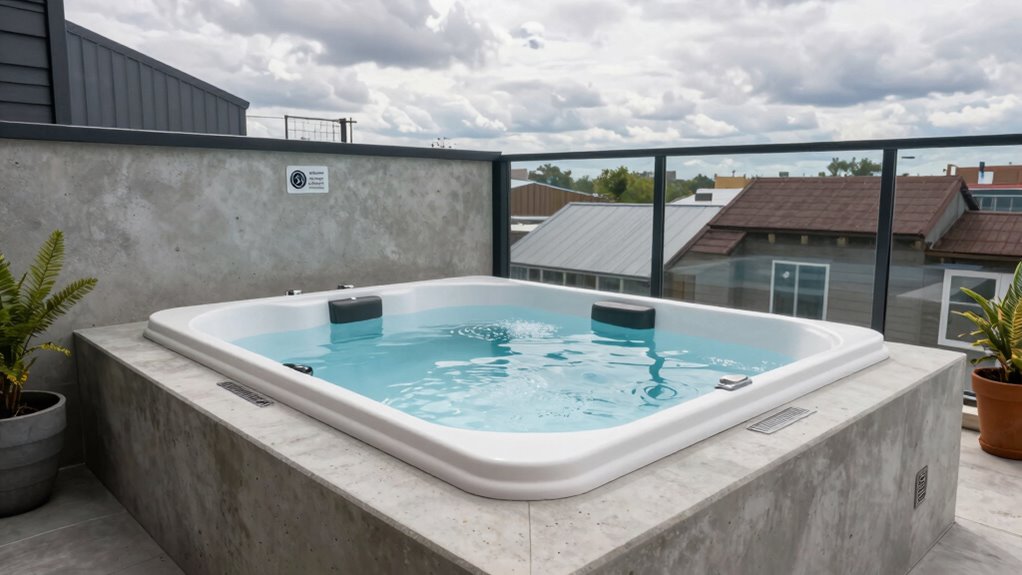
Before setting up a cold plunge on your balcony, it’s essential to know whether your space can handle the weight. Your balcony’s weight capacity depends on its structural integrity, which varies based on age, materials, and design. Check your building’s specifications or consult a structural engineer to determine the maximum load your balcony can support. Keep in mind that a typical cold plunge tub can weigh several hundred pounds when filled, so you need to consider both the weight of the tub and the water. Overloading your balcony risks structural damage or collapse. Always ensure that the weight limits are respected to maintain safety. Knowing your balcony’s weight capacity is the first step toward safely enjoying your cold plunge. Additionally, understanding building load capacity can help prevent unexpected structural issues. Recognizing the importance of precise weight measurements can further safeguard your setup and ensure longevity. Consulting professional guidance is recommended to ensure your setup remains safe and compliant with building regulations. Being aware of load distribution can help optimize your balcony’s safety and durability over time. Moreover, understanding safety margins can help account for unforeseen factors and provide additional security for your setup.
As an affiliate, we earn on qualifying purchases.
Choosing the Right Cold Plunge for Your Balcony

When selecting a cold plunge for your balcony, you need to consider the available space and whether the unit fits comfortably. Safety is key, so choose a model made from durable materials that can withstand outdoor conditions. By paying attention to size and material quality, you’ll ensure your cold plunge is both practical and long-lasting. Incorporating appropriate outdoor material choices can further enhance durability against weather elements. Additionally, understanding free floating principles can help in designing a stable setup that minimizes movement and potential hazards. Proper piercing care and hygiene practices can also be applied to maintain the longevity of your setup by preventing corrosion or damage caused by moisture. Embracing artistic expression through your design choices can also enhance your outdoor space and promote creative relaxation. Implementing effective email marketing strategies such as targeted messaging can also be useful if you’re promoting your outdoor setup to friends or community groups.
Space and Size Compatibility
Choosing the right cold plunge for your balcony starts with evaluating available space and size limitations. Measure your balcony dimensions carefully to confirm the unit fits comfortably without obstructing movement or views. Larger models may offer more features but require more space, which might not be feasible. Use this comparison to gauge your options:
| Model Size | Dimensions (ft) | Suitable for |
|---|---|---|
| Compact | 3×3 | Small balconies, tight spaces |
| Standard | 4×4 | Average-sized balconies |
| Large | 5×5 | Spacious balconies |
| Extra Large | 6×6 | Multi-purpose outdoor areas |
| Custom | Varies | Unique balcony sizes |
Match your available space with these sizes to verify proper fit and functionality. Considering toolbox organization and storage options can also help you maximize your balcony space effectively.
Safety and Material Considerations
Are you aware of the safety and material factors that are essential when selecting a cold plunge for your balcony? Material durability is critical because your plunge must withstand outdoor elements like rain, sun, and temperature fluctuations. Choose materials such as high-quality acrylic, stainless steel, or weather-resistant composites that won’t crack or corrode over time. Ensuring proper structural integrity is vital to prevent accidents or damage from environmental stresses. Proper weight capacity considerations are crucial to avoid overloading your balcony and risking structural failure. Safety features are equally important—look for non-slip surfaces, secure lids, and stable bases to prevent accidents. Ensure the cold plunge’s construction meets safety standards and that it’s designed to support the weight safely. Additionally, understanding the total-cost clarity of your chosen model is crucial to prevent structural issues or accidents. Investing in a model with proper safety features and durable materials not only protects you but also extends the lifespan of your cold plunge, making it a reliable addition to your balcony. Being aware of outdoor environmental factors can help you select a model that maintains its integrity over time.
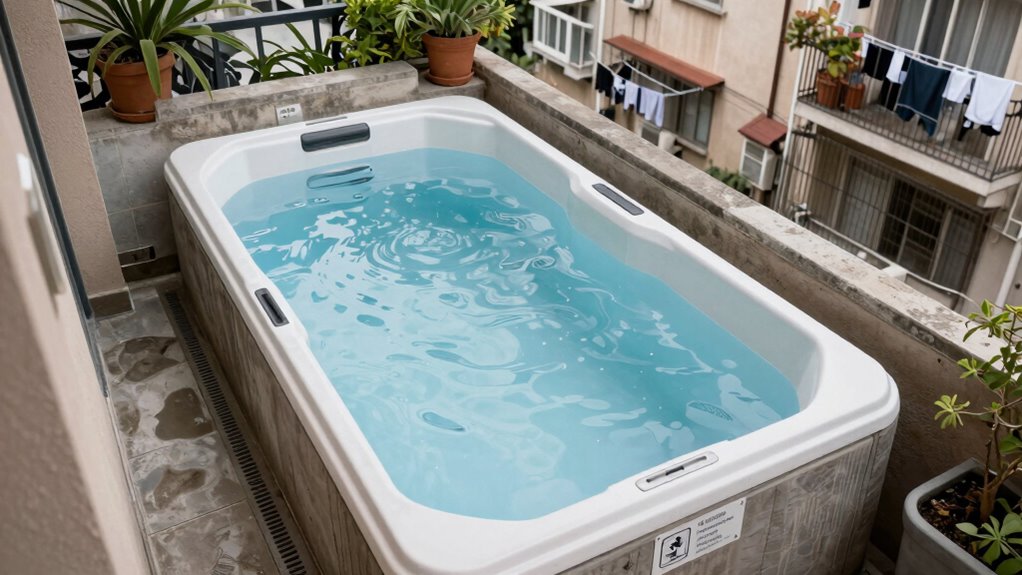
balcony weight capacity water tub
As an affiliate, we earn on qualifying purchases.
As an affiliate, we earn on qualifying purchases.
Do You Need Permits for Installing a Balcony Cold Plunge?
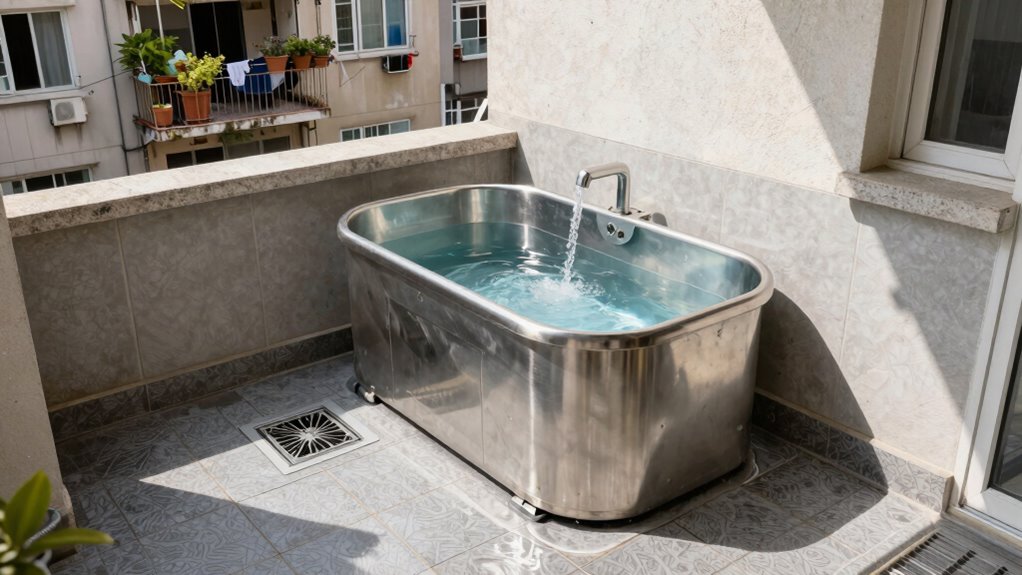
Before installing a balcony cold plunge, you should check your local regulations and building codes to see what’s required. Permit processes can vary depending on where you live and the specific modifications you’re making. Understanding the application steps upfront can help prevent surprises and guarantee your project stays compliant. Consulting with professionals experienced in auditory processing assessments can also ensure your project aligns with safety standards and best practices. Additionally, reviewing building load capacities is essential to ensure your balcony can support the weight of the cold plunge safely. Considering thermal behavior and insulation requirements is also important to maintain proper temperature control and prevent structural issues over time.
Local Regulations Overview
Installing a balcony cold plunge often requires maneuvering local regulations to guarantee compliance. You’ll need to review balcony regulations and local ordinances specific to your area. These rules can dictate whether you need permits, how much weight your balcony can support, and restrictions on modifications. Many municipalities have strict codes to ensure safety and prevent structural issues. Before proceeding, check with your city or building department to understand any restrictions or approvals required. Ignoring these regulations can lead to fines, removal orders, or safety hazards. It’s vital to research thoroughly and obtain any necessary permits beforehand. Staying compliant with local ordinances not only keeps you safe but also helps avoid costly legal complications down the line.
Building Code Requirements
Building code requirements play an essential role in determining whether you need permits to install a balcony cold plunge. Ensuring building code compliance is essential to protect your home’s structural integrity and safety. Local building codes specify standards for weight limits, material strength, and load distribution, which are critical when adding a cold plunge. If the installation exceeds existing structural capacity, you may need permits and possibly upgrades to meet codes. Failing to adhere to these requirements can lead to safety hazards, fines, or removal of the plunge. Additionally, chain of custody is important when dealing with structural plans and permits to ensure proper documentation and adherence to regulations. Before proceeding, check with your local building department to understand specific regulations. Proper adherence guarantees your balcony can support the additional weight safely, avoiding future issues and ensuring legal compliance.
Permit Application Process
Determining whether you need permits for your balcony cold plunge starts with understanding local regulations and the specifics of your project. The permit process varies by city or municipality, so it’s crucial to research your area’s requirements. Typically, you’ll need to submit an application that details your planned installation, including dimensions, weight, drainage, and safety features. Application procedures may involve providing drawings, structural assessments, and proof of compliance with building codes. Some jurisdictions require inspections before and after installation to ensure safety and adherence to regulations. Failing to follow proper permit procedures can result in fines or having to remove the cold plunge. To avoid surprises, contact your local building department early to clarify permit requirements and streamline the application process. Additionally, understanding building code compliance is essential to ensure your project meets all safety standards and avoids potential legal issues. Being aware of water drainage requirements is also important to prevent water damage or neighbor disputes. Consulting with a licensed contractor or engineer can help ensure your project adheres to all relevant standards and regulations.
As an affiliate, we earn on qualifying purchases.
How to Drain Water and Manage Water Safety on Your Balcony

To keep your balcony safe and prevent water accumulation, it’s essential to know how to drain excess water properly. Proper drainage avoids water pooling, which can cause damage or safety hazards. Start by ensuring your drainage system is clear and functioning. Regularly inspect your setup for blockages and perform maintenance routines that include cleaning filters and drainage points. To improve water safety and filtration, consider installing a small sump pump or drainage mats that direct water away from your balcony. You can also use the following techniques:
- Elevate your plunge basin slightly to promote water flow
- Use water filtration mats to trap debris
- Regularly remove standing water with a squeegee
- Check drainage outlets for clogs and clean as needed
These steps help maintain a dry, safe environment.
How Will a Cold Plunge Affect Your Neighbors? Managing Noise and Water
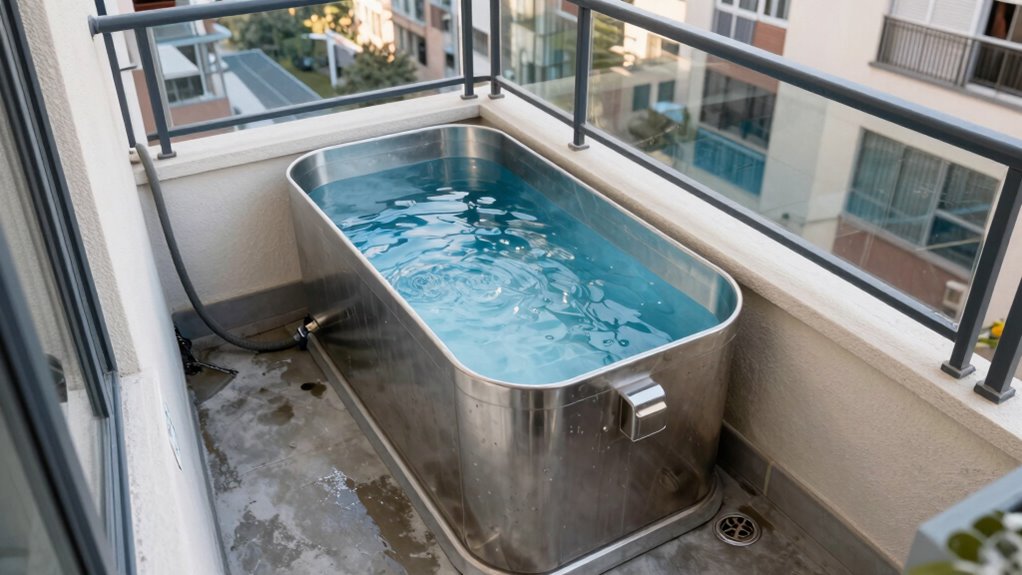
Even if you’re excited to enjoy a cold plunge on your balcony, it’s important to contemplate how it might impact your neighbors. The noise from your cold plunge machine can be a concern, especially if it’s loud enough to disrupt their peace. Soundproofing concerns may arise if your unit generates vibrations or humming sounds. You’ll want to consider adding barriers or mats to minimize noise transmission. Additionally, water splashing or draining can create water safety issues or water runoff that neighbors might notice or find bothersome. Privacy considerations also come into play, as neighbors may be concerned about visibility or the potential for increased noise to invade their space. Being mindful of these factors helps maintain good neighborly relations and ensures your balcony cold plunge remains a relaxing retreat for you—and respectful of others.
Protecting Your Balcony From Water Damage and Weight Stress
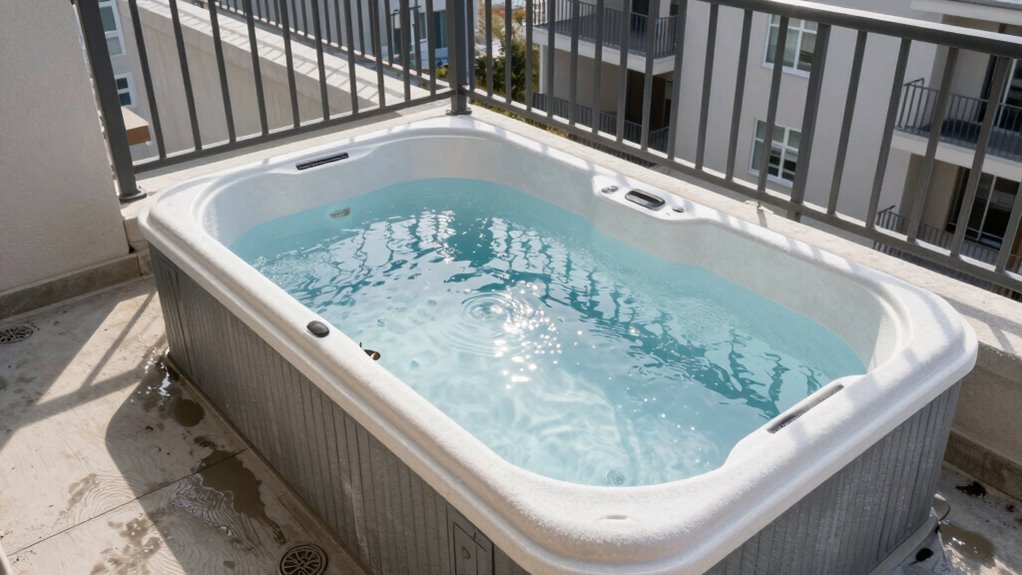
Since a cold plunge involves a significant amount of water and weight, you need to take precautions to protect your balcony from potential damage. To keep your balcony aesthetics intact and ensure safety, consider these steps:
- Install a durable, waterproof base or mat under the plunge to prevent water seepage.
- Use lightweight, weather-resistant outdoor furniture to reduce overall weight stress.
- Regularly inspect drainage systems to avoid water pooling and possible overflow.
- Limit the size and capacity of your cold plunge to stay within your balcony’s weight limits.
These measures help safeguard your balcony’s structure, prevent water damage, and preserve its visual appeal. Proper planning guarantees your outdoor space remains functional and attractive without risking damage or safety issues.
How to Talk to Your Neighbors About Installing a Cold Plunge
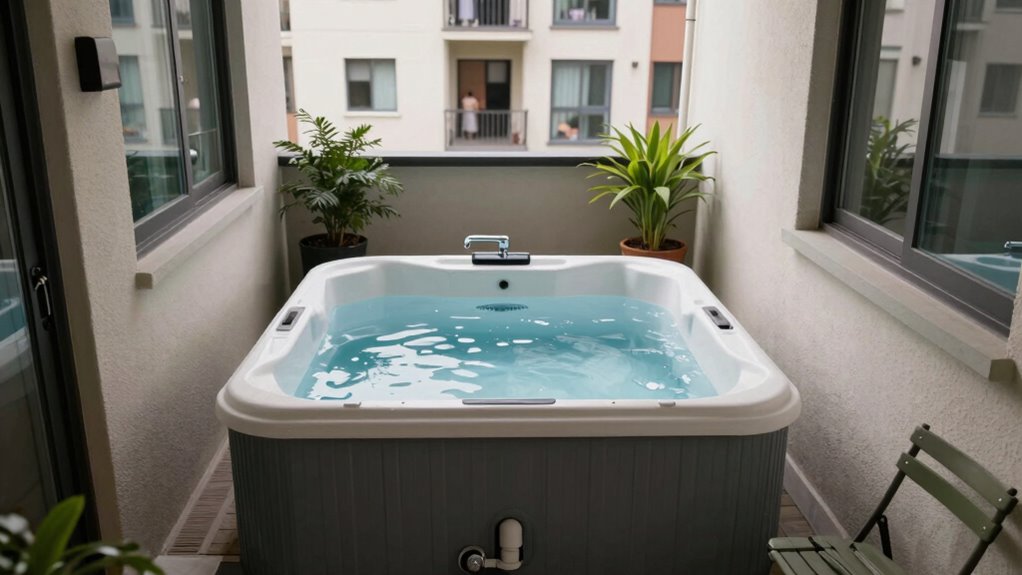
Talking to your neighbors about installing a cold plunge can feel intimidating, but approaching the conversation openly and respectfully makes it easier. Address their privacy concerns upfront, reassuring them that the plunge won’t compromise their privacy or create noise issues. Explain how you plan to manage water drainage and maintenance to minimize disruptions. Be honest about the aesthetic impact, emphasizing how you’ll ensure the setup complements the building’s look. Listening to their worries shows respect and helps you find common ground. If needed, suggest solutions like privacy screens or landscaping to reduce any visual impact. Clear communication builds trust and can prevent future misunderstandings, making the installation smoother for everyone involved.
Frequently Asked Questions
What Are the Long-Term Maintenance Costs of a Balcony Cold Plunge?
The long-term maintenance costs of a balcony cold plunge mainly involve the cost upkeep of the equipment and its lifespan. You’ll need to budget for regular cleaning, water treatments, and occasional repairs or replacements of filters and pumps. Generally, good quality equipment lasts several years, but costs can add up if you neglect routine upkeep. Staying proactive guarantees your plunge stays functional and safe, saving you money in the long run.
How Does Weather Impact the Durability of a Cold Plunge on a Balcony?
Don’t let the weather catch you off guard—your cold plunge’s durability depends on it. Wind resistance can cause wear and tear over time, especially if strong gusts hit frequently. UV protection is essential; prolonged sun exposure can fade surfaces and weaken materials. To keep your plunge in tip-top shape, make sure it’s well-shielded from harsh weather, and consider adding covers for added defense against the elements.
Can a Balcony Cold Plunge Increase Your Property’s Insurance Premiums?
Yes, installing a balcony cold plunge can increase your insurance premiums due to insurance implications and liability concerns. Your insurer might see the plunge as a risk, especially if it’s not properly installed or maintained, raising concerns about potential damage or injury. To avoid higher costs, verify your plunge meets safety standards, and consult with your insurer beforehand to clarify coverage and any additional liability protections needed.
Are There Specific Safety Features Recommended for Balcony Cold Plunges?
You should install safety features like non-slip mats or coatings to prevent slip hazards, especially when the surface gets wet. Make sure electrical safety is prioritized by using GFCI outlets and weatherproofed wiring to reduce the risk of electrical shocks. These measures not only protect you but also comply with safety regulations, ensuring you enjoy your balcony cold plunge safely without risking accidents or damage.
How Do I Choose a Cold Plunge Size Suitable for Limited Balcony Space?
To choose a cold plunge size suitable for limited balcony space, you need to assess your specific balcony space constraints first. Consider compact plunge size options like smaller tubs or foldable models that fit comfortably without overcrowding. Measure available area precisely, leaving room for safe access and ventilation. Opt for a model that balances your cooling needs with the space you have, ensuring it doesn’t compromise safety or neighbor considerations.
Conclusion
Before you plunge into the cold plunge adventure, remember your balcony’s limits are the sturdy backbone of your plans. With the right precautions, open communication, and a splash of caution, you can turn your balcony into a invigorating oasis without rocking the boat. Think of it as planting a delicate flower—you must nurture it carefully to enjoy its beauty without risking a storm. Embrace the process, and your chilly escape will be a revitalizing breeze, not a turbulent tide.
Fall yard work Picks
leaf blowers
As an affiliate, we earn on qualifying purchases.