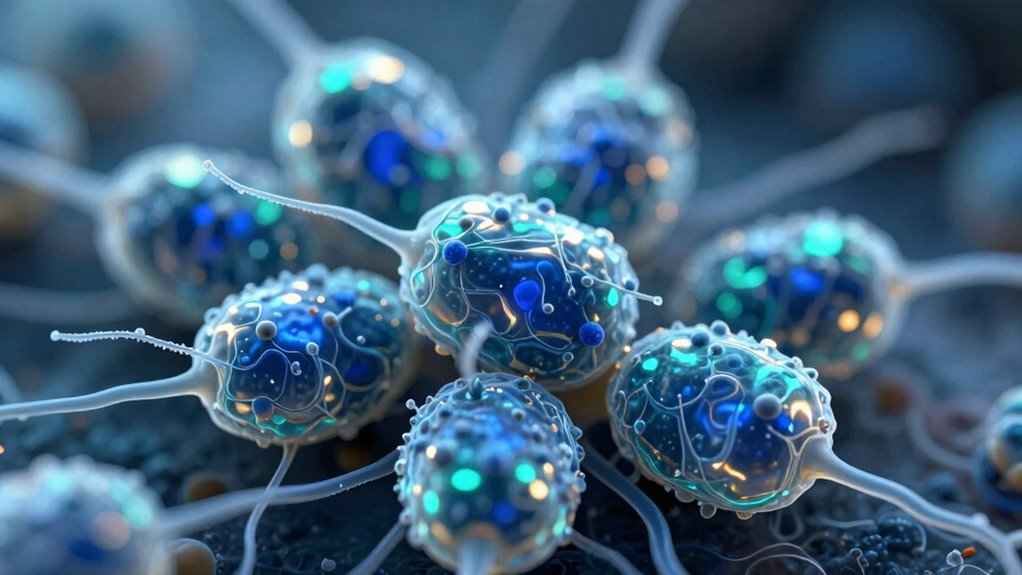

Cold shock proteins are molecules your cells produce quickly during sudden drops in temperature. They act like protectors, stabilizing cellular structures and ensuring essential functions continue despite the cold. These proteins help organisms survive harsh environments by sensing temperature changes and activating defenses immediately. Scientists know that their role is critical for adaptation in bacteria, plants, and even some animals. To discover more about how these proteins support life under cold stress, keep exploring what current research reveals.
Key Takeaways
- Cold shock proteins are rapid-response molecules that help cells survive sudden temperature drops by protecting cellular functions.
- They act as molecular shields, stabilizing structures like DNA, RNA, and proteins during cold stress.
- These proteins are quickly produced through gene regulation, enabling immediate cellular adaptation to cold environments.
- Their presence is vital across various organisms, including bacteria and plants, for maintaining metabolic activity in the cold.
- Understanding cold shock proteins offers insights into cellular resilience and potential applications in medicine and agriculture.

Cold shock proteins are specialized molecules that help cells survive sudden drops in temperature. When your body or cells are exposed to rapid cooling, these proteins kick into action to protect critical functions. They play an indispensable role in thermal adaptation, enabling cells to adjust quickly to the new environment. This process involves a complex network of gene regulation, where specific genes are turned on or off to produce the necessary proteins that counteract the stress caused by the cold. As a result, cells can maintain their integrity and continue functioning despite the temperature shift.
Understanding how cold shock proteins fit into thermal adaptation reveals a sophisticated biological system. When temperatures plummet unexpectedly, certain genes responsible for producing these proteins are rapidly activated. This gene regulation occurs through signaling pathways that detect changes in temperature and initiate the transcription process. Once activated, these genes produce cold shock proteins that assist in stabilizing cellular structures, preventing harmful ice formation, and ensuring essential processes like protein synthesis and DNA replication continue smoothly. Fundamentally, the proteins act as molecular shields, safeguarding the cell’s internal environment during the stress of cold exposure. Additionally, some research suggests that these proteins may also play a role in sustainable living, by helping organisms adapt more effectively to changing climates.
Your body’s ability to regulate gene expression in response to cold is crucial for survival, especially in extreme environments. Cold shock proteins are often produced quickly after a temperature drop, exemplifying an immediate genetic response that underpins thermal adaptation. This rapid gene regulation allows cells to adapt in real time, rather than relying solely on longer-term responses. It’s a finely tuned system where the presence of cold shock proteins indicates an active defense mechanism designed to mitigate cold-related damage. This direct link between temperature sensing and gene activation underscores the importance of gene regulation in cellular resilience.
Beyond humans, many microorganisms and plants also rely on cold shock proteins for thermal adaptation. In bacteria, for example, these proteins are essential for surviving in cold environments, helping maintain metabolic activity and cellular integrity. They demonstrate how evolution has equipped various organisms with molecular tools to cope with temperature fluctuations. By studying these proteins, scientists gain insights into the fundamental processes of gene regulation and adaptation, which could inform medical or agricultural advancements.
cold shock protein research kits
As an affiliate, we earn on qualifying purchases.
As an affiliate, we earn on qualifying purchases.
Frequently Asked Questions
Can Cold Shock Proteins Be Used in Medical Treatments?
Cold shock proteins show promising therapeutic potential, but their clinical applications are still under investigation. You might see future treatments using these proteins to protect cells during stress or injury, especially in neurodegenerative diseases or ischemic conditions. While research is ongoing, current use remains experimental, and scientists are working to understand how to safely harness their benefits in medicine. Keep an eye on developments for potential new treatment options.
How Do Cold Shock Proteins Differ From Heat Shock Proteins?
Cold shock proteins differ from heat shock proteins primarily in their response to temperature changes; cold shock proteins activate during a cold shock response, helping you adapt by stabilizing RNA and assisting protein synthesis. Heat shock proteins, on the other hand, respond to high temperatures, focusing on protein stabilization and preventing damage. Both protect your cells, but they are triggered by opposite temperature stresses, ensuring your cells survive and function properly.
Are Cold Shock Proteins Effective in Enhancing Stress Resilience?
Cold shock proteins can be effective in enhancing stress resilience by supporting molecular mechanisms that promote cellular adaptation. When exposed to cold, these proteins help stabilize proteins and maintain cell function, enabling your cells to better cope with stress. By boosting these protective responses, cold shock proteins contribute to improved stress resilience, helping your body adapt more efficiently to temperature fluctuations and other environmental challenges.
What Organisms Naturally Produce Cold Shock Proteins?
You might think only microbes produce cold shock proteins, but many organisms do. Extremophile adaptations in bacteria, fungi, and even some plants involve cold shock proteins to survive freezing temperatures. These proteins help maintain cellular functions during cold stress, boosting plant cold tolerance. While some assume cold shock proteins are exclusive to microbes, evidence shows that diverse organisms, including plants, produce them to withstand and adapt to cold environments.
Are There Any Known Side Effects of Manipulating Cold Shock Proteins?
Manipulating cold shock proteins can have potential side effects and raise safety concerns. You might experience unintended immune responses or cellular stress if these proteins are altered improperly. While research shows promising benefits, the long-term impacts remain uncertain, so caution is essential. Always consult with a healthcare professional before attempting to manipulate cold shock proteins, as adverse effects could outweigh the benefits if not carefully monitored.

Biology of Heat Shock Proteins and Molecular Chaperones (Abstracts of Papers Presented at the 1994 Meeting)
As an affiliate, we earn on qualifying purchases.
As an affiliate, we earn on qualifying purchases.
Conclusion
Now that you know about cold shock proteins, you’re holding the key to revealing the universe’s coolest secrets—literally! These tiny proteins might just be the superheroes of the microscopic world, with powers we’ve barely begun to understand. So, stay curious, because what we discover next could change everything you thought you knew about life, survival, and the chill of the unknown. The cold shock proteins are just getting started, and so should you!
cold stress cellular protection tools
As an affiliate, we earn on qualifying purchases.
As an affiliate, we earn on qualifying purchases.
biological cold shock protein models
As an affiliate, we earn on qualifying purchases.
As an affiliate, we earn on qualifying purchases.