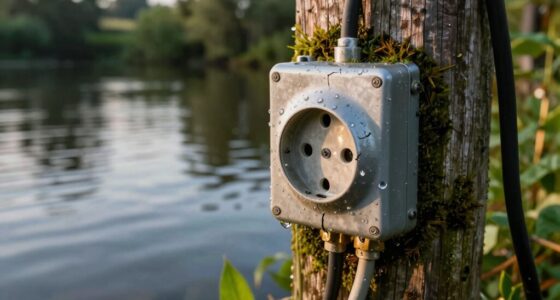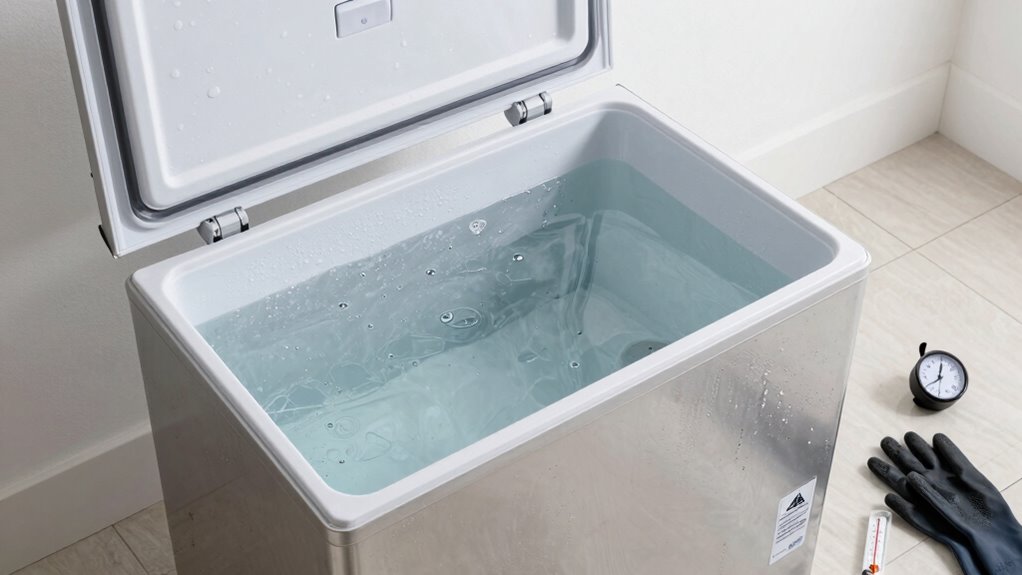

Before converting your chest freezer into a cold plunge, prioritize electrical safety by ensuring proper grounding, using GFCIs, and keeping electrical components dry and well-insulated. Choose non-toxic, waterproof materials to prevent leaks and mold, and use safe coatings that won’t leach chemicals. Maintain accurate temperature control with reliable monitoring and safety alerts. If you continue, you’ll find an all-inclusive checklist to help you create a safe and effective cold plunge setup.
Key Takeaways
- Ensure proper electrical grounding, circuit protection, and use GFCIs to prevent shocks and water-related hazards.
- Use waterproof, outdoor-rated wiring and regularly inspect electrical components for damage or corrosion.
- Select non-toxic, waterproof materials and coatings resistant to moisture, heat, and chemical leaching.
- Maintain water temperature between 50-59°F with reliable monitoring devices and safety alerts.
- Keep electrical components and water sources separated, and unplug all electrical parts during maintenance for safety.

Leviton GFCI Weather-Resistant Outlet, 15 Amp, Self Test, Tamper-Resistant with LED Indicator Light, Outdoor Locations, GFWT1-W, White
- Enhanced immunity for reduced nuisance tripping: Improves resistance to high frequency interference
- Weather-resistant construction: Stainless steel strap, UV plastics, cold impact face
- Continuous safety protection: Interrupts power during ground-fault detection
As an affiliate, we earn on qualifying purchases.
As an affiliate, we earn on qualifying purchases.
Why Safety Matters Before Converting a Chest Freezer
Because converting a chest freezer into a cold plunge involves working with electrical components and water, safety should always be your top priority. Understanding chemistry safety is essential to avoid harmful reactions, especially if you’re adding chemicals like disinfectants or pH adjusters. Proper storage precautions help prevent accidents, such as spills or chemical exposure, which could cause injuries or damage. Before starting, ensure all electrical parts are unplugged and kept dry. Keep chemicals out of reach and store them in labeled, secure containers. Taking these steps reduces risks related to water and electrical hazards, and guarantees a safe environment throughout the conversion process. Additionally, navigation and mapping tips can help you plan your setup efficiently, reducing the chance of mishaps. Proper electrical safety protocols are critical to prevent shocks or fires during the project. Prioritizing safety measures helps prevent accidents and creates a secure foundation for your cold plunge project. Moreover, understanding the chemistry safety involved ensures you handle any chemicals responsibly, avoiding dangerous reactions. Being aware of family photoshoot fails can remind you to stay patient and adaptable during the process, especially if unexpected issues arise. Incorporating risk management strategies can further enhance safety by helping you identify and mitigate potential hazards proactively.

350 Pcs Solder Seal Wire Connectors Heat Shrink Butt Connectors Kit Marine Waterproof Wiring Electrical Cable Splice Terminals for Boat Automotive RV Trailer
- Easy to Use: Connects with a heat gun, no tools needed
- Waterproof and Insulating: Seals with low heat solder and adhesive
- Wide Applications: Suitable for marine, automotive, and outdoor use
As an affiliate, we earn on qualifying purchases.
As an affiliate, we earn on qualifying purchases.
How to Understand and Mitigate Electrical Risks
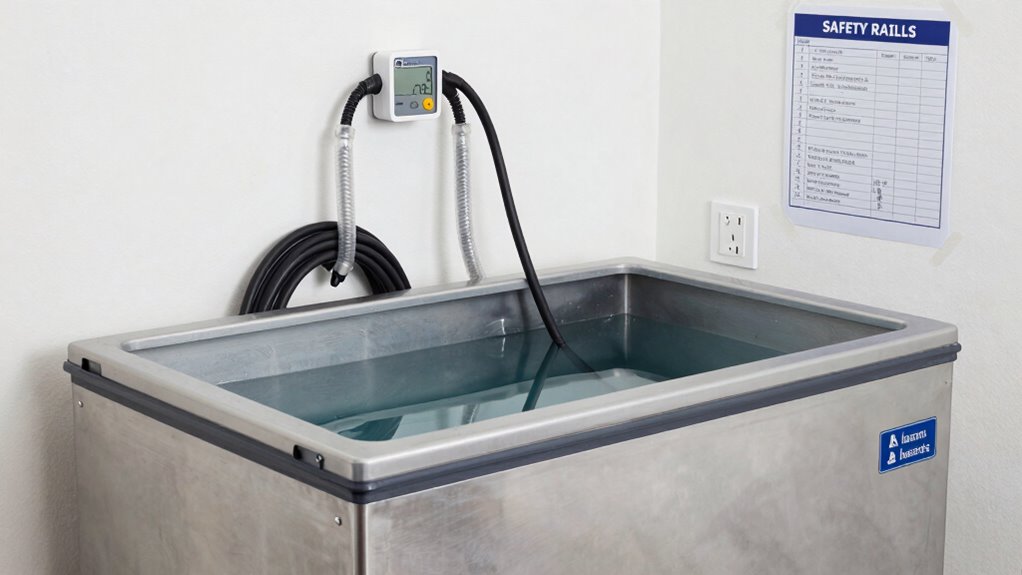
Understanding electrical risks is vital to keep your project safe. You need to follow proper grounding techniques, install circuit protection measures, and use correct wiring practices. These steps help prevent shocks and electrical fires, ensuring your cold plunge remains safe to use. Additionally, being aware of electric power generation methods can help you assess the energy sources involved and avoid overloads or improper connections. Proper knowledge of power distribution systems can further enhance safety by ensuring your setup is correctly integrated with existing electrical infrastructure. Knowing how electrical codes and standards apply to your project can also guide you in meeting safety requirements and avoiding potential hazards. Familiarity with circuit protection devices can provide an extra layer of safety by preventing overloads and short circuits. Understanding regional electrical regulations can also help ensure compliance with local safety laws and prevent legal issues.
Proper Grounding Techniques
Have you ever wondered how to guarantee your cold plunge setup remains safe from electrical hazards? Proper grounding techniques are essential. Understanding grounding methods helps prevent electric shocks by providing a safe path for stray current. Confirm your electrical grounding is correctly established by connecting your freezer and any electrical components to a grounded outlet or grounding rod. Use a three-prong plug and verify that the circuit has a proper ground connection. Regularly inspect grounding wires for damage or corrosion. Proper electrical grounding minimizes the risk of electrical shock if a fault occurs, protecting you and your equipment. Additionally, home security system principles, such as ensuring a secure electrical setup, can help prevent potential safety issues. Always follow local electrical codes and consult a professional if you’re unsure about your grounding setup. Safety starts with solid grounding practices.
Circuit Protection Measures
To effectively protect your cold plunge setup from electrical risks, implementing circuit protection measures is essential. Start by installing a dedicated circuit with proper circuit protection devices, such as circuit breakers or fuses. Choosing the right fuse ratings is critical; they should match the electrical load of your setup to prevent overloads or short circuits. Using appropriately rated fuses ensures that in the event of a fault, the circuit disconnects quickly, reducing the risk of electrical fires or damage. Regularly inspect your circuit protection devices for signs of wear or damage, and replace them immediately if needed. Proper circuit protection creates a safety barrier, minimizing electrical hazards and ensuring your cold plunge remains safe and reliable during use. Proper circuit protection is a key step in ensuring your setup can withstand electrical faults and prevent potential hazards. Additionally, understanding and monitoring electrical load helps prevent overloading circuits, further enhancing safety. Employing ground fault circuit interrupters (GFCIs) adds an extra layer of safety by quickly shutting off power in case of a ground fault, which is especially important in wet environments like backyard pools or hot tubs. Incorporating regular maintenance checks can also identify potential issues before they become serious safety risks.
Correct Wiring Practices
Proper wiring practices are essential to guarantee your cold plunge remains safe and free from electrical hazards. Start by ensuring all electrical grounding is correctly established; this prevents stray currents and reduces shock risks. Use proper circuit protection, such as circuit breakers or GFCIs, to automatically shut off power if a fault occurs. Avoid using damaged cords or outlets, and always follow the manufacturer’s wiring instructions. Keep wiring neat and secure, preventing accidental contact or damage. Verify that all connections are tight and insulated to prevent shorts. Regularly inspect wiring for signs of wear or corrosion. Correct wiring practices minimize electrical risks, protect your equipment, and keep your cold plunge safe to use. Proper grounding and circuit protection are essential for a secure setup.

Funsicle Floating Thermometer for Cold Plunge Tub – Accurate Water Temperature Monitoring for Cold Plunge Therapy
- Dual Temperature Display: Reads Fahrenheit and Celsius
- Buoyant Design: Floats on water surface
- Secure Attachment: Includes tie to prevent drifting
As an affiliate, we earn on qualifying purchases.
As an affiliate, we earn on qualifying purchases.
Proper Grounding Tips for Your Freezer Conversion
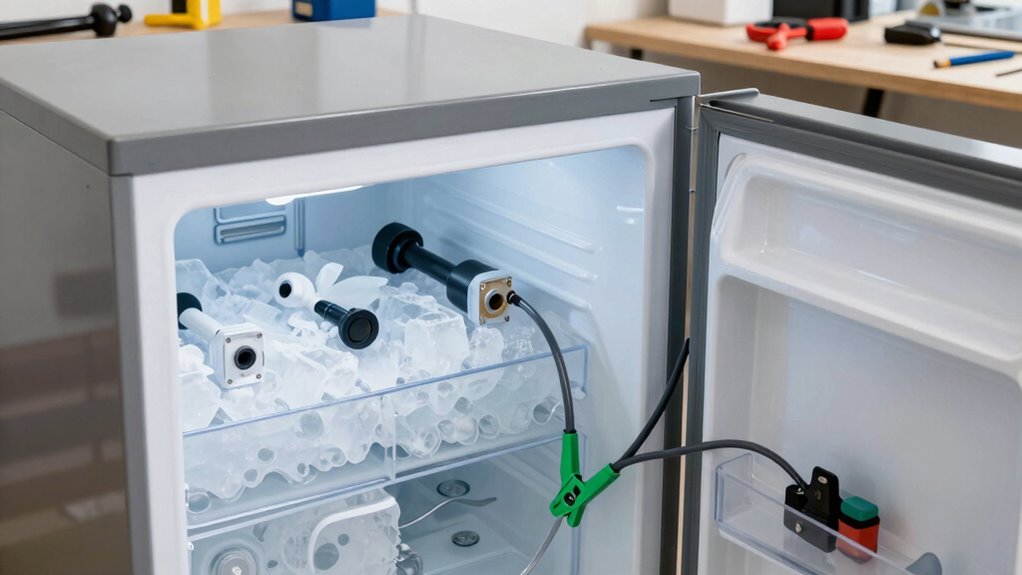
Ensuring your freezer conversion is properly grounded is essential for safety and reliable operation. Proper grounding techniques help prevent electrical shocks and equipment damage. First, confirm that your freezer’s power cord has a three-prong plug connected to a grounded outlet. Use a grounding rod or a grounding wire if necessary, especially if your setup isn’t built into a grounded circuit. Always verify that the grounding connection is secure and free of corrosion. When working with electrical safety, avoid shortcuts that could compromise grounding integrity. Regularly inspect your grounding system to ensure it remains intact and effective. Proper grounding not only protects you but also prolongs the life of your converted chest freezer, ensuring a safe and efficient cold plunge experience. Additionally, understanding electrical safety principles can help you identify potential issues before they become hazards. Being familiar with grounding techniques can further ensure your setup remains safe over time. Incorporating inspection routines into your maintenance can help catch any grounding issues early and maintain safety standards. Remember that Proper grounding is a critical component of any electrical conversion project, and neglecting it can lead to serious safety risks. Always consult qualified electricians when in doubt to ensure your system adheres to safety regulations.
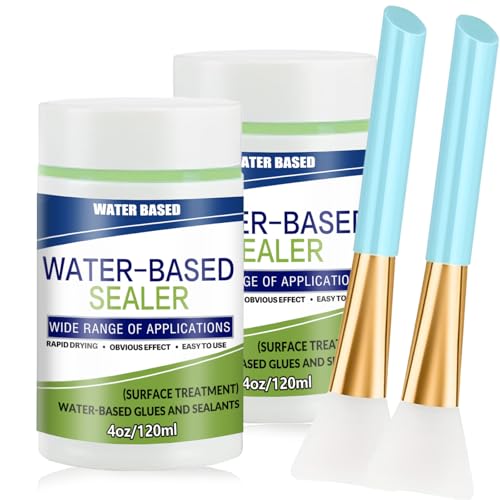
2 Pack 120ml Water-Based Sealer with Brush – Multi-Purpose Clear Surface Sealant & Adhesive for DIY Crafts, Wood, Plastic, Paper, and Art Projects, Fast Drying Non-Yellowing Finish
- Multi-Purpose Sealant & Adhesive: Suitable for crafts, wood, plastic, paper
- Eco-Friendly Water-Based Formula: Non-toxic, low-odor, safe for indoor use
- Fast Drying & Easy Application: Dries quickly with smooth, clear finish
As an affiliate, we earn on qualifying purchases.
As an affiliate, we earn on qualifying purchases.
Water Safety: Preventing Electrical Hazards in Your Cold Plunge
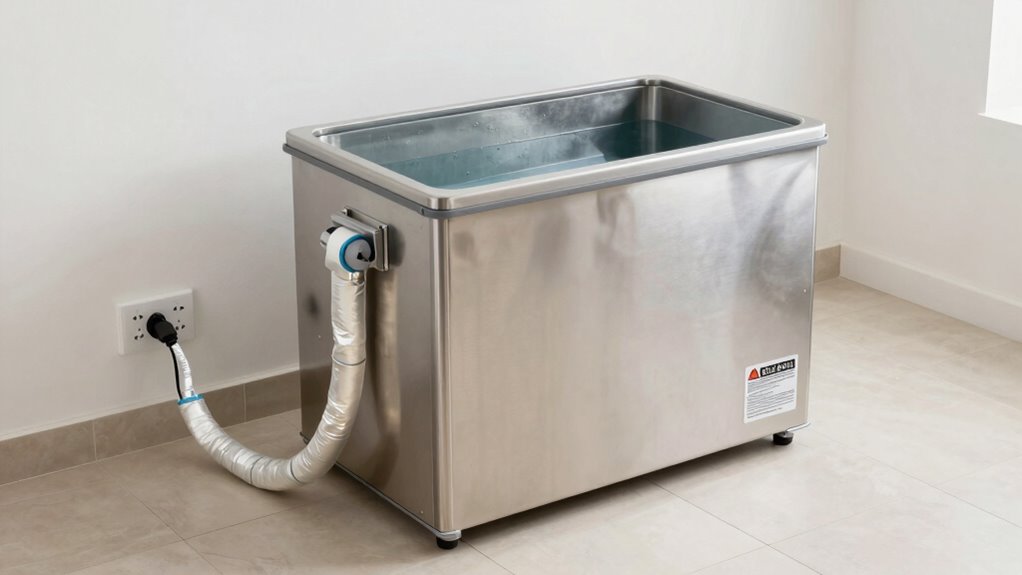
Electrical hazards are a serious concern when setting up your cold plunge, especially since water and electricity can be a dangerous combination. To prevent shocks, confirm your electrical wiring is properly installed and protected with GFCIs (Ground Fault Circuit Interrupters). Use correct grounding techniques to keep everything safe, especially near water. Always inspect cords and outlets for damage, and avoid overloading circuits. Here’s a quick safety checklist:
| Safety Step | Action | Why it Matters |
|---|---|---|
| Electrical wiring | Use waterproof, outdoor-rated wiring | Prevents shorts and leaks |
| Grounding techniques | Properly ground all equipment | Stops electrical buildup |
| Ground Fault Circuit Interrupters | Install GFCIs on outlets | Cuts power during faults |
| Inspect cords | Regularly check for damage | Avoid shocks |
| Keep water away from outlets | Maintain a safe distance | Prevents accidental contact |
Choosing Safe, Non-Toxic Materials for DIY Conversion
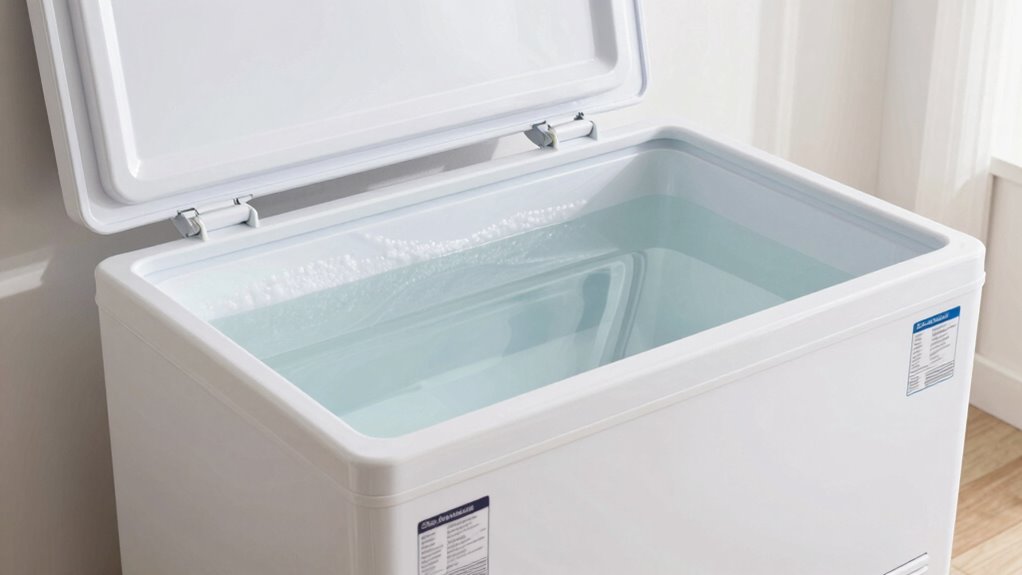
When converting your chest freezer, choosing safe, non-toxic materials is essential for your health and safety. You’ll want to select proper materials that won’t leach harmful chemicals into the water, and consider non-toxic coating options to protect the surface. Prioritizing these choices helps guarantee your cold plunge remains both safe and durable. Additionally, understanding ergonomics and layout can help ensure your setup minimizes strain and promotes comfort during use. Selecting appropriate materials that are resistant to water and corrosion can further extend the lifespan of your conversion and reduce maintenance needs. Incorporating safe construction practices ensures your DIY project remains reliable and minimizes potential hazards over time.
Proper Material Selection
Choosing the right materials is essential for a safe and effective DIY chest freezer cold plunge conversion. You need materials that offer high material durability to withstand constant exposure to moisture and temperature changes. Additionally, selecting options with aesthetic appeal ensures your setup looks clean and inviting. Consider these factors:
- Use food-grade, non-toxic plastics that resist cracking and warping.
- Opt for waterproof sealants and adhesives to prevent leaks.
- Select smooth, non-porous surfaces to ease cleaning and prevent mold.
- Avoid materials with harmful chemicals or strong odors that can leach into the water.
Non-Toxic Coating Options
Selecting the right coating is essential for guaranteeing your cold plunge remains safe and non-toxic. You want a non toxic coating that won’t leach harmful chemicals into the water or pose health risks. Look for safe materials like food-grade epoxy, enamel paints labeled as non-toxic, or coatings specifically designed for aquatic or food contact surfaces. These options provide a durable, waterproof barrier while keeping toxicity levels low. Avoid standard paints or coatings with volatile organic compounds (VOCs) or strong solvents. Applying a non toxic coating not only protects the metal surface but also guarantees the water remains safe for your skin. Always check product labels and specifications to confirm they’re safe material choices for a DIY cold plunge conversion.
How to Set and Monitor the Right Temperature Safely
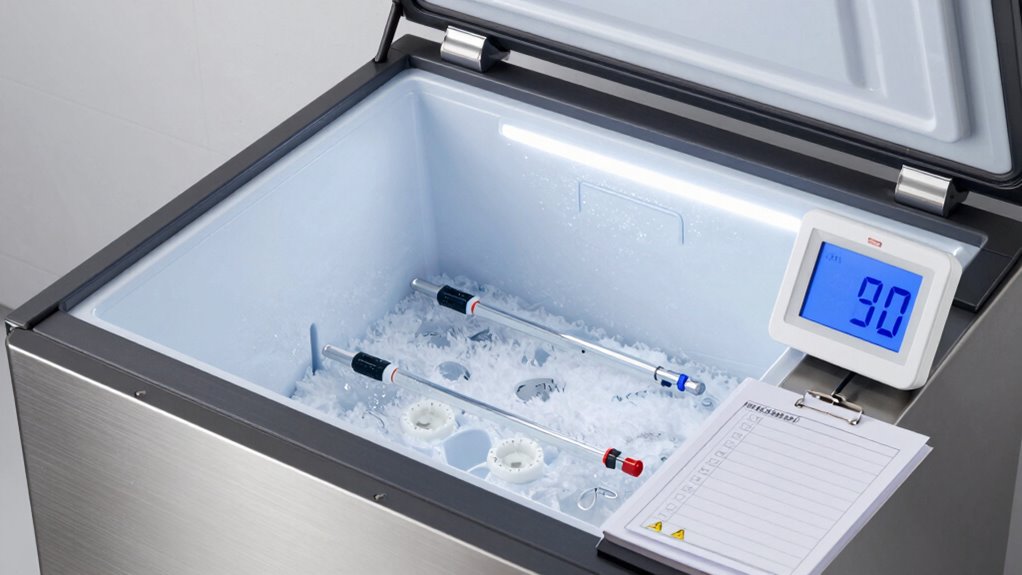
Setting and monitoring the right temperature safely is essential to guarantee an effective and enjoyable cold plunge experience. Proper temperature control ensures you avoid risks like hypothermia or frostbite. To maintain safety, follow these steps:
- Set the thermostat to your desired temperature, typically between 50-59°F (10-15°C).
- Regularly check the thermometer to confirm consistent temperature control.
- Use a reliable safety monitoring device to alert you if the water becomes too cold or too warm.
- Adjust the temperature immediately if safety monitoring indicates deviations.
Checking Local Codes and Regulations for Your Project
Before starting your chest freezer cold plunge project, it’s essential to review local codes and regulations to guarantee compliance and safety. Check with your local building department to determine if you need specific permits or inspections. Zoning permits may restrict where you can set up your plunge, especially if it involves electrical work or plumbing. Understanding these rules helps you avoid fines or legal issues down the line.
| Aspect | Requirements | Authority |
|---|---|---|
| Building Codes | Structural safety, electrical standards | Local building department |
| Zoning Permits | Location restrictions, usage classifications | Zoning office |
| Electrical Permits | Wiring, grounding, safety compliance | Electrical inspector |
| Plumbing Regulations | Drainage, water supply, sanitation | Plumbing department |
Your Complete Safety Checklist for Cold Plunge Conversion
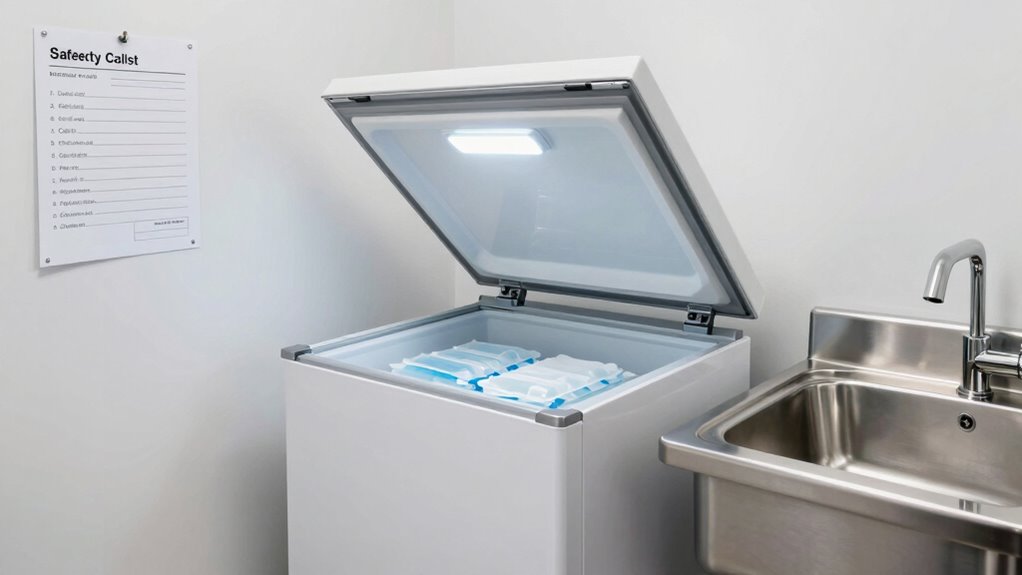
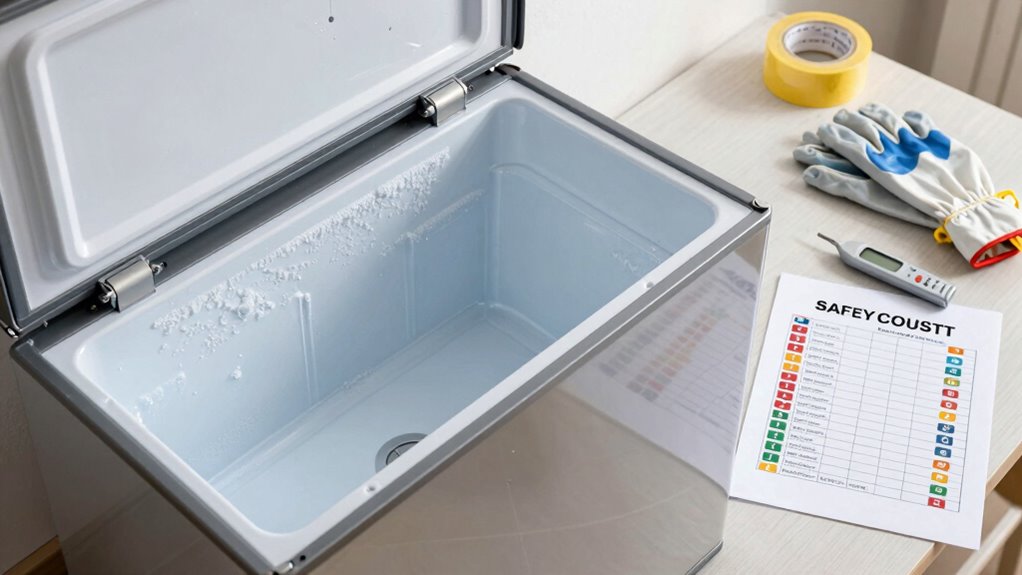
Guaranteeing safety is critical when converting a chest freezer into a cold plunge, as improper setup can lead to electrical hazards, water leaks, or injuries. Your safety checklist should include these key points:
Safety first: ensure proper grounding, reliable temperature control, durable materials, and secure electrical sealing for a safe cold plunge setup.
- Verify the freezer’s electrical system is grounded properly to prevent shocks.
- Ensure the temperature regulation system is accurate and reliable to avoid unsafe cold levels.
- Inspect the material durability of the freezer’s interior to withstand prolonged water exposure without corrosion or damage.
- Seal all electrical components securely to prevent water ingress and potential short circuits.
Frequently Asked Questions
Can I Convert Any Brand of Chest Freezer Into a Cold Plunge?
You can’t convert any brand of chest freezer into a cold plunge. Brand compatibility and model limitations matter because not all freezers are built to handle the low temperatures and continuous use required. Check the specifications for your specific model to guarantee it can handle the cold plunge conversion safely. If it’s incompatible, pushing beyond these limits could damage the unit or pose safety risks, so choose carefully.
What Is the Recommended Safety Gear for DIY Conversion?
You should wear proper personal protective equipment and electrical safety gear during your DIY conversion. Gear up with insulated gloves, safety goggles, and a long-sleeved shirt to protect against sharp edges and electrical shocks. Use insulated tools and wear rubber-soled shoes to guarantee electrical safety. Always disconnect the power before working on the freezer and double-check your gear to prevent accidents. Safety first ensures a smooth, risk-free conversion process.
How Often Should I Inspect the Converted Freezer for Safety?
Checking your converted freezer is like tending a garden—you need consistent care. You should inspect it weekly for safety monitoring, looking for leaks, corrosion, or electrical issues. Regular inspection frequency guarantees everything remains safe and functional, preventing accidents or malfunctions. Staying vigilant keeps your cold plunge safe and effective, giving you peace of mind while enjoying your DIY project. Don’t skip these safety checks—they’re essential for your peace of mind.
Are There Specific Ventilation Requirements for the Converted Unit?
You need to guarantee your converted unit meets ventilation standards and airflow requirements to prevent overheating and maintain safety. Proper ventilation involves installing vents or fans that promote adequate airflow, especially around the compressor and electrical components. Regularly check that airflow isn’t obstructed and that ventilation systems are functioning correctly. Following these standards helps keep your unit safe and efficient, reducing the risk of malfunctions or hazards during use.
What Emergency Procedures Should I Follow if Electrical Issues Occur?
Electrical issues happen in less than 1% of conversions, but you should be prepared. If you notice sparks, burning smells, or power loss, immediately perform an emergency shutdown by unplugging the unit. Prioritize electrical safety by avoiding contact with water or metal parts. Then, turn off the circuit breaker and contact a qualified electrician. Staying calm and acting swiftly can prevent injuries and further damage.
Conclusion
Think of your cold plunge project as steering a river. With the right safety precautions as your trusty boat, you can steer clear of hidden rocks and turbulent currents. By following these safety steps, you’ll guarantee your journey stays smooth and secure. Remember, a well-prepared vessel keeps you afloat and safe—so gear up, double-check your safety measures, and enjoy the invigorating calm of your DIY chest freezer cold plunge without worry.