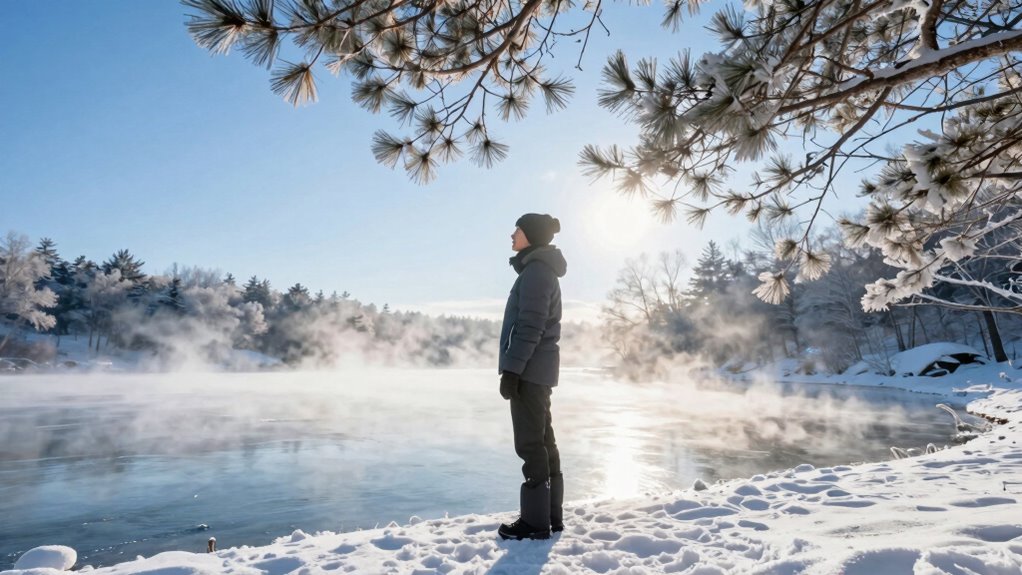

To make cold exposure effortless, integrate it into your routine by pairing it with existing habits, like showering or brushing your teeth. Start small with just 30 seconds and gradually increase over time. Focus on controlled breathing to stay calm, which reduces reliance on willpower. Set a consistent schedule so it becomes automatic. Keep reminders of the benefits to reinforce positive associations. If you keep these strategies in mind, you’ll find it easier to build this habit naturally.

Get home appliances delivered free with Prime
- Fast, free delivery on millions of items
- Prime Video, Amazon Music and more included
- Member-only deals all year
Key Takeaways
- Integrate cold exposure into existing routines to automate the habit.
- Start with small, manageable durations and gradually increase over time.
- Use controlled breathing techniques to stay calm and reduce mental resistance.
- Pair cold exposure with positive associations like improved mood or energy.
- Minimize reliance on motivation by establishing consistent schedules and cues.
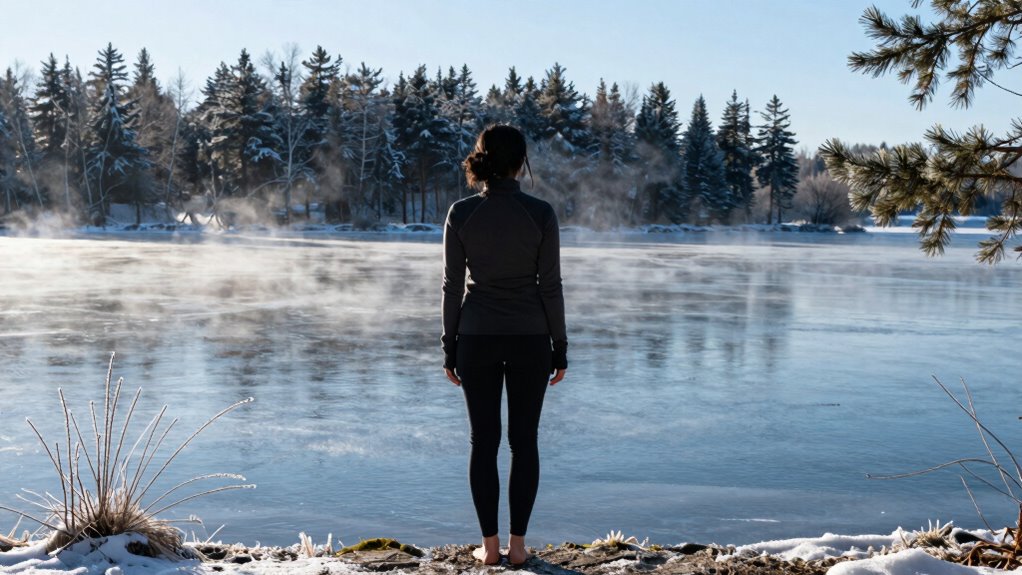
Many people overlook the benefits of cold exposure, but making it a regular habit can boost your mental clarity, resilience, and overall health. The key to integrating cold exposure into your routine without relying solely on willpower lies in establishing effective habits and leveraging simple mental strategies. One powerful tool is breathing techniques. When you step into a cold shower or plunge into icy water, your natural instinct might be to gasp or panic. Instead, focus on controlled, deep breaths—inhale slowly through your nose, hold briefly, then exhale steadily through your mouth. This not only calms your nervous system but also helps you stay present, making the cold less overwhelming. Over time, practicing these breathing techniques in cold conditions trains your mind to remain composed, enhancing your mental resilience.
Controlled breathing in cold exposure calms your mind and builds resilience over time.
To make cold exposure stick, create a consistent schedule that fits seamlessly into your daily life. For example, decide that every morning you’ll take a quick cold shower or finish your workout with a cold rinse. By pairing cold exposure with existing habits—like brushing your teeth or preparing your coffee—you reduce the mental effort needed to get started. The more you embed it into your routine, the less you rely on motivation and more on habit. This approach minimizes resistance and helps you bypass the mental barriers that often derail new practices.
Another tip is to start small and gradually increase exposure. You don’t have to jump into ice baths right away. Begin with 30 seconds of cold water at the end of your shower, then slowly extend the duration over days or weeks. This incremental approach makes the process feel manageable and less intimidating. As your body adapts, so does your mind; you’ll notice that cold exposure becomes less of a challenge and more of an expected part of your day. This consistency reinforces your mental resilience, allowing you to face other stressful situations with greater ease.
Additionally, remind yourself of the benefits—improved mood, strengthened immune system, and increased focus. When you associate cold exposure with positive outcomes, it becomes easier to push through discomfort. Remember, you’re not just training your body but also conditioning your mind to handle stress better. Incorporating home-based fitness practices can further support your resilience-building efforts by creating a comprehensive approach to health. Over time, the combination of deliberate breathing techniques, routine integration, and gradual exposure transforms cold exposure from a formidable task into a natural, empowering habit. With persistence, it will become an integral part of your lifestyle, requiring less mental effort and more automatic resilience.
As an affiliate, we earn on qualifying purchases.
Frequently Asked Questions
Can Cold Exposure Improve Mental Health Long-Term?
Cold exposure can improve your mental health long-term by boosting your emotional resilience and reducing symptoms of anxiety and depression. When you regularly practice cold exposure, your body releases endorphins and adapts to stress, making you more resilient to emotional challenges. Over time, this can lead to a greater sense of well-being and mental clarity. Consistency is key, and you’ll notice these mental health benefits grow as you make cold exposure a habit.
Is Cold Exposure Safe for Everyone?
Sure, cold exposure is safe for most, but don’t forget cold safety varies with individual differences. Some folks thrive in icy waters, while others risk hypothermia or shock. Think of it like trying a new dance—what’s safe for one might be hazardous for another. Always listen to your body, start gradually, and consult a healthcare professional if you have health concerns. After all, ice baths aren’t a one-size-fits-all party.
How Does Cold Exposure Compare to Other Habit-Forming Techniques?
Cold exposure promotes habit formation by creating strong physiological signals, but comparison techniques show it’s often more intense and immediate than methods like meditation or journaling. You might find it challenging at first, yet it quickly reinforces discipline through tangible results. Unlike passive habits, cold exposure engages your body actively, speeding up habit formation. Compared to other techniques, its visceral impact helps embed the habit naturally, making it easier to stick with over time.
What Are the Best Times of Day to Practice Cold Exposure?
The best times for cold exposure are during your morning routines or evening practices. Morning sessions can boost alertness and set a positive tone for the day, while evening practices help relax your muscles and improve sleep. You might find it easier to stick with cold exposure consistently if you incorporate it into these familiar parts of your day. Just guarantee you’re comfortable and gradually build up intensity.
Does Cold Exposure Affect Sleep Quality?
Cold exposure can improve your sleep quality by supporting your circadian rhythm and providing sleep benefits. When you practice cold exposure at the right time, it helps regulate your body’s internal clock, making it easier to fall asleep and enjoy restorative rest. Just avoid doing it too close to bedtime, as the invigorating effects might temporarily disrupt your sleep. Incorporate cold exposure thoughtfully for better overall sleep health.
As an affiliate, we earn on qualifying purchases.
Conclusion
Making cold exposure a habit doesn’t have to rely on sheer willpower. By gradually incorporating it into your routine, you can build resilience effortlessly. Did you know that consistent cold exposure can boost your immune system by up to 29%? That’s a powerful incentive to keep going. When you focus on small, manageable steps, it becomes easier to stick with it long-term. Soon, cold exposure will feel like a natural part of your daily life, not a chore.
As an affiliate, we earn on qualifying purchases.
As an affiliate, we earn on qualifying purchases.
Halloween Picks
halloween
As an affiliate, we earn on qualifying purchases.