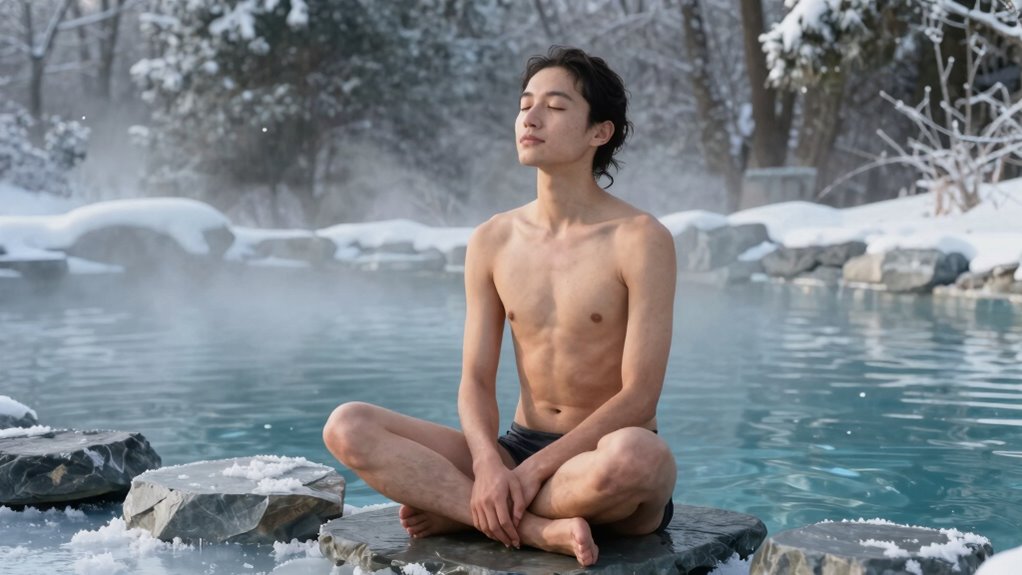

To use progressive muscle relaxation during cold plunges, start by tensing each muscle group—like your shoulders or legs—for a few seconds, then release and focus on the warmth and relaxation that follows. Take slow, deep breaths throughout to calm your nervous system. This technique helps manage the body’s natural cold shock response, keeping you more comfortable. Continue exploring this method, and you’ll discover simple ways to stay relaxed even amid thermal challenge.

Get home appliances delivered free with Prime
- Fast, free delivery on millions of items
- Prime Video, Amazon Music and more included
- Member-only deals all year
Key Takeaways
- Begin by tensing a specific muscle group (e.g., shoulders) for 5-7 seconds to induce awareness of tension.
- Slowly release the tension, focusing on the sensation of relaxation and warmth returning to the muscles.
- Progress through major muscle groups sequentially, such as arms, legs, and core, for full-body relaxation.
- Use deep, slow breaths during tension and release phases to enhance relaxation and reduce cold shock response.
- Incorporate mental visualization of warmth and calmness to complement muscle relaxation during cold plunge practice.
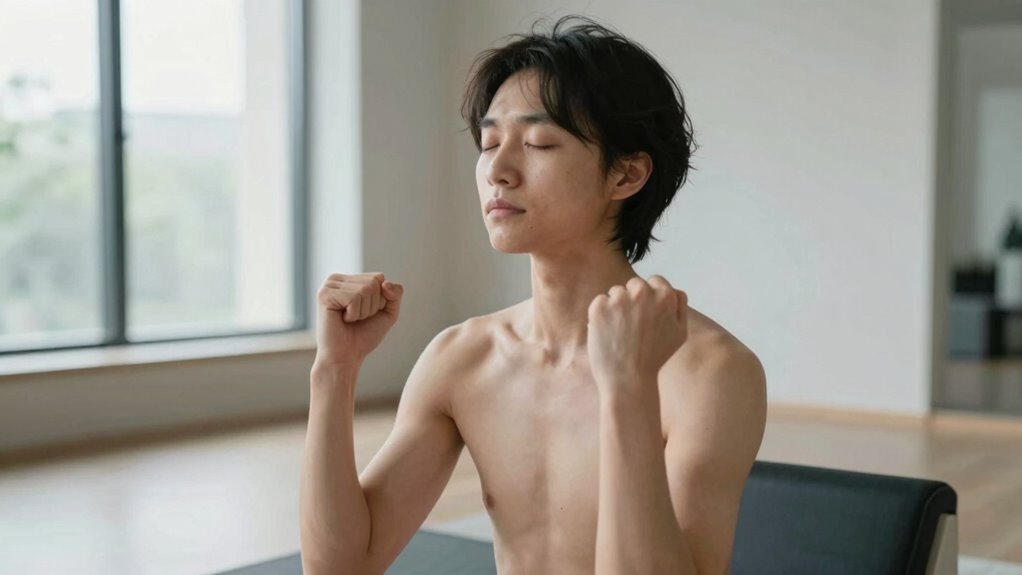
Cold plunges are gaining popularity for their health benefits, but they can also trigger intense physical and mental reactions. When you immerse yourself in icy water, your body responds with rapid breathing, shivering, and a surge of adrenaline. To manage these intense reactions, practicing progressive muscle relaxation can be incredibly effective. It helps you stay calm and centered, making the experience more manageable and even enjoyable.
Cold plunges can trigger intense reactions; relaxation techniques help you stay calm and enjoy the experience.
One of the key tools in your relaxation arsenal is breathing techniques. Before entering the cold water, take slow, deep breaths to set a steady rhythm. Focus on inhaling deeply through your nose, filling your lungs completely, then exhaling slowly through your mouth. This controlled breathing helps reduce the initial shock and calms your nervous system. During your plunge, maintain this mindful breathing pattern to prevent hyperventilation, which can increase panic and discomfort. As you breathe intentionally, you send signals to your brain that it’s safe to relax, countering the fight-or-flight response triggered by the cold.
Mental visualization is another powerful technique you can use. Picture yourself in a serene, warm environment—perhaps lying on a sunny beach or nestled in a cozy cabin. Visualizing a calming scene helps shift your focus away from the cold and any discomfort it causes. When you imagine yourself relaxed and at ease, your mind influences your physical state, helping to reduce tension and anxiety. As you step into the cold water, keep this mental image active. Remind yourself that the feeling is temporary and that your body is capable of adapting. Visual cues like imagining your muscles loosening or your breathing slowing reinforce your sense of control. Understanding the body’s response to cold helps you develop effective coping strategies and build resilience over time.
Progressive muscle relaxation works best when combined with these techniques. Start by tensing specific muscle groups—your shoulders, arms, or legs—for a few seconds, then release. As you relax each group, focus on the sensations of release and warmth returning to those muscles. This practice helps you become more aware of tension and teaches your body to let go. Over time, you’ll notice that your muscles relax more quickly, and your reactions to the cold become less intense.
Frequently Asked Questions
Can PMR Be Combined With Other Cold Exposure Techniques?
Yes, you can combine progressive muscle relaxation (PMR) with other cold exposure techniques. Before cold plunges, try breathing exercises or meditation techniques to calm your mind and body, enhancing relaxation. During or after cold exposure, continue with PMR to deepen muscle relaxation. This combination helps manage stress responses, boost recovery, and improve your overall cold exposure experience, making it more effective and enjoyable.
How Long Should Each Cold Plunge Session Last?
For each cold plunge, aim for 1 to 3 minutes, following duration guidelines that balance benefits and safety. The ideal timing depends on your experience level; beginners should start with shorter dips and gradually increase as your tolerance improves. Listen to your body, and avoid overdoing it, since longer sessions can lead to discomfort or hypothermia. Consistency is key for reaping cold exposure benefits safely.
Is PMR Effective for Anxiety Unrelated to Cold Exposure?
Yes, progressive muscle relaxation (PMR) is effective for anxiety unrelated to cold exposure. It’s a proven relaxation technique that helps improve mental health by reducing stress levels. When you practice PMR regularly, you can better manage anxiety symptoms, promote calmness, and enhance overall well-being. Incorporating PMR into your routine offers a simple, accessible way to foster relaxation and support mental health beyond cold plunges.
Are There Age Restrictions for Practicing PMR Before Cold Plunges?
Yes, there are age considerations for practicing PMR before cold plunges. Generally, pediatric safety is a priority, so you should consult a healthcare professional before involving children or teenagers in cold exposure combined with PMR. For adults, PMR is typically safe, but age-specific health conditions might require adjustments. Always guarantee proper supervision and gradual exposure to prevent any adverse reactions, especially for younger or older individuals.
How Quickly Can I Expect to See Benefits From PMR and Cold Plunges?
You’ll likely notice some benefits of PMR and cold plunges within a few sessions, but don’t hold your breath for overnight miracles. Timing expectations vary, and symptom improvement can be subtle at first. Usually, consistent practice over weeks yields the best results. So, stay patient, keep at it, and remember—your body’s response might just surprise you when you least expect it.
Conclusion
As you embrace cold plunges with the calming power of progressive muscle relaxation, you’ll find your body becomes a resilient vessel amid icy waves. Like a ship steadying through turbulent waters, your mind and muscles learn to surrender, transforming chilling discomfort into a dance of serenity. With each breath and release, you forge a tranquil anchor within, turning the icy plunge into a symphony of calm mastery—your personal voyage toward resilience, one chilled moment at a time.
NFL season / tailgating Picks
team gear
As an affiliate, we earn on qualifying purchases.