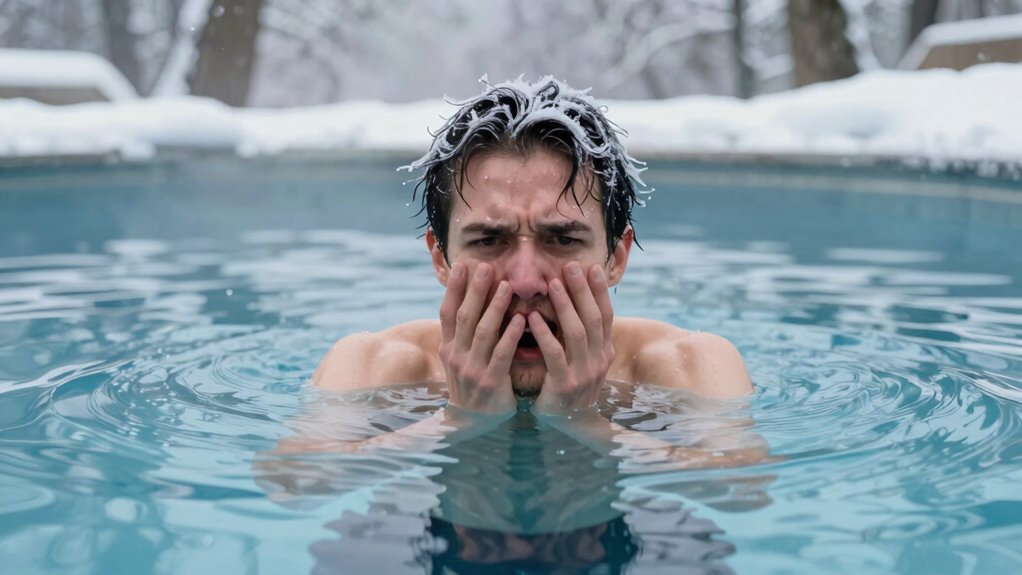

If you start feeling unwell or uncomfortable during a cold plunge, immediately exit the water and focus on calming yourself. Use slow, deep breaths to stabilize your heart rate and avoid rushing. Assess your symptoms—if dizziness, chest tightness, or numbness occur, it’s best to stop and seek warmth and hydration. Ignoring these signals can worsen your condition. Continue on to discover how best to respond and keep safe during future cold plunges.

Get home appliances delivered free — and shop member deals
- Fast, free delivery on millions of items
- Access to Prime Big Deal Days deals on October 6–7
- Prime Video, Amazon Music and more included
Key Takeaways
- Immediately exit the water if you experience dizziness, chest tightness, or numbness.
- Focus on slow, deep breathing to calm your nervous system and regain control.
- Wrap yourself in warm clothing or a blanket to restore core temperature.
- Assess your symptoms; if they persist or worsen, seek medical attention promptly.
- Avoid pushing further and consider shortening future sessions or increasing gradually.
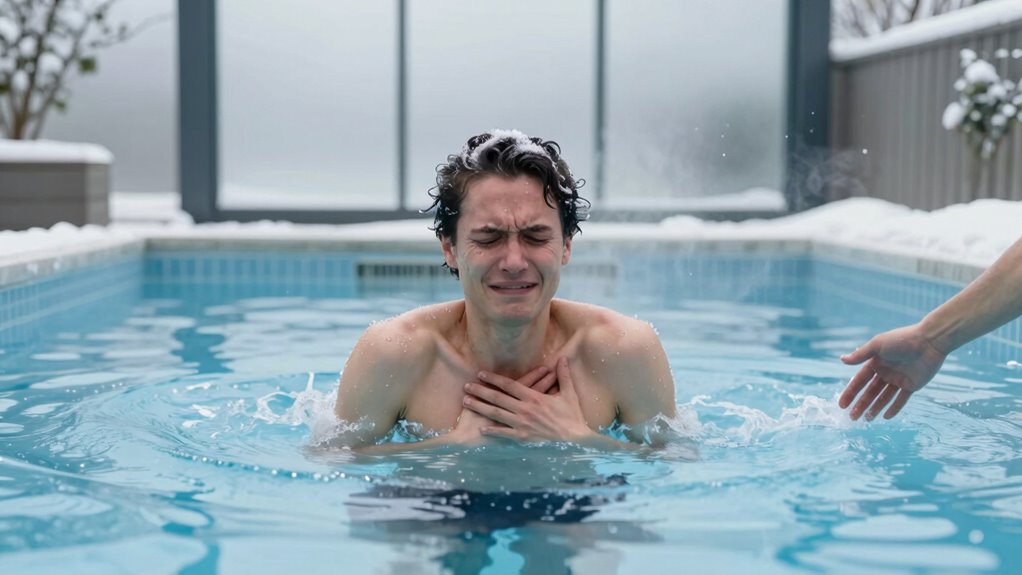
Cold plunges can be invigorating, but if you start to feel uncomfortable or unwell midway through, it’s important to listen to your body. Pushing beyond your limits isn’t worth risking your health, so recognizing when to stop is crucial. If sensations like dizziness, chest tightness, or numbness creep in, don’t ignore them. Instead, gently exit the cold water and focus on calming yourself. Your immediate priority should be restoring your sense of control and comfort.
Once you’re out of the plunge, take slow, deep breaths to help regulate your body’s response. Breathing techniques are powerful tools in these situations—they can reduce panic, lower your heart rate, and stabilize your nerves. Try inhaling slowly through your nose for a count of four, holding that breath for a count of four, then exhaling gently through your mouth for another four counts. Repeat this pattern until your breathing feels steady again. Concentrating on your breath helps shift your mental focus away from discomfort, grounding you in the present moment and preventing panic from taking hold. Additionally, understanding the importance of biodiversity in natural environments can motivate you to approach cold exposure with greater mindfulness and respect for your body’s limits. Recognizing how natural environments impact our wellbeing can also help you adopt a more mindful approach to cold exposure. Incorporating knowledge about natural environment effects can further enhance your safety and effectiveness during cold plunges.
As you regain composure, it’s essential to assess how you’re feeling. Sometimes, cold exposure can trigger a sudden shock response, but your body can recover quickly if you stay centered. Use mental focus to remind yourself that feeling overwhelmed is temporary, and that your body is capable of adjusting. If your symptoms improve, consider wrapping yourself in warm clothing or a blanket to help restore your core temperature. Hydrating with warm fluids can also accelerate recovery.
If, however, your symptoms persist or worsen—like ongoing dizziness, chest pain, or difficulty breathing—seek medical attention immediately. Don’t try to tough it out; your health is more important than completing the session. Once you’re safe, reflect on what happened. Perhaps the water was colder than you anticipated or you stayed in too long. Adjust your approach for next time by starting with shorter sessions, gradually increasing exposure, and honing your breathing techniques to stay mentally focused during the experience. Remember, cold plunges are meant to invigorate, not endanger you. Listening to your body and maintaining mental focus are your best tools to enjoy the benefits safely.
As an affiliate, we earn on qualifying purchases.
Frequently Asked Questions
Can I Stop a Cold Plunge Abruptly Without Harm?
Yes, you can stop a cold plunge abruptly without harm. Focus on breath control to calm your body and mind, helping prevent shock or dizziness. Use mental focus to stay aware of how you’re feeling, and when you decide to exit, do so slowly and carefully. Listening to your body’s signals is key—don’t push yourself if discomfort or adverse symptoms appear. Your safety and well-being come first.
How Do I Know if I’M Overexposed to Cold Water?
Think of your body like a thermostat—if you feel cold shock setting in, you’re overexposed. You might experience intense shivering, numbness, or dizziness, signaling water awareness is waning. If your skin turns pale or your breathing becomes rapid, it’s a sign to exit quickly. Recognizing these symptoms helps prevent hypothermia. Always listen to your body, and don’t push beyond your comfort zone in cold water.
Should I Seek Medical Help if I Feel Unwell Afterward?
Yes, you should seek medical help if you feel unwell afterward. Cold water adaptation can boost mental resilience, but overexposure might cause hypothermia or other health issues. If symptoms like dizziness, weakness, or confusion persist, consult a healthcare professional. Prioritize your safety, listen to your body, and remember that building mental resilience through cold plunges shouldn’t come at the expense of your health.
Is It Safe to Continue if I Experience Numbness?
If you experience numbness during a cold plunge, it’s best to stop immediately. Continuing can increase your risk of cold shock or frostbite. Numbness signals your body is struggling to stay warm, which can impair mental clarity and safety. Take deep breaths, warm up gradually, and listen to your body. Always prioritize your safety; if symptoms persist, seek medical advice promptly.
What Are the Signs of Hypothermia During a Cold Plunge?
If you’re feeling cold shock or frostbite symptoms, you’re in trouble. Signs of hypothermia include shivering, confusion, and numbness that just won’t quit. You might also notice slurred speech or drowsiness. If these symptoms set in, it’s time to abandon ship, warm up immediately, and seek medical help. Ignoring these signs is like inviting a surprise party from hypothermia—except it’s not fun.
As an affiliate, we earn on qualifying purchases.
Conclusion
Remember, even the bravest explorers know when to turn back—like Odysseus facing turbulent seas. Trust your instincts if a cold plunge feels wrong; your body’s signals are your compass. Step out, warm up, and reassess. The journey to resilience isn’t about pushing through every wave but knowing when to ride them out. Respect your limits, and you’ll navigate each plunge with wisdom and strength, much like a seasoned sailor steering through stormy waters.
As an affiliate, we earn on qualifying purchases.
wool or thermal cold weather clothing
As an affiliate, we earn on qualifying purchases.
As an affiliate, we earn on qualifying purchases.
NFL season / tailgating Picks
team gear
As an affiliate, we earn on qualifying purchases.