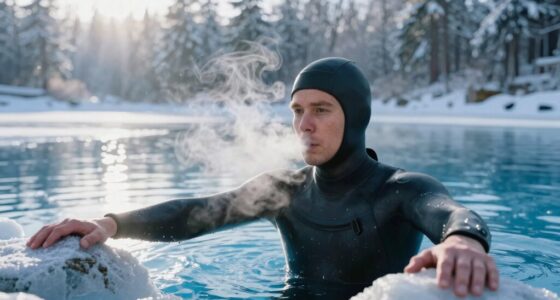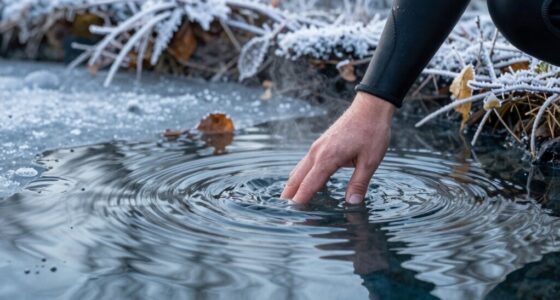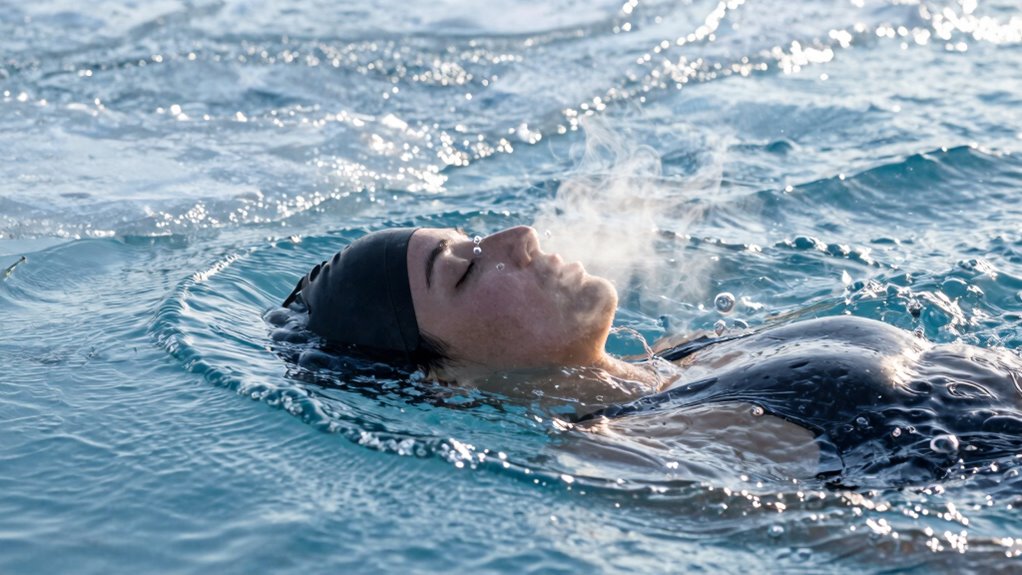

To stay calmer in cold water, use a slow, controlled breathing pattern—inhale deeply through your nose for about four seconds, then exhale slowly through your mouth for six seconds. Focus on gentle, steady breaths to calm your heart rate and reduce panic. Practicing this breathing rhythm before and during immersion helps build resilience and keeps you centered. Keep exploring techniques like this, and you’ll discover more ways to maintain calmness and confidence.
Key Takeaways
- Use slow, deep breaths emphasizing longer exhalations to activate relaxation responses and slow the heart rate.
- Practice inhaling for four seconds and exhaling for six seconds to establish a calming breathing rhythm.
- Incorporate mindful breathing exercises before immersion to reduce anxiety and improve focus.
- Maintain a steady, gentle breath pattern during cold water exposure to prevent panic and control cold shock response.
- Use controlled breath-hold techniques safely to deepen calmness and enhance resilience in cold water conditions.
Why Cold Water Triggers Panic: And How Calm Breathing Can Help
When you suddenly plunge into cold water, your body perceives it as a threat, triggering a stress response that can lead to panic. This is known as cold shock, which causes an immediate surge of adrenaline and rapid breathing. Your heart races, and your instinct may be to breathe rapidly and uncontrollably, fueling the panic response. Cold shock can also cause involuntary gasping, increasing the risk of inhaling water. Staying calm is essential to avoid this spiraling reaction. Practicing calm breathing techniques helps counteract the body’s instinctive panic response. By controlling your breath, you signal to your nervous system that you’re not in danger, reducing anxiety and preventing the onset of panic during cold water immersion. Engaging in free floating techniques can help you stay relaxed and maintain control in such situations. Additionally, understanding the body’s natural stress response can empower you to better manage your reactions in cold water.
The Best Cold Water Breathing Pattern to Stay Calm
To stay calm in cold water, adopting a simple, controlled breathing pattern can make all the difference. The best breathing techniques involve slow, deep breaths that emphasize exhalation, helping to reduce your heart rate and prevent panic. Focus on your breath to sharpen your mental focus, blocking out distractions and calming your mind. A common pattern is inhaling for four seconds, then exhaling for six seconds, maintaining a steady rhythm. This controlled approach encourages relaxation and prevents hyperventilation. Consistent practice reinforces your ability to stay composed under stress. Proper breathing techniques can significantly improve your response to cold shock and help maintain your composure longer. Incorporating breathing awareness into your training can further enhance your ability to manage cold-induced stress. Using mindfulness during your practice can also boost your resilience to cold exposure. Developing resilience training can prepare you better for unexpected immersion scenarios. Paying attention to your body signals can help you recognize early signs of stress and adjust your breathing accordingly. By maintaining this breathing technique, you’ll enhance your mental focus, allowing you to manage the cold shock more effectively and stay calmer during immersion.
How to Practice Cold Water Breathing Step-by-Step
Start by finding a quiet, comfortable space where you can focus on your breath. Begin with deep, controlled inhales through your nose, filling your lungs fully. Then, exhale slowly and completely, maintaining calm and steady breathing throughout the practice. Incorporating mindful breathing techniques can help enhance your sense of calm and improve your ability to stay relaxed in cold water. Engaging in proper breathing patterns during practice can also help you develop greater awareness of your physiological responses. Practicing this regularly can also boost your mental resilience, making it easier to remain composed in challenging situations. Remember that controlled breathing patterns are essential for managing your physiological response to cold exposure, and consistent practice can strengthen your overall stress management skills.
Prepare Your Breathing Space
Creating a dedicated space for practicing cold water breathing helps you stay focused and calm. Find a quiet, comfortable spot where you won’t be disturbed, ideally away from distractions. Use this space to set your intention and prepare your mind for water immersion. Keep your breathing techniques simple and consistent, so your mind can stay centered. Having a designated area helps reinforce your routine, making it easier to relax and focus during water immersion. You might include calming elements like soft lighting or a timer to track your practice. This intentional preparation creates a mental boundary, allowing you to approach cold water with confidence. Practicing in a consistent environment can also enhance your focus and improve your overall technique over time. Regularly practicing in this space supports developing proactive security measures, making your mental state more resilient to unexpected stressors. Creating a routine around this dedicated space can also boost your confidence and help you build trust in your ability to stay calm. Over time, your dedicated space becomes a safe retreat that enhances your ability to control your breath and stay calm under pressure. Incorporating proper preparation into your routine further stabilizes your mindset, helping you manage discomfort more effectively. Additionally, cultivating a mindful environment can significantly reduce anxiety and foster greater mental resilience during challenging situations.
Execute Deep, Controlled Breaths
Once you’ve established your breathing space, it’s time to focus on executing deep, controlled breaths. Use breathing techniques that emphasize slow, deliberate inhales and exhales to manage anxiety effectively. This helps regulate your nervous system and keep you calm in cold water. Practice the following steps:
| Step | Action |
|---|---|
| 1 | Inhale deeply through your nose, filling your lungs. |
| 2 | Hold your breath for a count of 3. |
| 3 | Exhale slowly through your mouth, releasing all air. |
| 4 | Pause for a moment before the next inhale. |
| 5 | Repeat, maintaining a steady, controlled rhythm. |
Consistent practice strengthens your ability to stay calm during cold water exposure. Focusing on air purifier maintenance and proper breathing techniques can help manage physical responses to cold environments. Incorporating mindful awareness of your breathing pattern can also enhance your overall sense of calm and control. Developing a mindful breathing routine can further support your resilience in challenging conditions, especially since understanding the importance of ventilation systems in various environments contributes to overall well-being.
How Calm Breathing Reduces Panic and Boosts Endurance
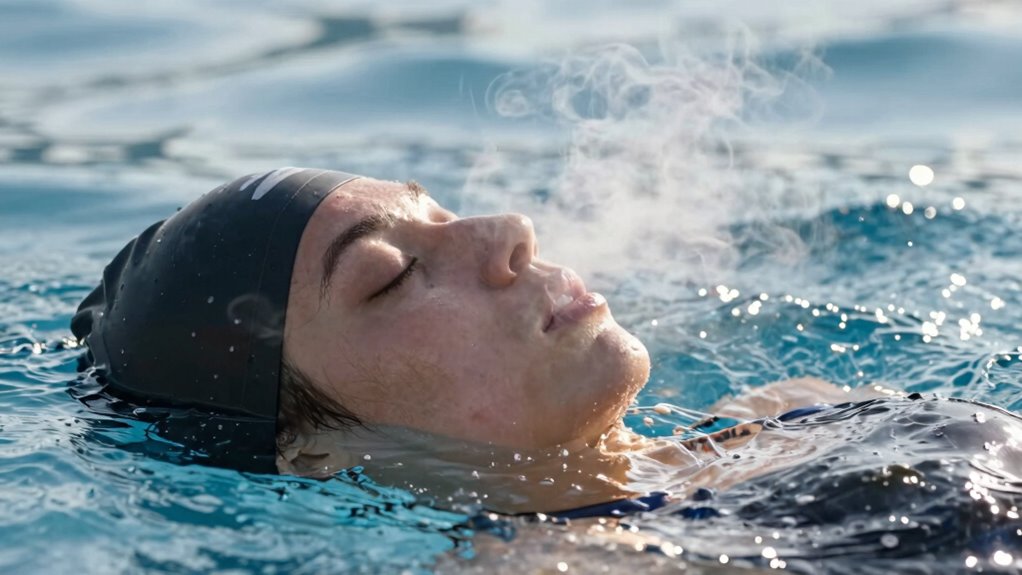
Calm breathing plays a crucial role in preventing panic and enhancing your endurance in cold water. When you focus on slow, steady breaths, you activate your parasympathetic nervous system, which reduces stress and calms your mind. This stress reduction helps prevent the rapid heartbeat and hyperventilation associated with panic, allowing you to stay composed. As you maintain controlled breathing, your mental resilience strengthens, making it easier to face the cold with confidence. Incorporating proper breathing techniques can further improve your ability to manage stress and extend your endurance. Developing breath control skills is essential for building confidence and effectively handling challenging conditions. Additionally, understanding the influence of astrology on personality traits can sometimes boost self-confidence and mindset, indirectly supporting your resilience. Recognizing the importance of holistic health can also enhance your overall ability to stay calm under stress. Practicing mindfulness and body awareness can further reinforce your capacity to remain centered during difficult situations. This simple technique is key to better endurance and emotional control.
Tips for Incorporating Breathing Exercises Before and During Cold Water
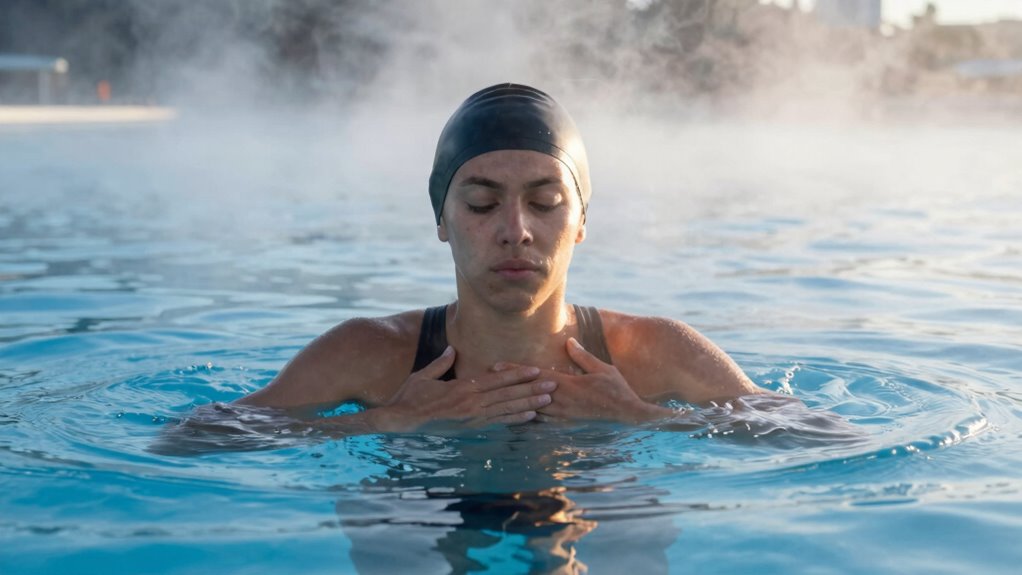
To stay calm in cold water, start practicing deep breathing exercises beforehand to steady your nerves. Keep a steady breath rhythm during immersion to maintain control, and consider using breath-hold techniques to manage your body’s response. Incorporating these methods can help you remain focused and composed in challenging conditions.
Practice Deep Breathing Exercises
Practicing deep breathing exercises before and during cold water exposure can markedly help you stay calm and control your response. These exercises enhance your lung capacity, allowing you to take deeper, more controlled breaths that stabilize your heart rate. As you focus on your breathing, you build mental resilience, making it easier to manage panic and discomfort. Incorporate slow, deliberate inhales through your nose, filling your lungs fully, then exhale steadily to release tension. Repeating this process helps to activate your parasympathetic nervous system, promoting relaxation. Consistent practice strengthens your ability to maintain composure, even in challenging conditions. Over time, deep breathing becomes an instinctive tool, empowering you to stay calm and focused in cold water situations.
Maintain Steady Breath Rhythm
Maintaining a steady breath rhythm during cold water exposure helps you stay focused and in control. Breath control is essential for preventing panic and managing your body’s response to the cold. Use relaxation techniques to keep your breathing smooth and consistent, avoiding rapid or shallow breaths. Before entering the water, practice inhaling and exhaling at a gentle, even pace to establish a rhythm. During immersion, consciously monitor your breath and make small adjustments to maintain that steady pattern. This consistency helps reduce stress and keeps your nervous system calm. Remember, a composed breathing rhythm signals your body to relax and conserve energy, making it easier to handle the cold and stay centered throughout your experience.
Use Breath-Hold Techniques
Incorporating breath-hold techniques into your cold water routine can considerably enhance your ability to stay calm and conserve energy. Breath hold benefits include reducing cold water anxiety by helping you control your body’s stress response and slowing your heart rate. Before entering the water, practice controlled breath holds to build mental resilience and familiarize yourself with the sensation of holding your breath. During immersion, use gentle breath holds to deepen your sense of calm and prevent hyperventilation. These techniques shift your focus away from discomfort and help manage panic triggers. Over time, regular practice strengthens your ability to stay relaxed, even in challenging conditions. Remember, safe execution is critical—never push beyond your comfort zone or hold your breath too long.
Common Mistakes to Avoid When Practicing Cold Water Breathing
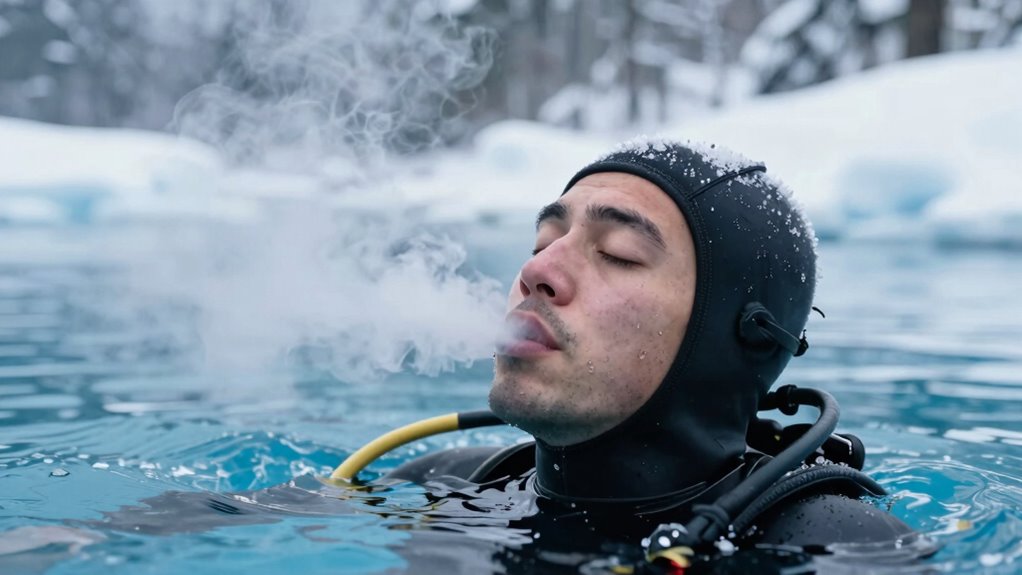
One common mistake is holding your breath or forcing your breathing, which can increase stress and make it harder to stay calm. Instead of breath holding, focus on maintaining a steady, relaxed rhythm. Forcing your breath can lead to hyperventilation or panic, defeating the purpose of calming your nervous system. Avoid using mental visualization to control your breathing in a way that creates tension; instead, visualize smooth, even breaths flowing effortlessly. Trying to control every inhale and exhale tightly can cause unnecessary anxiety. Remember, gentle, relaxed breathing is key. Stay mindful of your breath without pressuring yourself to breathe perfectly. This approach helps you stay centered and prevents the common mistake of over-controlling your breath during cold water exposure.
Final Tips: Combining Breathing With Mindfulness for Cold Water Confidence
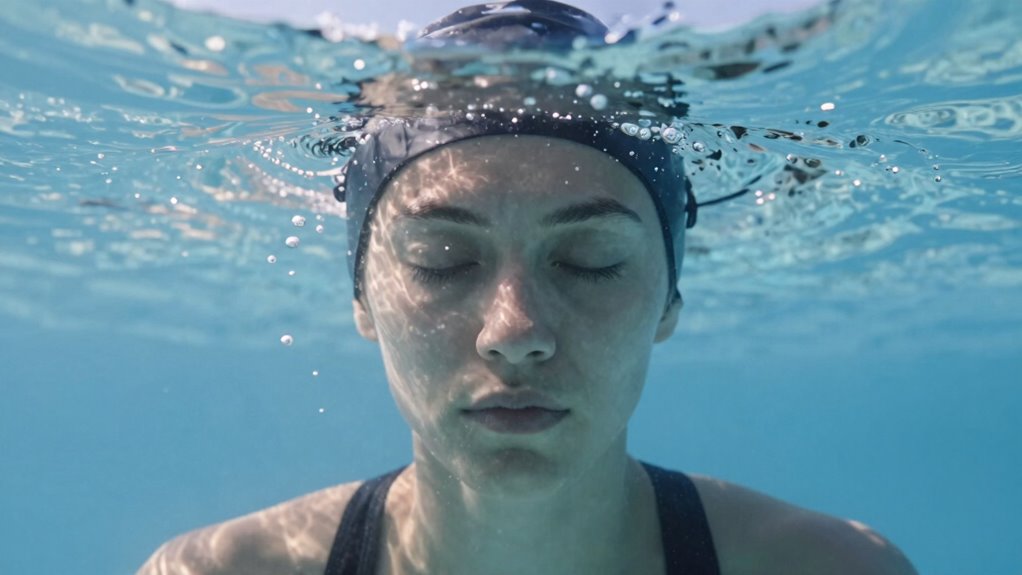
To build confidence in cold water, pairing your steady breathing with mindfulness techniques can make a significant difference. Mindfulness integration helps you stay present and focused, reducing panic and enhancing confidence building. As you practice, visualize calming images:
- The gentle ripple of water around you
- Your breath flowing smoothly, like waves on a shore
- The warmth of calmness spreading through your body
This mental imagery reinforces your connection between breath and awareness. Incorporating mindfulness into your cold water routine establishes a sense of control and resilience. By consciously observing your sensations and staying grounded, you develop trust in your ability to remain calm. These combined practices strengthen your mental preparedness, making each cold water experience more confident and controlled.
Frequently Asked Questions
Can Cold Water Breathing Techniques Be Used for Other Stressful Situations?
Yes, cold water breathing techniques can be used for stress management and anxiety reduction in various stressful situations. When you focus on controlled breathing, you activate your parasympathetic nervous system, helping you stay calm and centered. Practice these techniques during daily stresses or high-anxiety moments to improve your resilience and emotional regulation. Consistent use can make it easier to manage stress and reduce anxiety in everyday life.
How Long Should I Practice Cold Water Breathing to See Benefits?
You should practice cold water breathing for at least 10-15 minutes daily over several weeks to see noticeable benefits. Consistency is key, as regular practice helps your body adapt and enhances your calmness in stressful situations. Over time, you’ll likely experience improved stress management, better focus, and increased resilience. Stick with the routine, and you’ll gradually notice your ability to stay calmer in cold water and other challenging circumstances.
Are There Age Restrictions for Practicing Cold Water Breathing Exercises?
Age limitations for practicing cold water breathing exercises depend on individual health, but generally, beginners should be cautious, especially children and older adults. For beginner safety, it’s best to consult a healthcare professional before starting, as younger or older individuals may have specific risks. If approved, start slowly, listen to your body, and avoid pushing too hard. Proper guidance guarantees you benefit safely from this calming practice.
What Equipment or Clothing Is Recommended During Cold Water Practice?
You should wear a well-fitting wetsuit suited for cold water to maintain warmth and buoyancy. Consider thermal accessories like gloves, booties, and a hood to protect extremities. Proper wetsuit selection depends on water temperature, so choose one with appropriate thickness and flexibility. These items help prevent heat loss, ensuring comfort and safety during cold water practice. Always prioritize equipment that enhances insulation and mobility.
How Quickly Can I Expect to Feel Calmer Using This Breathing Method?
You can expect to feel an instant calm within a few breaths when you practice this breathing method. Focusing on controlled breathing duration, such as slow, deep inhales and exhales, helps activate your parasympathetic nervous system. With consistent practice, you’ll notice a reduction in cold water shock and anxiety, making it easier to stay calm and composed. Over time, this technique becomes quicker and more effective at calming your mind and body.
Conclusion
Mastering this breathing pattern could be your secret weapon in cold water. When panic lurks, will you have the calm focus to stay afloat? The key lies in your breath—quiet, steady, controlled. Practice consistently, and you might just disclose a new level of confidence you never knew possible. Are you ready to discover how a simple breath can transform your cold water experience forever? The moment to try is closer than you think.