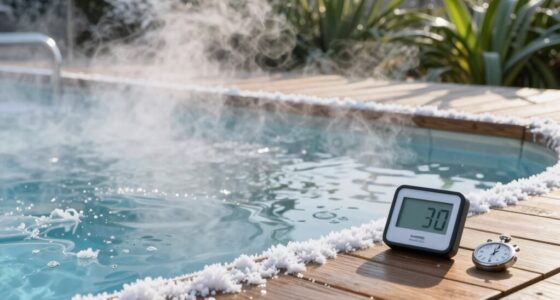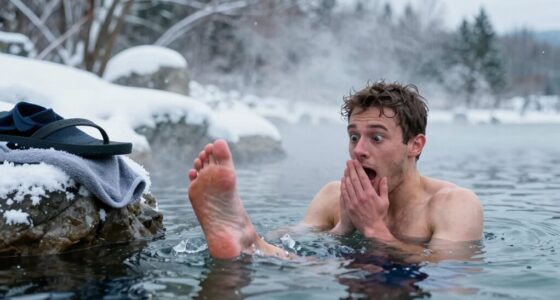

In your first month of cold exposure, don’t skip mental preparation or jump straight into intense cold without easing in. Avoid neglecting your body’s signals, like dizziness or discomfort, and focus on controlled breathing to stay calm. Overdoing it too soon can upset hormonal balance and increase stress. Consistency is key—gradually increase duration and intensity while maintaining patience. Keep these tips in mind, and you’ll set yourself up for steady progress and better safety. If you want to learn more, there’s plenty to discover.
Key Takeaways
- Jumping into cold exposure without mental preparation increases stress and risk of panic.
- Overestimating tolerance can lead to overexposure, causing discomfort or health issues.
- Neglecting proper breathing techniques can heighten anxiety and reduce safety.
- Skipping warm-up routines or ignoring body signals may result in adverse reactions.
- Lack of patience and consistency hampers adaptation and long-term benefits.
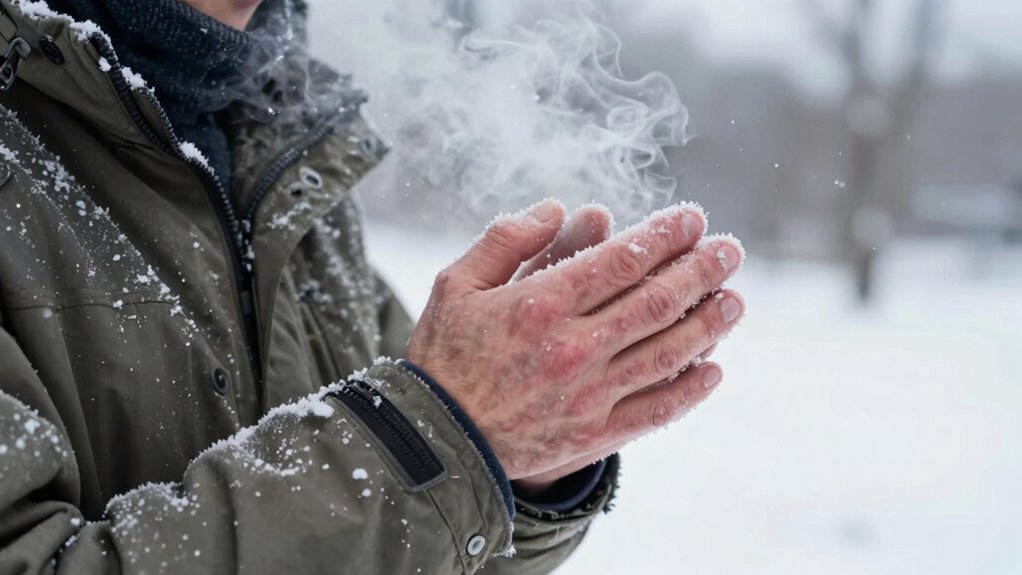
Starting cold exposure without proper preparation can lead to common mistakes that hinder your progress and even pose health risks. Many beginners overlook the importance of mental adaptation, which is essential for handling the shock of cold temperatures. Jumping straight into cold water or ice baths without gradually acclimating your mind can cause unnecessary stress, anxiety, or even panic. It’s important to set realistic expectations and focus on mental readiness before increasing exposure intensity. Instead of diving in headfirst, start with shorter durations and lower intensities, giving your mind time to adapt to the discomfort. This mental preparation helps you remain calm and in control, reducing the risk of adverse reactions.
Start cold exposure gradually to ensure mental readiness and reduce health risks.
Another common mistake involves neglecting your hormonal response to cold exposure. When you expose your body to cold, your nervous system triggers a hormonal cascade, releasing substances like norepinephrine and endorphins, which influence your mood, alertness, and pain perception. Failing to recognize or support this hormonal response can slow your progress and dampen the benefits of cold exposure. For example, if you push yourself too hard or too fast, you may overwhelm your system, causing excessive stress that hampers recovery and adaptation. Instead, focus on controlled, moderate exposure to allow your hormonal response to optimize your resilience and mental clarity over time.
Many beginners also underestimate the importance of proper breathing during cold exposure. Shallow or irregular breathing can increase stress levels and make it harder to stay calm. Learning to breathe deeply and steadily helps regulate your nervous system, enhancing mental adaptation and supporting a healthy hormonal response. With conscious breathing, you can maintain focus, reduce panic, and even improve circulation, which aids in quicker adaptation to cold. Recognizing the significance of body’s physiological response to cold can further enhance your experience and safety during exposure.
Additionally, skipping warm-up routines or ignoring your body’s signals can lead to setbacks. Always listen to your body—if you feel dizzy, excessively cold, or uncomfortable, it’s better to pause or end your session. Consistency and patience are key; rushing into longer or colder exposures without proper preparation can undo your progress and increase health risks. Over time, with gradual increases and a focus on mental readiness, your body will adapt more effectively, allowing you to enjoy the full range of benefits cold exposure offers.

High Visibility Cold Weather Safety Pants, Tear Resistant, Water Resistant, ANSI Class E, Lime, Large, SAFEGEAR
Hi-Vis Tear Resistant Safety Pants are fluorescent lime. Made of 100% ANSI compliant polyester rip-stop oxford fabric with…
As an affiliate, we earn on qualifying purchases.
As an affiliate, we earn on qualifying purchases.
Frequently Asked Questions
How Do I Know if I’M Overexposing Myself to Cold?
You know you’re overexposing yourself to cold if you experience persistent shivering, numbness, or tingling sensations that don’t subside. These signs indicate your body is struggling to adapt through cold adaptation. If you notice increased fatigue or difficulty maintaining body warmth, it’s a sign to scale back. Listening to your body’s signals and avoiding prolonged exposure will help prevent overexposure and promote safe cold adaptation.
Can Cold Exposure Worsen Existing Health Conditions?
Cold exposure can have serious effects if you have existing health conditions. It might worsen symptoms or trigger adverse reactions if you’re not cautious. During cold adaptation, your immune response can become compromised, making you more vulnerable to illness. Always consult a healthcare professional before starting cold exposure, especially if you have health issues. Don’t underestimate the power of cold—it’s a force that demands respect and proper management.
What Should I Do if I Experience Numbness or Pain?
If you experience numbness concerns or pain during cold exposure, stop immediately. Prioritize pain management by warming the affected area gradually with dry, insulated clothing or a warm cloth. Avoid sudden heat, which can cause shock. Listen to your body, and if numbness or pain persists, consult a healthcare professional. Always make sure your cold exposure sessions are safe and within your tolerance to prevent injury.
Is There an Ideal Time of Day for Cold Exposure?
You can do cold exposure anytime that fits into your schedule, but many find morning routines effective for boosting alertness and energy. Starting your day with cold exposure can set a positive tone and improve circulation. Alternatively, evening sessions offer benefits like relaxation and better sleep. Choose a time that aligns with your lifestyle, ensuring consistency and comfort, so you can reap the full benefits without disrupting your daily rhythm.
How Does Cold Exposure Affect Mental Health Initially?
You might worry cold exposure worsens your mood initially, but it actually boosts mental clarity and mood regulation. When you start, you could feel discomfort or anxiety, yet these sensations often diminish with regular practice. Initially, cold exposure stimulates your nervous system, releasing endorphins that elevate your mood. Over time, this can lead to improved emotional resilience, helping you handle stress better and fostering a more positive mental outlook.

Mustang Cold Water Immersion Suit with Harness
Approval: USCG – UL1197 – Immersion Suits 160.171 – USCG/MED SOLAS 2010
As an affiliate, we earn on qualifying purchases.
As an affiliate, we earn on qualifying purchases.
Conclusion
Just like jumping into icy water without a plan can leave you overwhelmed, rushing into cold exposure without proper preparation often leads to setbacks. Remember, even seasoned adventurers learned to respect the cold’s power—starting slow and listening to your body. In your first month, avoid common mistakes, stay consistent, and trust the process. With patience, you’ll build resilience—like a snowball rolling downhill, gaining momentum and strength with each careful step.

The Way of The Iceman: How The Wim Hof Method Creates Radiant, Longterm Health―Using The Science and Secrets of Breath Control, Cold-Training and Commitment
As an affiliate, we earn on qualifying purchases.
As an affiliate, we earn on qualifying purchases.

JZCreater Thermal Underwear for Men, Mens Long Johns Thermal Underwear Set, Fleece Lined Base Layer for Cold Weather Black
[Stay Warm in Cold Weather] Our JZCreater Men's Fleece Lined Base Layer Set is designed to keep you…
As an affiliate, we earn on qualifying purchases.
As an affiliate, we earn on qualifying purchases.