
TL;DR

Get home appliances delivered free with Prime
- Fast, free delivery on millions of items
- Prime Video, Amazon Music and more included
- Member-only deals all year
An Ideal Home report says closing curtains just before sunset can add insulation at windows and may help homes stay comfortable longer. The writer measured temperature differences of up to 2°C across thermal curtains, but this is a personal observation, not a verified estimate of energy or bill savings.
An Ideal Home writer reports that closing curtains just before sunset helped her home feel warmer in the evening, with a temperature reading showing a 2°C difference across thermal curtains. The report says the habit may slow heat loss through windows, but it does not quantify energy or bill savings, which depend on the home and its window coverings.
The writer said she resumed closing curtains before dark over the course of a week and found the rooms felt warm for longer, reducing her perceived need to run central heating for an extra hour. She measured temperatures on either side of closed curtains after sunset, reporting the largest difference—2°C—in rooms with thermal curtains. These are observations from one home, not results from a controlled test, and the report does not state the measuring equipment or exact measurement conditions.
Stuart Middleton, So Energy’s consumer energy expert, said windows can be a source of heat loss and that curtains add a layer that can slow it. He said thick, well-fitting or thermally lined curtains may be particularly effective. The report also found smaller temperature differences at the writer’s home: just under 1°C across wooden blinds and about half a degree across standard curtains. Those readings describe the writer’s experience and should not be treated as expected results for every household.
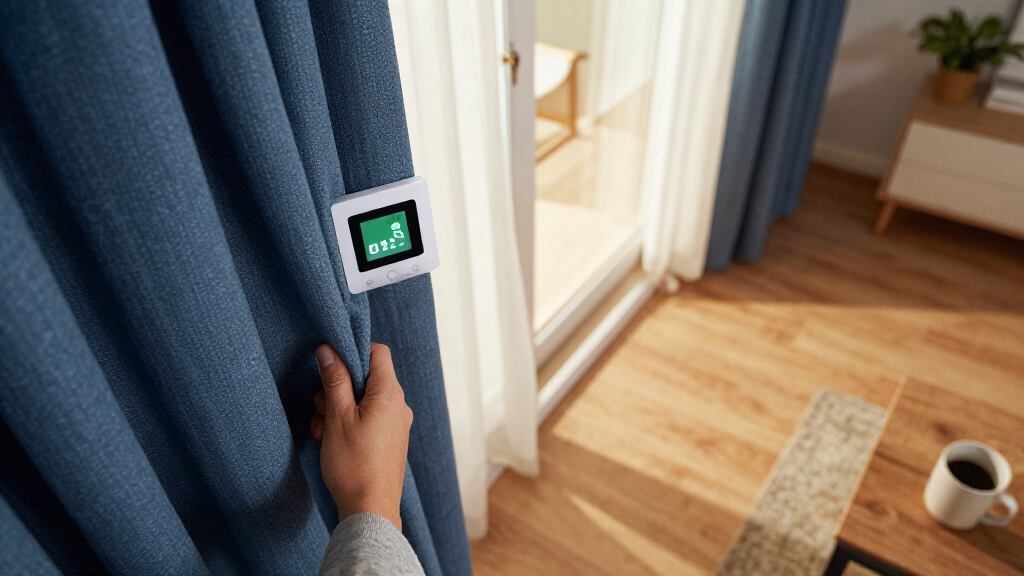
The suggested timing is shortly before sunset, rather than during daylight, so curtains can retain heat gained from sunlight. The writer recommends checking the local sunset time and setting a reminder. The article also describes automated curtain devices as an option for people who are away at that time, but it gives no independent evidence that these products pay for themselves through energy savings.
How Curtains May Affect Evening Heating
For households trying to limit heating use during colder evenings, curtains are a relatively simple measure that requires no change to the heating system. By slowing heat loss at windows, they may help a room stay comfortable for longer. Whether that leads to lower energy use depends on what residents would otherwise do: a household that keeps its heating setting unchanged may not use less energy, while one able to delay turning the heat on could reduce heating time.
The reported 2°C difference is a temperature reading across a particular set of thermal curtains, not a 2°C increase in the room’s overall temperature and not an estimate of energy saved. Readers should not use it to predict a bill reduction. The practical value is more limited but still relevant: closing appropriate curtains before dark may improve comfort, while the size of any heating benefit remains home-specific and unmeasured in the report.
thermal insulated curtains blackout window panels
As an affiliate, we earn on qualifying purchases.
As an affiliate, we earn on qualifying purchases.
What the Home Test Found
The Ideal Home report frames the habit as an autumn and winter measure and notes that window coverings differ in their insulating effect. Its writer compared thermal curtains, wooden blinds, standard curtains and fabric blinds in her own home. She described the thermal curtains as the most effective in her experience, followed by wooden blinds; the supplied report gives no numerical reading for fabric blinds.
The article recommends closing curtains around sunset to retain warmth while making use of daylight beforehand. It gives one example of a local sunset at 4:52 p.m. and a curtain-closing reminder at about 4:30 p.m.; that time is specific to the writer’s location and date, not a general schedule. The report also mentions a phone reminder and automated curtain controls, including a device with a light sensor, as ways to manage the timing.
The source refers to energy-price changes, including a 4% rise in October and forecasts of increases of 16% to 25% in January, but the supplied text does not identify the year, tariff, geography or forecasting sources for those figures. They cannot be presented as current, general price data. The article’s core test concerns comfort and temperature readings, not a measured change in household energy consumption.
““Closing your curtains at dusk is a simple way to help keep your home warm as temperatures drop.””
— Stuart Middleton, So Energy’s consumer energy expert
thermal curtain liners for existing curtains
As an affiliate, we earn on qualifying purchases.
As an affiliate, we earn on qualifying purchases.
Savings Depend on Each Home
The report does not measure how much electricity or gas the writer saved, whether her heating use changed on a meter, or how much money the habit saved. It also does not provide enough detail about the temperature readings to establish how they would compare with a controlled test. The reported differences should be understood as observations in one home rather than proof of a typical outcome.
Results are likely to vary with factors identified in the report, including window type, curtain thickness and fit, and insulation. The source does not quantify the effect of glazing, gaps around curtains, room size, outdoor temperature or heating settings. It is also unclear whether the price figures mentioned in the article apply to a particular market or remain relevant, because their year and basis are not specified.
indoor window thermometer temperature monitor
As an affiliate, we earn on qualifying purchases.
As an affiliate, we earn on qualifying purchases.
What Households Can Try
Households can try closing curtains shortly before local sunset and judge whether rooms feel more comfortable, while keeping in mind that this does not establish a specific bill saving. Checking sunset time and using a reminder are low-cost ways to test the routine. Curtains should be drawn in a way that does not block radiators or other heat sources, as the report does not assess the effect of different room arrangements.
Anyone considering automated controls can compare device cost and compatibility with their existing curtains before buying; the article does not provide evidence of a financial payback. A more reliable estimate of savings would require measurements of energy use over comparable periods while accounting for weather, heating settings and occupancy. No such follow-up data or independent test is included in the supplied report.
automatic curtain opener timer smart curtain motor
As an affiliate, we earn on qualifying purchases.
As an affiliate, we earn on qualifying purchases.
Key Questions
Does closing curtains before sunset save energy?
It may help slow heat loss through windows and could reduce the need for heating in some homes. The report does not measure energy use or establish a typical saving, so the effect on bills is unknown.
When should I close my curtains?
The report recommends closing them shortly before local sunset, allowing daylight to enter first. Sunset varies by location and date, so its example time is not a universal schedule.
Which window coverings performed best in the report?
The writer said thermal curtains performed best in her home, followed by wooden blinds. She reported a 2°C difference across thermal curtains, just under 1°C across wooden blinds and about half a degree across standard curtains; these are personal readings, not guaranteed results.
Can I calculate my savings from the reported 2°C difference?
No. The 2°C figure is a temperature difference measured across curtains in one home, not a room-wide temperature change or an energy-saving measurement. The report provides no basis for converting it into a bill estimate.
Source: rss
NFL season / tailgating Picks
team gear
As an affiliate, we earn on qualifying purchases.