
Cold exposure activates your autonomic nervous system, triggering both sympathetic and parasympathetic responses. Initially, it prompts a fight-or-flight reaction, increasing heart rate, vasoconstriction, and stress hormones to maintain core temperature. Over time or with relaxation techniques, it can stimulate your parasympathetic system, promoting calmness, better heart rate variability, and recovery. Understanding this balance can help you harness cold therapy for stress resilience and relaxation—if you explore further, you’ll uncover how to optimize these effects.
Key Takeaways
- Cold exposure activates the sympathetic nervous system, triggering vasoconstriction, increased heart rate, and stress hormone release.
- The parasympathetic system can also be stimulated by cold, promoting relaxation, vasodilation, and heart rate reduction.
- Sympathetic response prepares the body for cold stress, while parasympathetic activation supports recovery and calmness.
- Regular cold exposure may enhance neural pathways regulating thermoregulation and stress resilience.
- The balance between sympathetic and parasympathetic responses determines overall adaptation and stress management during cold exposure.
What Is the Autonomic Nervous System and How Does Cold Exposure Affect It?
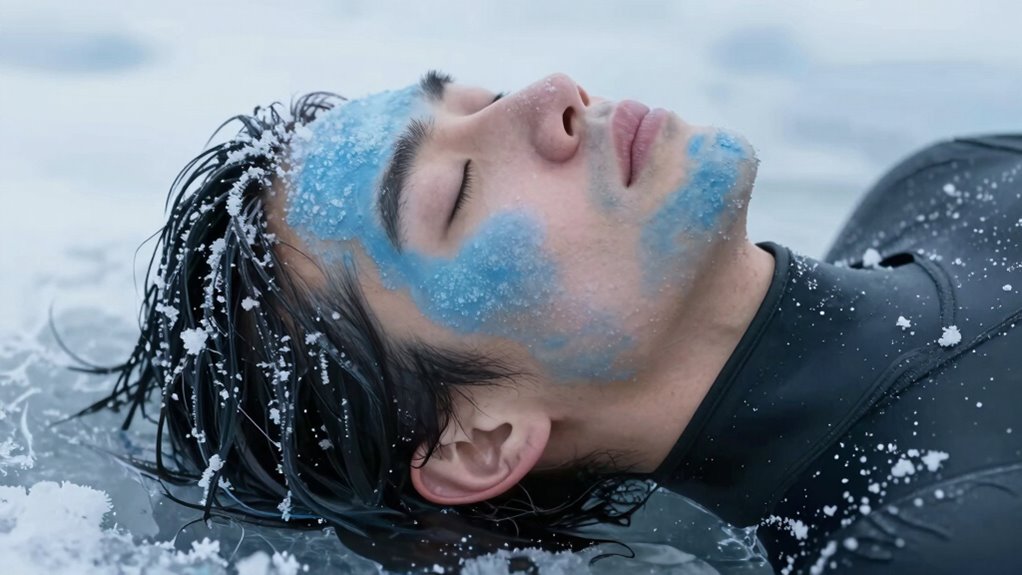
The autonomic nervous system (ANS) controls involuntary functions in your body, such as heart rate, digestion, and blood flow. When exposed to cold, your body activates autonomic regulation to maintain stability. Cold triggers a response that shifts the nervous system balance toward sympathetic dominance, preparing you to handle the stress. This process causes blood vessels to constrict and increases heart rate, helping preserve core temperature. Your body’s ability to adapt relies on a finely tuned ANS that manages these automatic responses efficiently. Regular cold exposure can influence this balance, potentially enhancing your overall autonomic regulation. Understanding how cold impacts your nervous system highlights the importance of autonomic balance for resilience and well-being.
How Does Cold Exposure Trigger the Sympathetic ‘Fight-or-Flight’ Response?

When your body encounters cold temperatures, it rapidly activates the sympathetic nervous system, commonly known as the “fight-or-flight” response. This triggers your thermoregulation mechanisms to preserve core warmth. You might notice your blood vessels constrict through peripheral vasoconstriction, reducing blood flow to your extremities. This process helps conserve heat but causes your fingers and toes to feel numb or cold. Your heart rate increases, pumping blood more efficiently to essential organs. You may also experience:
- Rapid breathing
- Pupil dilation
- Sweating reduction
- Increased adrenaline release
- Heightened alertness
These responses prepare you to face the cold, prioritizing core temperature maintenance over limb comfort. The activation of the sympathetic nervous system is your body’s quick, protective reaction to sudden cold exposure. Additionally, the body’s response can include metabolic adjustments to generate additional heat and maintain internal stability.
Can Cold Exposure Calm Your Nerves? The Parasympathetic Relaxation Explained
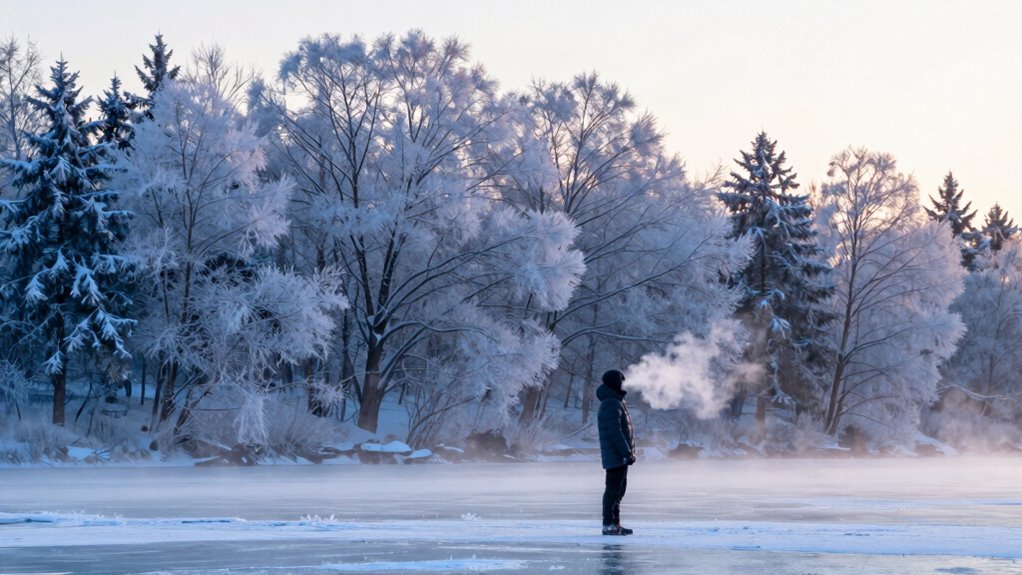
Cold exposure can activate your parasympathetic nervous system, encouraging relaxation and calmness. When you expose yourself to cold, your body may shift from the stress response to a state of rest and recovery. This process helps soothe your nerves and promotes a sense of tranquility. Additionally, engaging in Free Floating techniques, such as controlled breathing during cold exposure, can further enhance your relaxation response. Incorporating nervous system activation strategies can optimize the calming effects of cold exposure on your nerves. Recognizing how autonomic nervous system functions respond to cold exposure can help you better harness its benefits for relaxation and stress reduction. Understanding parasympathetic activation can also guide you in developing effective cold exposure practices for overall well-being. Exploring physiological responses to cold can deepen your understanding of how your body adapts to stress and recovery.
Cold’s Effect on Parasympathetic
Although cold exposure might initially cause discomfort, it can activate your parasympathetic nervous system, promoting relaxation and calmness. When exposed to cold, your body responds with cold-induced vasodilation, increasing blood flow to essential organs and signaling relaxation. This process stimulates the vagus nerve, enhancing parasympathetic activity. Visualize:
- Your skin cooling and blood vessels expanding
- A gentle, calming sensation spreading through your body
- Heart rate slowing as your nerves relax
- Breathing becoming steady and deep
- A sense of tranquility washing over you
This shift encourages your body to rest and recover, making cold exposure a potential tool for calming nerves and reducing stress. Additionally, understanding the nervous system’s response can help you optimize cold therapy for relaxation and health benefits. Incorporating parasympathetic activation techniques into your routine may support long-term nervous system resilience and overall well-being. Moreover, engaging in regular cold exposure may foster nervous system adaptability, enhancing your capacity to handle stress more effectively. Recognizing the importance of autonomic nervous system balance can help you tailor your cold exposure practices for maximum calming effect.
Relaxation Response Activation
The activation of the relaxation response is a key way cold exposure can soothe your nerves. When you expose yourself to cold, it can trigger calming mechanisms in your nervous system. Combining cold exposure with breathing exercises or meditation techniques enhances this effect. Slow, deep breaths help activate your parasympathetic nervous system, promoting relaxation. Meditation techniques focus your mind, reducing stress and calming your nerves further. Cold exposure may slow your heart rate and lower cortisol, supporting relaxation. Additionally, understanding how autonomic nervous system regulation functions can help you optimize these techniques for better stress management. By intentionally practicing breathing exercises or meditation during or after cold exposure, you reinforce the calming response. This synergy helps you manage stress, improve mental clarity, and foster a sense of calm. Incorporating relaxation techniques into your routine can maximize the benefits of cold exposure for nervous system health. Exploring paradoxical effects of cold exposure reveals how it can reset your stress response pathways, enhancing overall resilience. Cold exposure, paired with relaxation techniques, offers a powerful way to soothe your nervous system naturally and may improve your overall stress resilience.
What Are the Main Physiological Effects of Cold on Heart Rate, Blood Flow, and Stress Hormones?
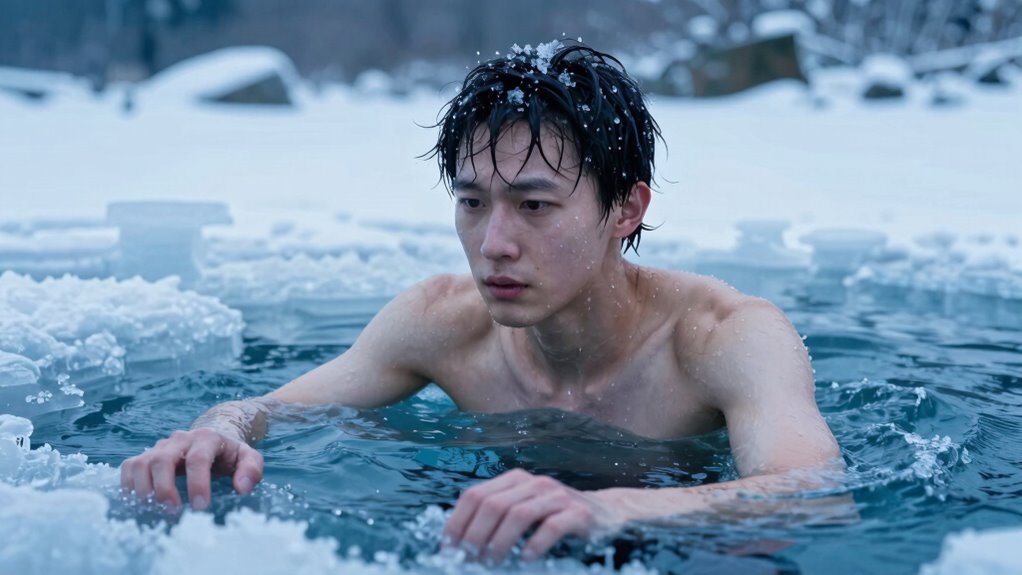
When exposed to cold, your body responds by activating several physiological mechanisms that affect your heart rate, blood flow, and stress hormone levels. You might notice your heart rate dropping temporarily as blood vessel constriction directs blood away from your extremities to preserve core warmth. This response influences heart rate variability, reflecting your nervous system’s balance. Cold exposure also triggers a surge of stress hormones like adrenaline and cortisol, preparing you for survival. Visualize:
- Blood vessels narrowing, limiting blood flow to skin
- Heart rate slowing or fluctuating
- Elevated adrenaline levels for quick energy
- Increased blood pressure due to constriction
- Cortisol release to manage stress response
These effects work together to maintain your internal temperature and prepare your body for ongoing cold stress. Awareness of the Toilet Flushing Mechanisms can help manage water usage during cold weather, ensuring efficient resource conservation. Additionally, understanding the interplay between parasympathetic and sympathetic nervous system responses can help you better manage your physical reactions to cold exposure.
How to Practice Cold Exposure Safely and Maximize Its Nervous System Benefits
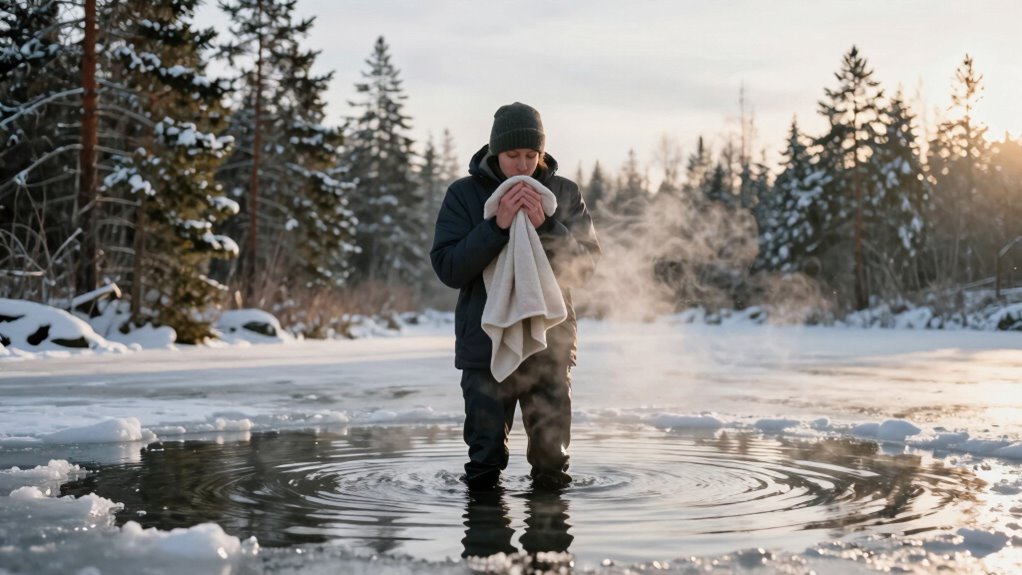
To practice cold exposure safely and maximize its nervous system benefits, start gradually by introducing brief, controlled sessions into your routine. Focus on your breathing techniques, using slow, deep breaths to help stay calm and regulate your stress response. Incorporate mental visualization to prepare your mind for the cold, imagining sensations of warmth or resilience to build mental strength. Avoid pushing yourself too hard initially—listen to your body and increase exposure time gradually. Always guarantee you’re in a safe environment, and consider consulting a healthcare professional if you have health concerns. Consistency is key; over time, controlled cold exposure combined with mindful breathing and visualization can help balance your nervous system and enhance overall resilience.
What Cold Exposure Reveals About Building Nervous System Resilience
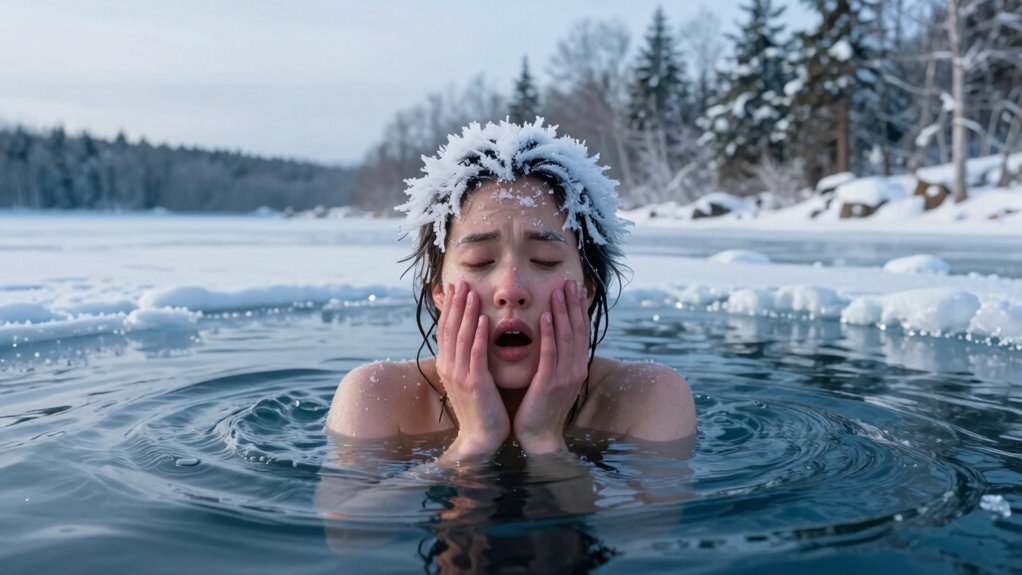
Cold exposure shows you how to strengthen your nervous system by promoting balance and resilience. It activates your parasympathetic nervous system, helping you recover and stay calm under stress. Over time, it teaches your body to adapt, making your nervous system more robust and responsive.
Cold Stimulates Nervous Balance
Exposure to cold triggers your nervous system to adapt by strengthening the balance between the sympathetic and parasympathetic branches. This process refines neural pathways involved in thermoregulatory responses, making your body more efficient at managing temperature shifts. When exposed to cold, your body initiates a cascade of responses that recalibrate your nervous system’s balance. You might imagine:
- Shivering to generate heat
- Blood vessels constricting to conserve warmth
- Heart rate adjusting to cold stimuli
- Breathing becoming more regulated
- Neural signals fine-tuning your body’s responses
These adaptations enhance your resilience, helping you respond more effectively to future cold exposures. Over time, your nervous system becomes more resilient, maintaining equilibrium through improved neural pathways and thermoregulatory responses.
Parasympathetic Activation Benefits
When your nervous system encounters cold stimuli, it activates the parasympathetic branch to promote relaxation and recovery. This activation primarily involves the vagus nerve, which helps regulate essential functions and reduces stress. As a result, your heart rate variability improves, indicating a balanced and resilient nervous system. Enhanced heart rate variability is associated with better emotional regulation and cardiovascular health. Cold exposure stimulates the vagus nerve, strengthening its function over time, which can lead to a calmer, more adaptable nervous system. This parasympathetic activation supports recovery, decreases inflammation, and fosters resilience against daily stressors. By regularly exposing yourself to cold, you train your nervous system to respond more efficiently, building a foundation for overall health and emotional stability.
Stress Adaptation Mechanisms
Understanding how your nervous system adapts to stress reveals valuable insights into building resilience. Cold exposure triggers your body’s natural cold adaptation, strengthening nervous resilience over time. This process involves several key mechanisms:
- Activation of thermoreceptors that signal cold stress
- Increased sympathetic response to maintain core temperature
- Enhanced parasympathetic activity for recovery
- Improved regulation of stress hormones like cortisol
- Neural plasticity that fortifies stress response pathways
As you repeatedly face cold, your nervous system becomes more efficient at managing stress, reducing overreactions and promoting calmness. This adaptation process can also positively influence other bodily systems involved in stress regulation, helping to promote overall health. Cold adaptation teaches your nervous system to handle future stressors more effectively, boosting overall resilience. This dynamic balance between sympathetic and parasympathetic responses is vital for long-term nervous system health. Understanding nervous system functions helps clarify how these adaptations contribute to overall well-being.
Frequently Asked Questions
How Long Should Cold Exposure Sessions Last for Optimal Nervous System Benefits?
For ideal nervous system benefits, aim for cold exposure sessions lasting about 5 to 10 minutes, following duration guidelines that prevent overexposure. Start with shorter durations and gradually increase as your body adapts. Consider intensity considerations by ensuring the cold isn’t overwhelming; a temperature around 50-59°F (10-15°C) is effective. Always listen to your body and avoid pushing beyond comfort to maximize benefits safely.
Can Cold Exposure Improve Mental Health and Reduce Anxiety?
Yes, cold exposure can boost your mental health and reduce anxiety. It encourages you to practice mindfulness practices as you focus on your breath and sensations, helping you stay present. Additionally, cold exposure aids hormonal regulation, releasing endorphins and reducing stress hormones like cortisol. Regular sessions can improve mood, resilience, and overall well-being, making it a valuable addition to your mental health routine.
Does Cold Exposure Influence Sleep Quality and Circadian Rhythms?
Cold exposure can dramatically improve your sleep quality and regulate your circadian rhythms. It triggers thermoregulation benefits, helping your body find balance, and boosts hormonal regulation, making you feel more energized and rested. By cooling your body before bed, you reset your internal clock, leading to deeper, more restorative sleep. This simple practice can transform your nights, making you wake up refreshed, recharged, and ready to conquer your day.
Are There Specific Cold Exposure Techniques Suited for Beginners?
Yes, as a beginner, you should start with simple cold exposure techniques like cold showers or splash baths. Focus on breathing techniques to stay calm and gradually adapt your body to colder temperatures. Begin with shorter durations and slowly increase exposure time as your body adjusts. This gradual adaptation helps prevent shock and makes cold exposure safer and more effective, building your confidence over time.
How Does Cold Exposure Affect Other Autonomic Functions Like Digestion?
Did you know cold exposure can temporarily shift your autonomic balance? It often reduces digestive regulation by activating your sympathetic nervous system, which slows digestion. This effect can last for minutes to hours, depending on exposure. While beneficial for alertness, it may disrupt digestion if prolonged. You can support autonomic functions by balancing cold exposure with relaxation techniques, helping your nervous system stay in harmony.
Conclusion
Did you know that regular cold exposure can boost your nervous system resilience by up to 30%? By understanding how it toggles your sympathetic and parasympathetic responses, you can harness its benefits safely. Whether it sharpens your alertness or helps you relax, cold exposure offers powerful tools for managing stress and improving overall well-being. Start slowly, listen to your body, and access the incredible potential your nervous system holds.