Curved treadmills feel harder at the same speed because their shape increases muscle engagement, requiring more effort to propel yourself forward. You use your body weight and balance to overcome inertia and friction, which naturally makes the workout more intense. Their design promotes better biomechanics, engaging muscles like calves, hamstrings, and core more effectively. Want to understand how to optimize your effort on one? Keep exploring to learn more.
Get ready for Prime Big Deal Days — try Prime free
Exclusive member deals on October 6–7, plus fast free delivery. Cancel anytime.
As an affiliate, we earn on qualifying purchases.
Key Takeaways
- Curved treadmills require greater muscular effort to propel the surface due to their non-motorized, self-powered design.
- The curved shape shifts biomechanics, demanding more stabilization and engagement from core and leg muscles.
- Overcoming inertia and surface resistance increases effort, making each stride feel more intense despite the same speed.
- Maintaining proper posture and balance on the curve involves more muscle activation, heightening perceived exertion.
- The natural biomechanics promoted by curved treadmills lead to higher calorie burn and muscle engagement at equivalent speeds.
As an affiliate, we earn on qualifying purchases.
What Is a Curved Treadmill and How Is It Different?
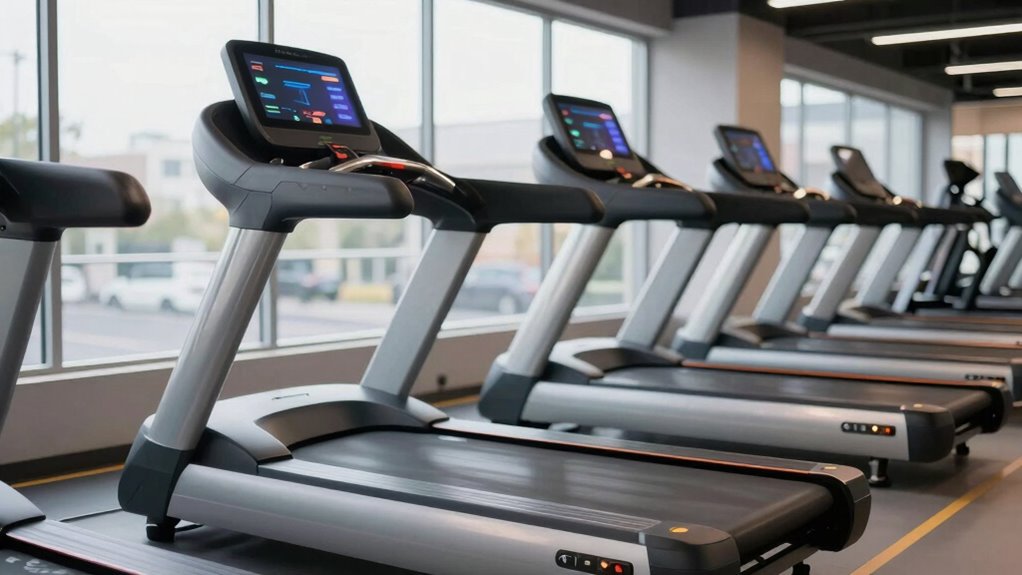
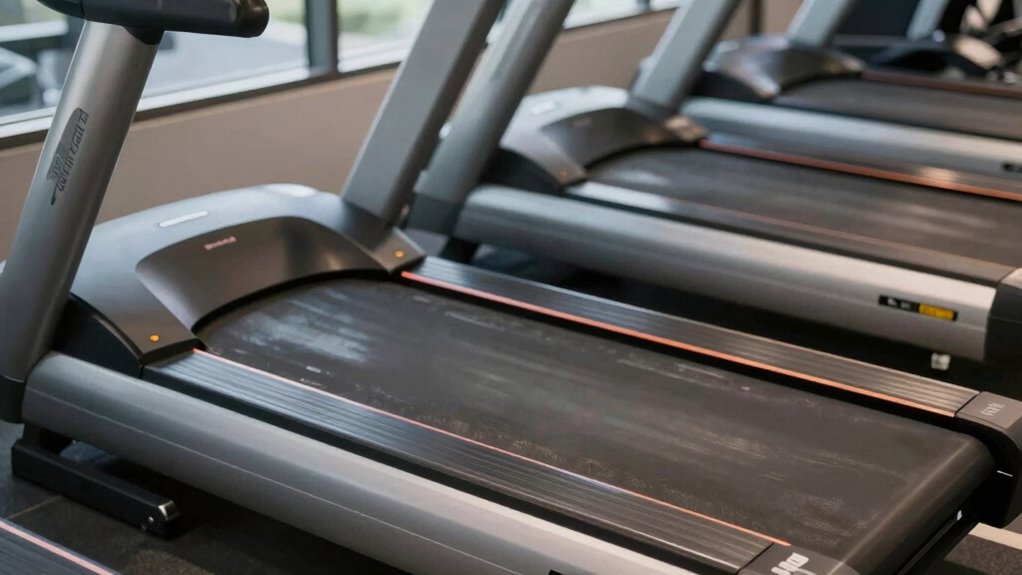
What exactly makes a curved treadmill different from a standard flat treadmill? The key difference lies in its design, which uses curved running surfaces and innovative treadmill technology. Unlike flat treadmills, a curved model relies on your natural power and momentum to propel you forward, instead of motorized belts. This shifts the focus to your running biomechanics, encouraging a more natural stride and better engagement of muscles. Because there’s no motor, you control the speed entirely through your effort, making the workout more dynamic. The curved shape also distributes your weight differently, which can enhance your running form. Additionally, the mechanical resistance of a curved treadmill can lead to a more intense workout compared to motorized models. The design promotes a more active, biomechanics-focused workout, giving you a different experience compared to traditional flat treadmills. Furthermore, the user effort required on a curved treadmill can lead to higher calorie burn and cardiovascular benefits. This design innovation encourages users to engage more muscles and improve overall running efficiency.
As an affiliate, we earn on qualifying purchases.
How Does Its Design Change Your Running Mechanics?
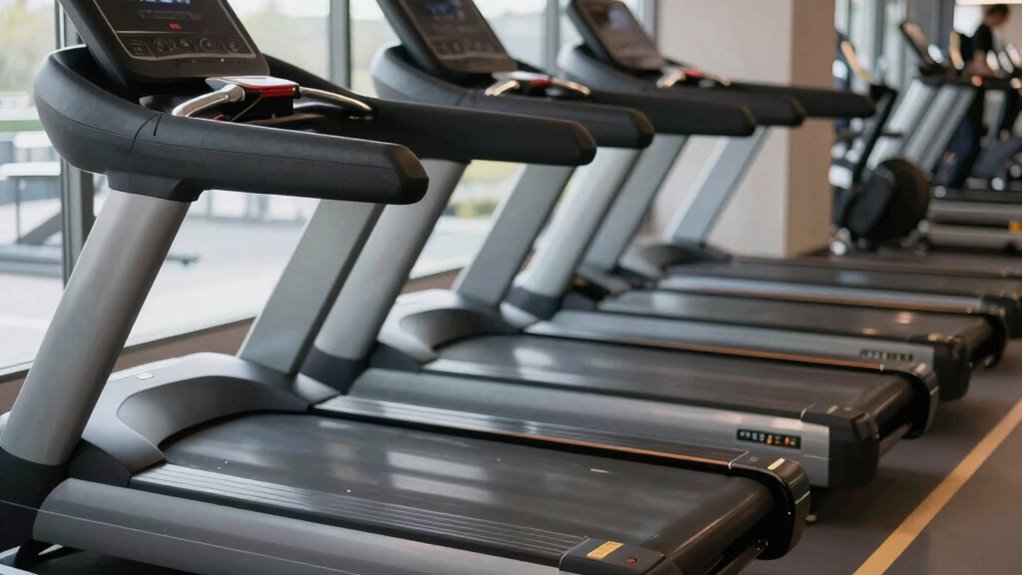
Have you ever wondered how the unique design of a curved treadmill influences your running mechanics? Its ergonomic design encourages natural, forward-leaning posture, engaging different muscles than flat surfaces. The curved surface’s tread surface texture provides better grip, prompting you to adjust your stride and cadence. This shape shifts the focus from pushing against a flat belt to propelling yourself on a curved path, altering your balance and muscle engagement. Additionally, the ergonomic design promotes proper alignment, which can help reduce fatigue and improve overall running efficiency. The tread surface texture also plays a role in reducing impact stress, making your run both safer and more comfortable. Understanding how running biomechanics are affected can help you optimize your workout and prevent injury. Recognizing the importance of muscle engagement can further enhance your training results. Here’s how it impacts your mechanics:
| Aspect | Effect | Feelings |
|---|---|---|
| Ergonomic design | Promotes natural posture | More comfortable, less strain |
| Tread surface texture | Enhances grip and control | Secure, confident strides |
| Curved shape | Changes stride dynamics | Engages different muscles |
| Inclination | Slightly encourages forward lean | More efficient, energetic |
| Overall mechanics | Shifts workload, alters muscle activation | Feeling of increased effort |
best curved treadmill for running
As an affiliate, we earn on qualifying purchases.
As an affiliate, we earn on qualifying purchases.
Why Does Running on a Curved Treadmill Feel More Difficult?
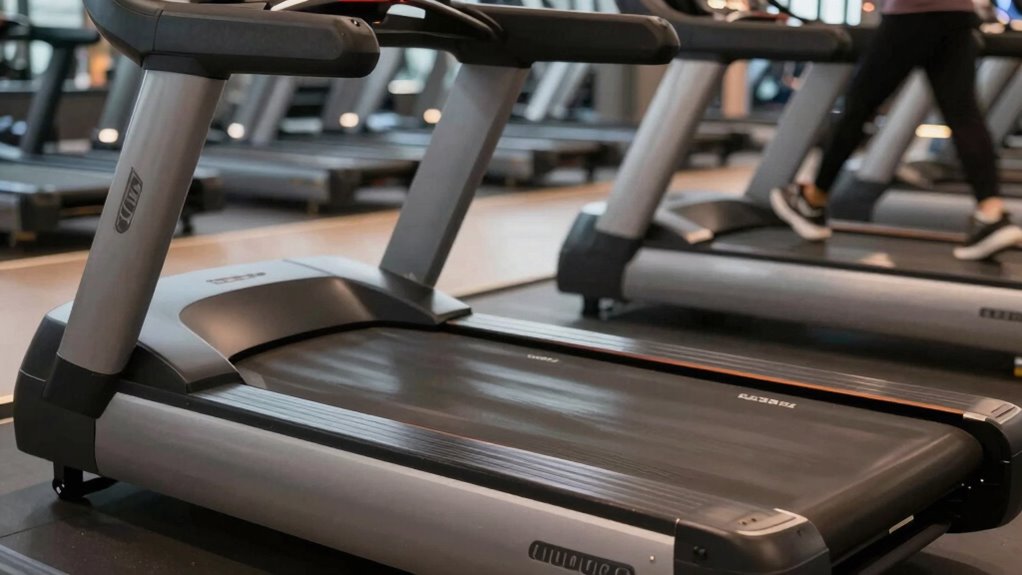
Running on a curved treadmill often feels more challenging because its design demands greater muscular effort and balance than a flat surface. The treadmill’s ergonomics shape your running path, requiring you to engage more stabilizing muscles to maintain proper posture and control. This shifts your running biomechanics, as you naturally adjust your stride and posture to navigate the curved surface. The increased effort to keep your balance, combined with the need to propel yourself forward without the aid of a flat belt, makes each step more demanding. Additionally, the curved design amplifies the engagement of core muscles and leg stabilizers, making your workout feel more intense even at the same speed. All these factors contribute to why running on a curved treadmill feels harder.
curved treadmill workout equipment
As an affiliate, we earn on qualifying purchases.
As an affiliate, we earn on qualifying purchases.
How Moving Your Own Weight Increases Effort and Inertia?
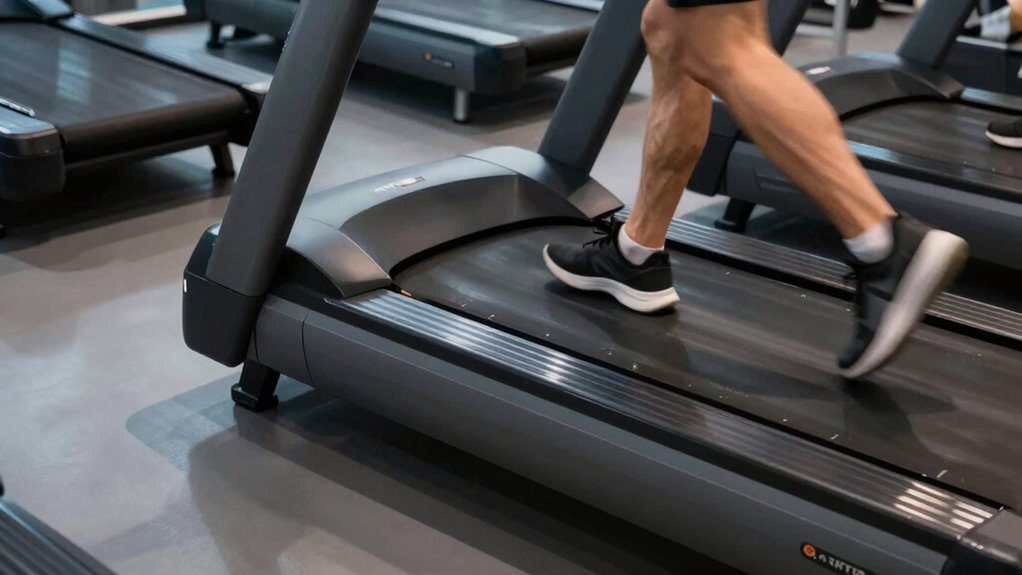
As you move your own weight on a curved treadmill, you must exert more effort to overcome inertia and maintain your balance. Body weight dynamics come into play as your muscles work harder to initiate and sustain movement against inertia effects. Because the treadmill’s curved surface shifts your center of mass, your body continuously adjusts to stay upright, increasing the effort needed. When you shift your weight, inertia effects resist rapid changes, requiring extra force to start or stop movement. This means your muscles must work harder, not only to propel yourself forward but also to counteract the inertia that naturally resists abrupt motion. Additionally, understanding how body weight distribution influences effort can help optimize your workout on curved treadmills. Recognizing how inertia impacts movement can further enhance your training efficiency. External factors like surface friction also affect the amount of effort required during use. As a result, moving your own weight on a curved treadmill feels more demanding, engaging your muscles more intensely.
How the Curved Surface Engages Your Muscles Differently?
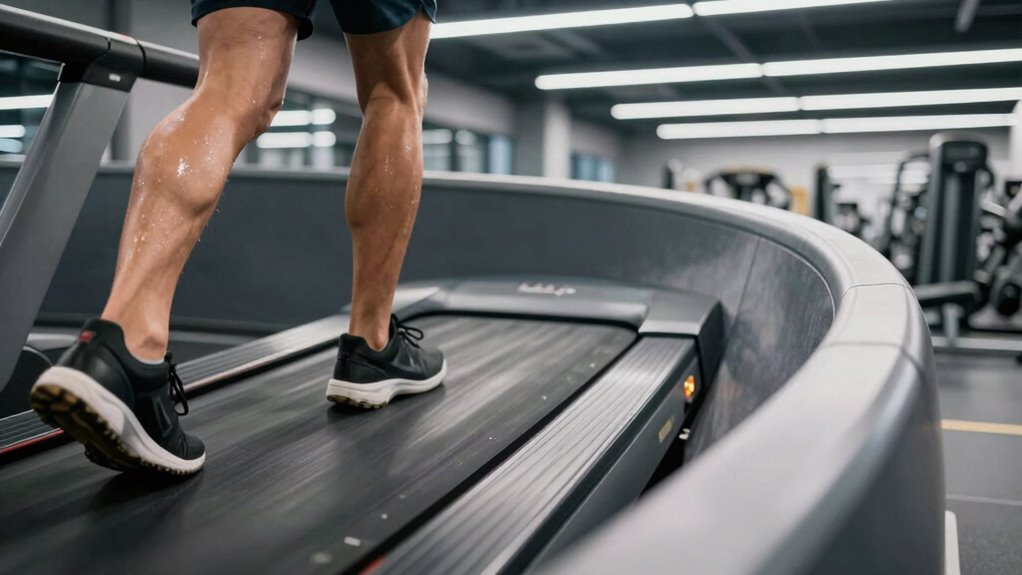
Walking or running on a curved treadmill activates your calves more intensely, as you push off differently. Your core muscles work harder to maintain balance and posture because the surface shifts under your feet. This change also alters your running mechanics, making your movements more natural and engaging different muscle groups. Additionally, passive voice detection tools can help identify instances where your writing may be weakened by passive constructions, enhancing clarity and engagement. Engaging with muscle activation techniques can further optimize your workout on such surfaces. Incorporating core stabilization exercises can also improve your overall balance and performance on curved treadmills.
Increased Calf Activation
Because of their curved surface, these treadmills naturally force your calves to work harder with each stride. As you run, your calf muscles experience increased activation levels because you need to push off more forcefully to stay balanced and propel yourself forward. The incline created by the curve causes your calves to engage more intensely than on a flat treadmill, especially during the push phase of each step. This heightened activation helps strengthen your calf muscles more effectively over time. You’ll notice that your calves fatigue faster and feel more sore after a workout on a curved treadmill, even at the same speed as a flat one. Additionally, the muscle engagement required on curved treadmills promotes greater muscular endurance in your lower legs. The unique design of curved treadmills also increases the cardiovascular demand, making your workout more intense overall. This increased calf activation is a key reason why running on these machines feels more challenging, and it can also contribute to improved muscle strength with consistent use. In fact, the increased stability and balance required to run on a curved surface further amplifies the muscles’ workload during your session. Moreover, the neuromuscular coordination improves as your body adapts to maintaining stability on the curved platform.
Greater Core Engagement
The curved surface of these treadmills naturally demands more from your core muscles to maintain balance and stability throughout your run. This increased need for core stabilization means you’re engaging your abdominal and lower back muscles more than you would on a flat treadmill. As a result, your body works harder to control your posture and prevent wobbling, especially during longer sessions. These balance challenges activate muscles that normally stay less engaged, making your core a central player in maintaining proper form.
- Enhances proprioception and body awareness
- Strengthens deep core muscles for better stability
- Forces you to adopt a more upright posture
- Reduces reliance on leg muscles alone
- Promotes functional muscle engagement for everyday movements
Altered Running Mechanics
When you run on a curved treadmill, your muscles respond differently than they do on a flat surface. The curved design forces you to adjust your running posture, leaning slightly forward to maintain balance and momentum. This shift engages your calves, hamstrings, and glutes more actively, as you push against the incline created by the curve. Unlike flat surfaces, the treadmill’s incline varies with your speed, requiring your muscles to adapt constantly. You naturally lean into the curve to stay centered, which changes your stride mechanics and increases muscle activation in areas less used on traditional treadmills. These altered mechanics make your workout more dynamic, demanding greater muscular effort while improving your coordination and stability. Additionally, understanding the safe operation of curved treadmills can help prevent injury and enhance your training effectiveness. Proper maintenance and calibration of the machine ensure consistent performance and safety during your workouts. Regularly inspecting and tuning your equipment helps maintain optimal performance, and being aware of the potential for uneven wear can prevent mechanical issues over time. In fact, the design of curved treadmills often necessitates more attentive care to ensure they remain safe and effective for high-intensity training.
Does a Curved Treadmill Burn More Calories Than a Flat One?
Curved treadmills often burn more calories than flat ones because they require greater effort and engagement of your muscles. This increased effort boosts your calorie expenditure, making your workout more effective for weight loss. When you run on a curved surface, you activate more muscle groups to maintain balance and power through each stride. This heightened intensity means you burn more calories in less time. Additionally, because you control the treadmill’s pace by your effort, you naturally push yourself harder.
- Higher muscle activation leads to increased calorie burn
- More effort results in greater cardiovascular challenge
- Variable resistance enhances workout intensity
- Engaging core muscles improves stability
- Greater calorie expenditure accelerates weight loss goals
Tips to Adjust Your Speed and Effort on a Curved Treadmill?
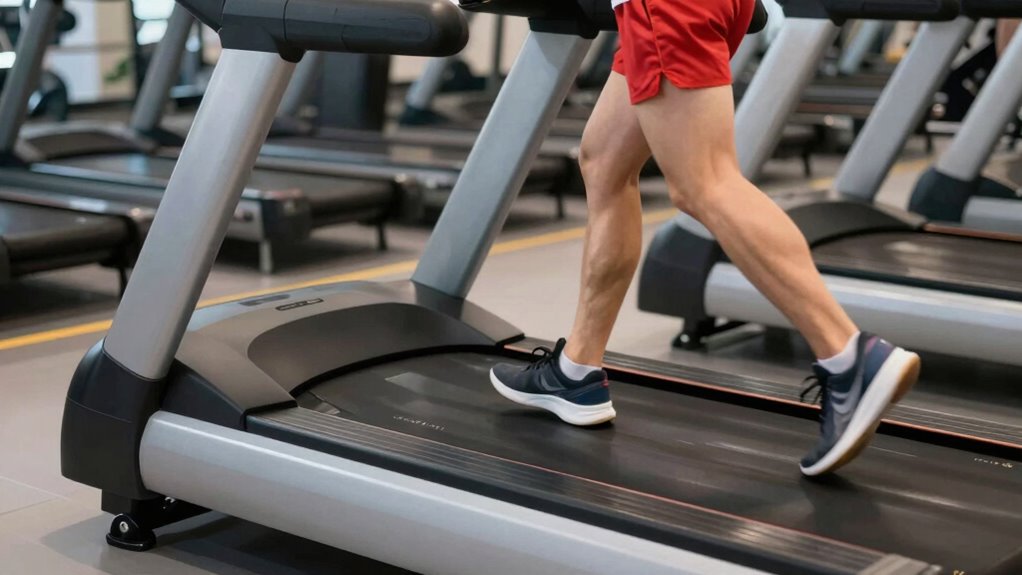
To get the most out of your curved treadmill workout, start by adjusting your speed gradually to find a comfortable pace. Keep an eye on your body position to maintain balance and reduce fatigue. Focusing on these tips helps you control effort and avoid overexertion.
Adjust Your Speed Gradually
Adjusting your speed gradually is essential for a safe and effective workout on a curved treadmill. Sudden changes can cause imbalance or strain, especially since you control the pace by your effort. Start slow, allowing your body to adapt and prevent overexertion. Use the handrails minimally to maintain proper form and avoid unnecessary reliance, which can interfere with natural movement. Also, guarantee your treadmill is well-maintained; smooth operation helps you gauge speed increments accurately. When increasing effort, do so in small, deliberate steps rather than abrupt jumps. This approach helps you build endurance safely while reducing the risk of injury. Remember, patience and gradual progression are key to maximizing your workout benefits and preserving treadmill longevity.
- Focus on smooth, controlled movements
- Use handrails only for balance, not support
- Regularly check treadmill maintenance for consistency
- Listen to your body’s signals to avoid overexertion
- Progress in small steps to build endurance safely
Focus on Body Position
Maintaining proper body position is essential for controlling your speed and effort effectively on a curved treadmill. Focus on posture correction by keeping your shoulders relaxed and your chest slightly forward. Proper body alignment helps distribute your weight evenly, reducing unnecessary fatigue. Keep your gaze forward rather than down, which encourages a natural upright posture. Engage your core to stabilize your torso, preventing leaning or slumping. When your body is aligned correctly, you’ll find it easier to adjust your pace smoothly and avoid overexertion. Avoid hunching or leaning into the curve, as this increases effort and can lead to discomfort. By paying attention to your body position, you improve efficiency, reduce strain, and make your workout feel less strenuous at the same speed.
Are Curved Treadmills Great for High-Intensity or Fat Loss Workouts?
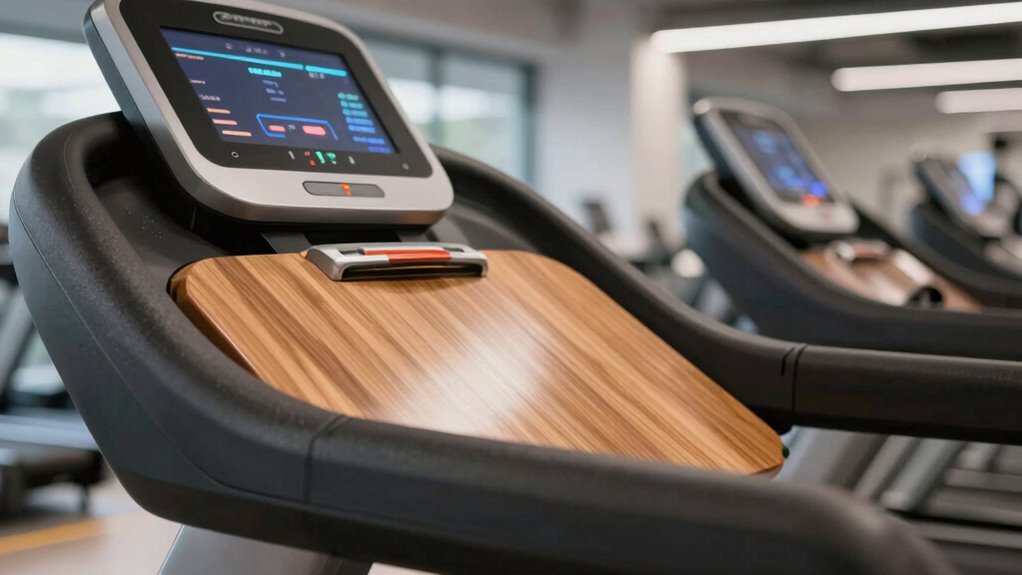
Curved treadmills are particularly well-suited for high-intensity and fat loss workouts because they naturally promote increased effort and calorie burn. Their design encourages you to engage more muscles, boosting overall intensity. Plus, the self-powered mechanism allows for a more natural gait analysis, helping you improve running form. They also challenge your stamina, making workouts more effective. When using a curved treadmill, treadmill safety is essential—stay focused on your gait and avoid overexertion. This equipment pushes you to work harder without relying on speed settings, making it ideal for high-intensity intervals and fat loss. By consistently increasing effort, you’ll see better results in less time. These benefits make curved treadmills a powerful tool for your fitness goals.
Common Mistakes When Using a Curved Treadmill and How to Avoid Them?
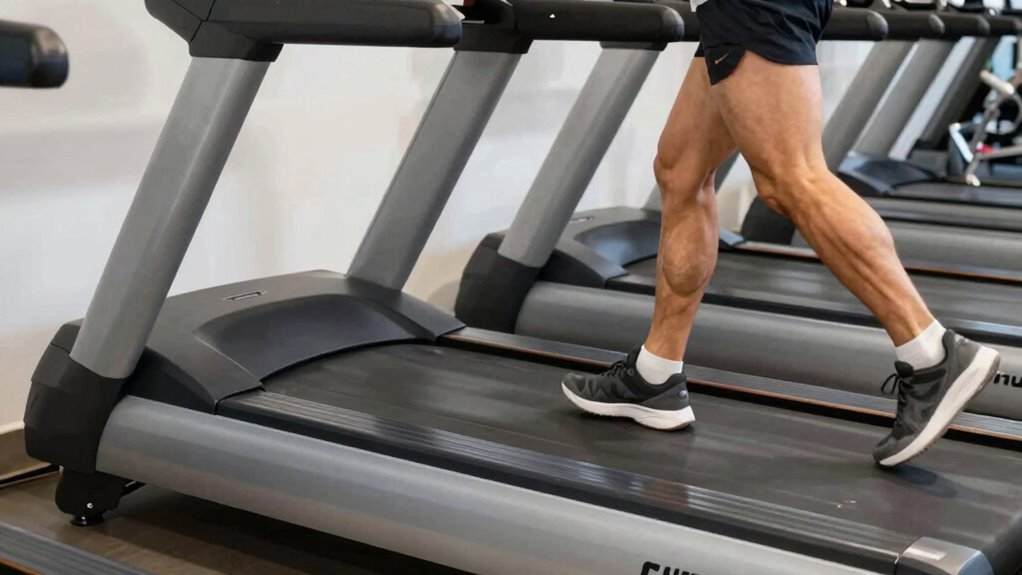
Many users make the mistake of rushing into intense workouts on a curved treadmill without familiarizing themselves with its unique mechanics. One common error is misusing the handlebars, which can lead to poor posture and fatigue. Instead, focus on maintaining a natural arm swing and avoid gripping the bars tightly. Additionally, improper stride length is a frequent problem; taking strides that are too long or too short can cause discomfort and reduce efficiency. To avoid these issues, start slow, experiment with your stride to find a comfortable rhythm, and use the handlebars only for balance when necessary. Remember, a smooth, controlled movement pattern helps prevent injuries and maximizes the benefits of your workout on a curved treadmill.
Is a Curved Treadmill Right for Your Fitness Goals?
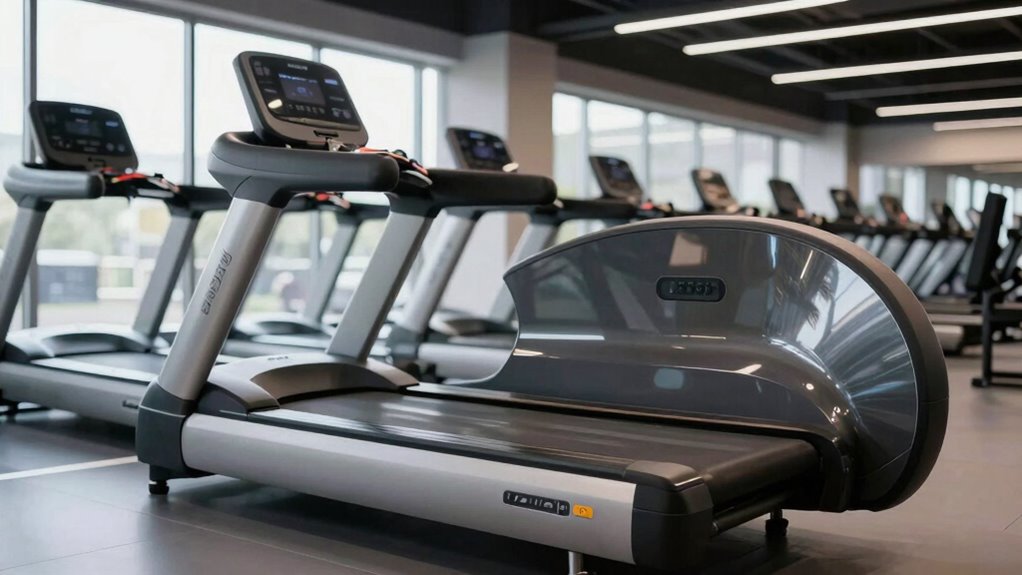
A curved treadmill can boost your workout intensity and help you push your limits. It encourages a natural running form, reducing strain and improving efficiency. If you’re aiming for high-performance training, this equipment might align well with your fitness goals.
Enhances Workout Intensity
If you’re looking to boost your workout intensity, a curved treadmill can be an excellent choice. Its design demands more effort, engaging your muscles more effectively. This increased effort can push your cardiovascular limits and improve overall endurance. Plus, the dynamic nature of curved treadmills encourages better running posture, reducing injury risk and optimizing performance. To maintain consistent intensity, you need to pay attention to treadmill maintenance, ensuring the surface remains smooth and responsive. Using a curved treadmill challenges you to work harder without increasing speed, making workouts more efficient.
- Promotes higher calorie burn in less time
- Builds muscle strength through increased effort
- Improves cardiovascular health faster
- Encourages natural running mechanics
- Keeps your workout engaging and challenging
Promotes Natural Running Form
Curved treadmills naturally promote better running mechanics by encouraging a forward-leaning posture and a midfoot strike, which closely mimic outdoor running form. This design helps you develop a more efficient running posture, reducing strain and improving stride length. Unlike flat treadmills, the curved surface compels you to engage core muscles and adopt a natural stride, minimizing overstriding and unnecessary impact. The table below highlights key benefits:
| Benefit | Explanation |
|---|---|
| Improved running posture | Encourages a slight forward lean, reducing injury risk |
| Longer stride length | Promotes efficient propulsion without overextending |
| Natural foot strike | Supports midfoot strike, enhancing biomechanics |
| Engages core muscles | Maintains stability and proper form |
| Reduced impact | Mimics outdoor running, decreasing joint stress |
This promotes a more natural, injury-resistant running style aligned with your fitness goals.
Supports High-Performance Training
Building on the natural running mechanics promoted by curved treadmills, these machines are also highly effective for high-performance training. They enhance biomechanical benefits by encouraging proper stride mechanics and engaging stabilizing muscles, which can improve overall running efficiency. Using a curved treadmill pushes you to generate power through your own effort, helping to build strength and endurance. Additionally, this type of training can reduce injury risk by promoting better form and reducing impact forces. If your goal is to improve speed, stamina, or athletic performance, a curved treadmill offers a targeted way to achieve those aims. It’s especially useful for athletes who want a challenging, functional workout that supports both performance gains and injury prevention.
- Boosts biomechanical efficiency
- Enhances muscle engagement
- Mimics real-world running conditions
- Reduces impact-related injuries
- Builds explosive power
Frequently Asked Questions
Can Beginners Safely Use a Curved Treadmill?
Yes, beginners can safely use a curved treadmill if you prioritize beginner safety by starting with a slow pace and short sessions. Focus on gradual progression, gradually increasing speed and duration as your fitness improves. Always listen to your body and take breaks when needed. It’s also helpful to seek guidance from a trainer initially to guarantee proper form and prevent injury, making your workout both safe and effective.
How Does a Curved Treadmill Differ in Maintenance?
Think of a curved treadmill as a wild stallion needing your care. Its maintenance requirements are simpler, mainly because it’s motorless, so no motor parts to worry about. You’ll focus on the belt and rollers, ensuring they stay clean and lubricated. Unlike motorized treadmills, it’s built for durability, requiring less frequent checks. This makes it a rugged, low-maintenance companion for your workouts, ready to perform whenever you are.
Are Curved Treadmills Suitable for Sprint Training?
Yes, curved treadmills are great for sprint training because they promote natural running mechanics and increase intensity. You can incorporate interval training by adjusting your speed and using the incline feature to challenge yourself further. The curved design helps you engage more muscles, making sprints more effective. Plus, the self-powered nature encourages a more powerful stride, pushing your endurance and speed during high-intensity workouts.
What Are Common Injuries Associated With Curved Treadmills?
You’re playing with fire if you ignore proper form on a curved treadmill, as common injuries include joint stress and muscle strain. The intense, natural motion can strain your knees, hips, and ankles if you overdo it or run improperly. To stay safe, warm up thoroughly, listen to your body, and avoid pushing too hard too fast. Remember, a stitch in time saves nine—prevention beats cure.
How Does Surface Friction Affect Running Difficulty?
Surface friction directly impacts your running difficulty by affecting surface grip and the friction coefficient. A higher friction coefficient means better grip, making it easier to push off and maintain control. Conversely, lower friction reduces grip, requiring more effort to stay stable, which can make running feel harder. So, when running on surfaces with varying friction coefficients, your effort level changes, influencing how difficult the activity feels at the same speed.
Conclusion
So, while curved treadmills might make you work harder and feel tougher, they’re really just giving you a clever way to burn more calories without even noticing. Irony? The harder it feels, the less you’re actually pushing yourself—at least, that’s what your muscles think. So go ahead, embrace the challenge, and maybe, just maybe, enjoy the sweet victory of feeling exhausted for a reason you didn’t see coming.
NFL season / tailgating Picks
team gear
As an affiliate, we earn on qualifying purchases.