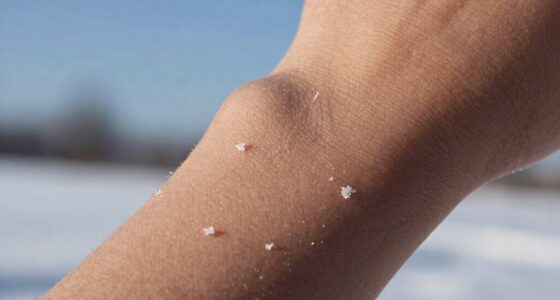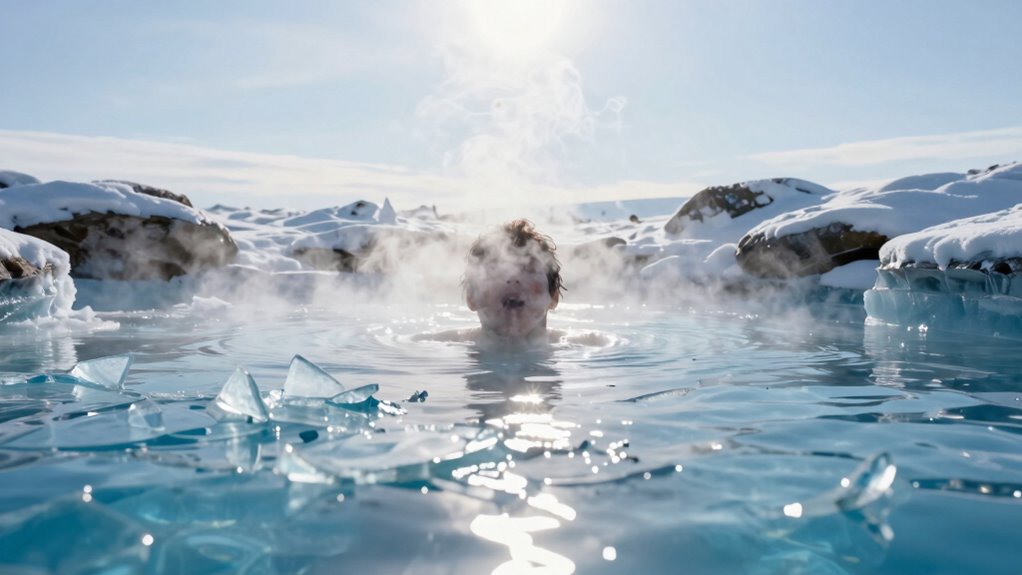

When you suddenly immerse in cold water, your body instinctively reacts to protect essential functions. Thermoreceptors send signals to your hypothalamus, activating your nervous system’s fight-or-flight response. This causes your breathing to become faster and shallower, helping you take in more oxygen for your muscles and organs. Over time, these responses become smoother and more controlled. Keep exploring, and you’ll discover how your body adapts to this intense stressor.

Get home appliances delivered free with Prime
- Fast, free delivery on millions of items
- Prime Video, Amazon Music and more included
- Member-only deals all year
Key Takeaways
- Cold water triggers thermoreceptors that signal the hypothalamus, activating the body’s stress response.
- The sympathetic nervous system causes rapid breathing (hyperventilation) to increase oxygen intake.
- Initial shock reflexively prompts a gasp, followed by faster, shallower breaths.
- Blood vessel constriction and heart rate spike contribute to the body’s quick response to cold stress.
- Repeated cold exposure leads to more controlled and efficient breathing over time.
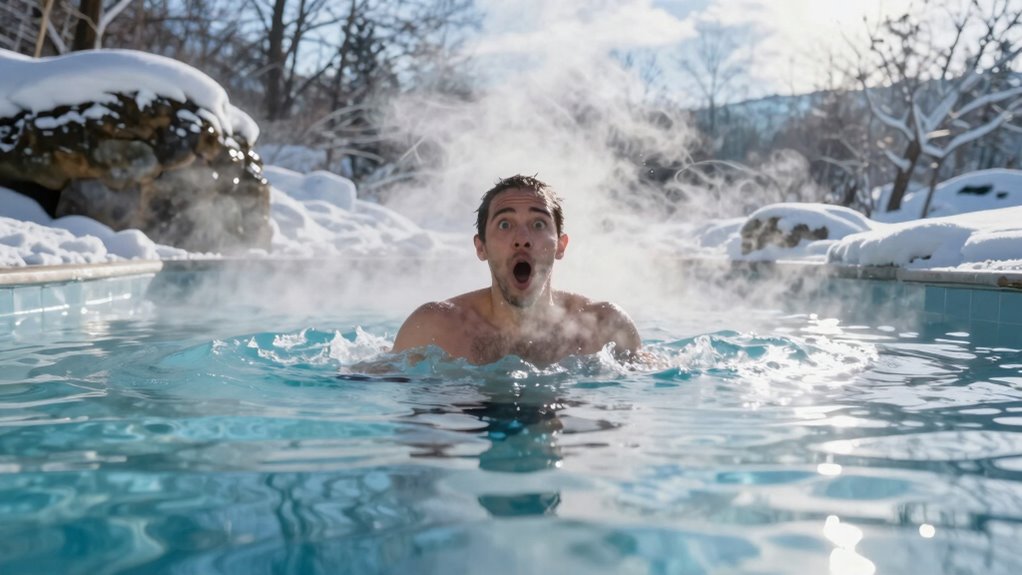
When you take a cold plunge, you might notice your breathing changes almost instantly. Your body reacts quickly to the sudden drop in temperature, triggering a complex response that involves oxygen regulation and your nervous system. This immediate shift isn’t random; it’s your body’s way of protecting itself and maintaining balance in a stressful situation. As cold water hits your skin, sensors called thermoreceptors send signals to your brain, particularly to the hypothalamus, which plays a key role in regulating body temperature and autonomic functions. In response, your nervous system kicks into high gear, activating the sympathetic branch—the part responsible for the fight-or-flight response.
This activation causes your breathing to become faster and more shallow. Your body perceives the cold as a threat, prompting it to increase oxygen intake to meet the heightened energy demands. The rapid breathing, or hyperventilation, helps you get more oxygen into your bloodstream quickly, supporting your muscles and vital organs. At the same time, your nervous system works to regulate this process, ensuring that oxygen levels remain sufficient for survival. It’s a finely tuned balance: your body wants to accelerate oxygen regulation, but it also needs to prevent over-ventilation, which could lead to dizziness or lightheadedness.
As your body adjusts, you might notice that your heart rate spikes, blood vessels constrict, and your breathing pattern stabilizes after an initial gasp. This initial reaction is an automatic reflex designed to protect your core temperature and supply your brain and organs with enough oxygen. Your nervous system’s role here is crucial, coordinating the rapid responses that allow you to survive the cold shock. Over time, with repeated cold plunges, your nervous system and oxygen regulation can improve, making these responses more controlled and less intense. You’ll learn how to breathe more efficiently, which helps you stay calm and conserve energy even in extreme conditions. Additionally, the body’s thermoreceptors play a vital role in temperature regulation, ensuring that your core temperature remains as stable as possible during cold exposure. A better understanding of bodily responses to cold stress can help you prepare and adapt more effectively.
In essence, the instant change in your breathing when you plunge into cold water is your body’s natural response to sudden stress. It’s a seamless interaction between oxygen regulation systems and your nervous system that keeps you alive and functioning. So, every time you step into cold water, remember that your body is working hard behind the scenes—quickly adjusting your breathing and nervous responses to adapt to the icy challenge. Understanding cold shock responses can also enhance your safety and comfort during these experiences.
As an affiliate, we earn on qualifying purchases.
Frequently Asked Questions
Can Cold Plunges Improve Long-Term Respiratory Health?
Cold plunges can boost your long-term respiratory health by promoting respiratory adaptation, which helps your lungs handle cold shock better. Regular exposure strengthens your breathing response, improves oxygen intake, and increases lung capacity. Over time, this resilience can reduce the risk of respiratory issues. So, if you consistently practice cold plunges, you’re likely to develop a stronger, more efficient respiratory system, benefiting your overall health and endurance.
How Quickly Does Breathing Return to Normal After a Cold Plunge?
Breathing patterns can seem to freeze in time, but they usually return to normal within a few minutes after a cold plunge. Your respiratory adaptation kicks in quickly, and your breathing stabilizes as your body warms up. Typically, you’ll notice your breathing normalizes within 3 to 5 minutes, though individual responses vary. Patience and controlled breathing help ease your shift back to regular breathing patterns faster.
Are There Any Risks of Hyperventilation During Cold Exposure?
Yes, there’s a risk of hyperventilation during cold exposure, especially if you panic or don’t use proper breathing techniques. To avoid this, practice controlled breathing and cold adaptation gradually. Breathing techniques like slow, deep breaths help regulate your response, preventing hyperventilation. As you build cold adaptation over time, your body learns to manage the shock, reducing the risk and improving your overall cold exposure experience.
Does Breathing Change Differ Between Cold Plunge Beginners and Regular Users?
Your breathing pattern differs between cold plunge beginners and regular users because of cold adaptation. Beginners often experience rapid, shallow breaths as your body reacts to the cold, while regular users tend to have more controlled, steady breathing. Over time, your body learns to adapt, reducing the shock and making your breathing more efficient. This gradual change helps you stay calmer and more focused during cold exposure, improving your overall experience.
Can Breathing Changes Indicate Underlying Health Issues?
Breathing changes during a cold plunge can sometimes signal underlying health issues, especially if you notice persistent difficulty. If your lung capacity is reduced or your oxygen saturation drops markedly, it might indicate respiratory or cardiovascular concerns. Pay attention to how your body responds; if breathing feels labored or abnormal, consult a healthcare professional to rule out any underlying issues before continuing cold plunges.
As an affiliate, we earn on qualifying purchases.
Conclusion
As you step into the cold plunge, your breath quickens—an instinctive response to shock. Yet, as your body adapts, calmness gradually replaces that initial panic. It’s a paradox: the cold forces you to gasp, but also teaches you to breathe more intentionally. In this icy silence, your breath becomes both a reflex and a choice, reminding you that even in discomfort, there’s a moment of control—and clarity—waiting to be embraced.
breathing control training device
As an affiliate, we earn on qualifying purchases.
As an affiliate, we earn on qualifying purchases.
As an affiliate, we earn on qualifying purchases.
Fall Picks
fall essentials
As an affiliate, we earn on qualifying purchases.