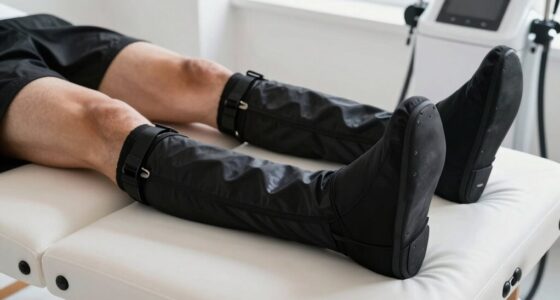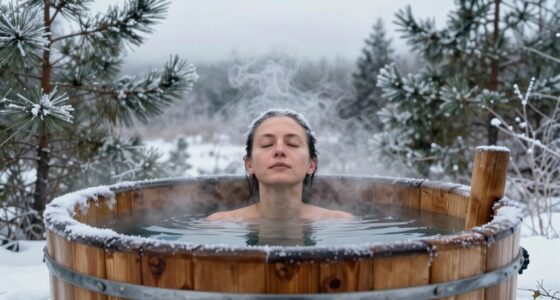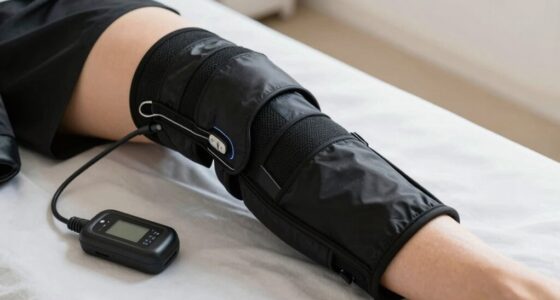
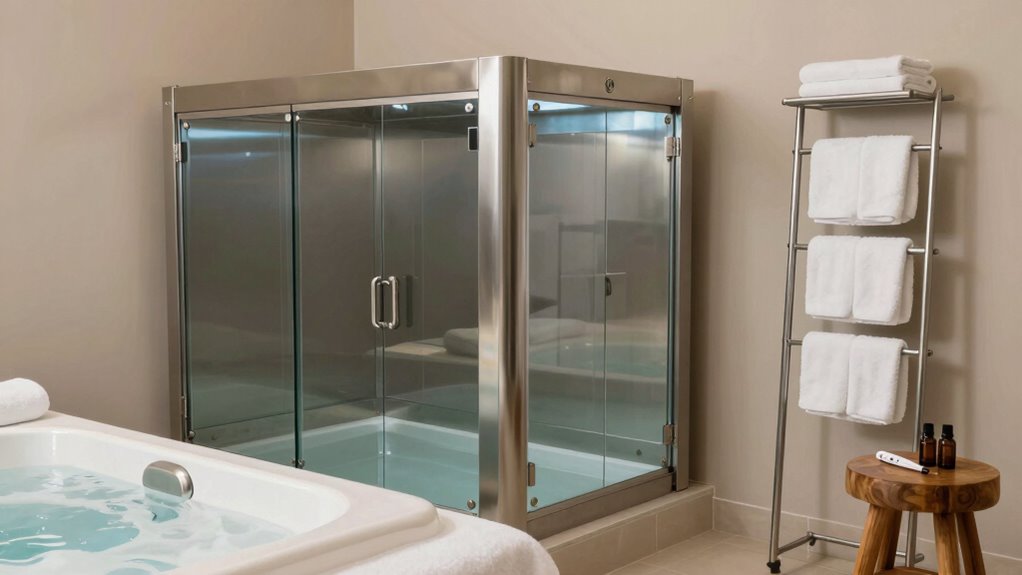

For most people, 2 to 4 rounds of contrast therapy are safe and effective, with each cycle lasting about 1 to 4 minutes. Start with fewer rounds to see how your body responds, gradually increasing if you tolerate it well. Watching for signs of overstimulation, like soreness or fatigue, is key. Keeping a balanced approach helps maximize benefits without risking overstress. To learn how to tailor your routine, keep exploring the essential tips and guidelines that follow.
Listen free for 30 days with Audible
Thousands of audiobooks and originals — cancel anytime.
As an affiliate, we earn on qualifying purchases.
Key Takeaways
- Typically 2-4 rounds are safe, with 2-3 for basic recovery and 4-5 for enhanced healing.
- Adjust the number of rounds based on individual tolerance and body response to avoid overstimulation.
- Monitor signs of fatigue or soreness and modify sessions accordingly to prevent overtraining.
- Each cycle generally lasts 1-4 minutes, depending on your goals and comfort level.
- Limit sessions to avoid overstress, and gradually increase rounds as your body adapts.
cold and hot contrast therapy packs
As an affiliate, we earn on qualifying purchases.
As an affiliate, we earn on qualifying purchases.
What Is Contrast Therapy and How Does It Help You Recover?
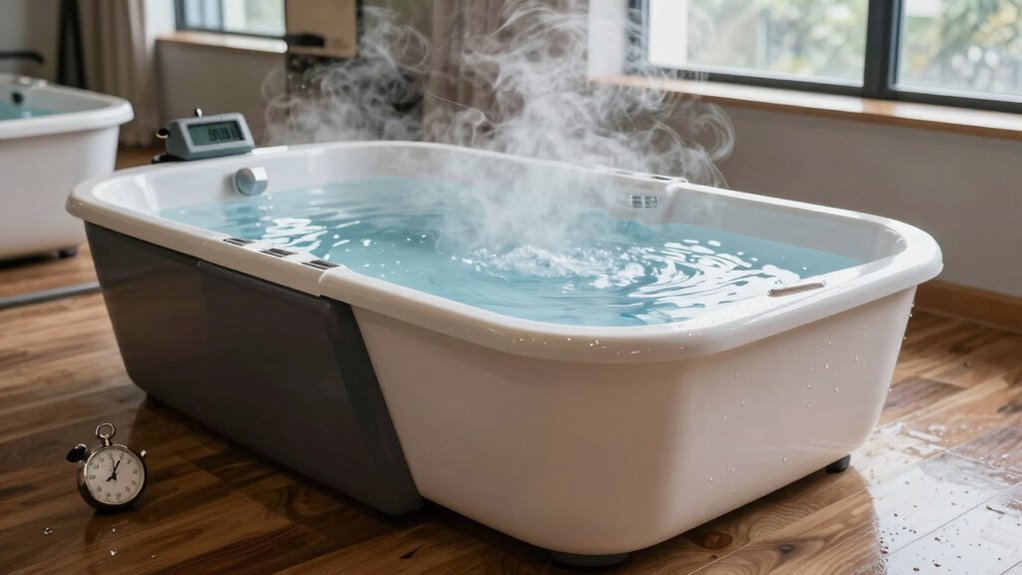
Have you ever wondered how to speed up recovery after an intense workout or injury? Contrast therapy combines cold and hot treatments to promote healing. Cold therapy, such as ice packs or cold baths, helps reduce inflammation and numb pain. It also triggers a circulation boost when you switch to heat, like warm packs or hot baths. This alternating process stimulates blood flow, delivering oxygen and nutrients to damaged tissues while removing waste products. The rapid changes in temperature encourage your body’s natural healing response. Incorporating temperature regulation into your routine can maximize the benefits of contrast therapy. Understanding circulation stimulation can help you optimize treatment effectiveness. Additionally, practicing gradual temperature shifts can prevent shock and discomfort during treatment. To further enhance recovery, maintaining proper hydration during contrast therapy sessions can support your body’s healing process. By regularly practicing contrast therapy, you support your recovery process, decrease soreness, and improve overall circulation. It’s a simple yet effective way to accelerate healing and get you back on your feet faster.
As an affiliate, we earn on qualifying purchases.
How Many Rounds of Contrast Therapy Are Safe and Effective?
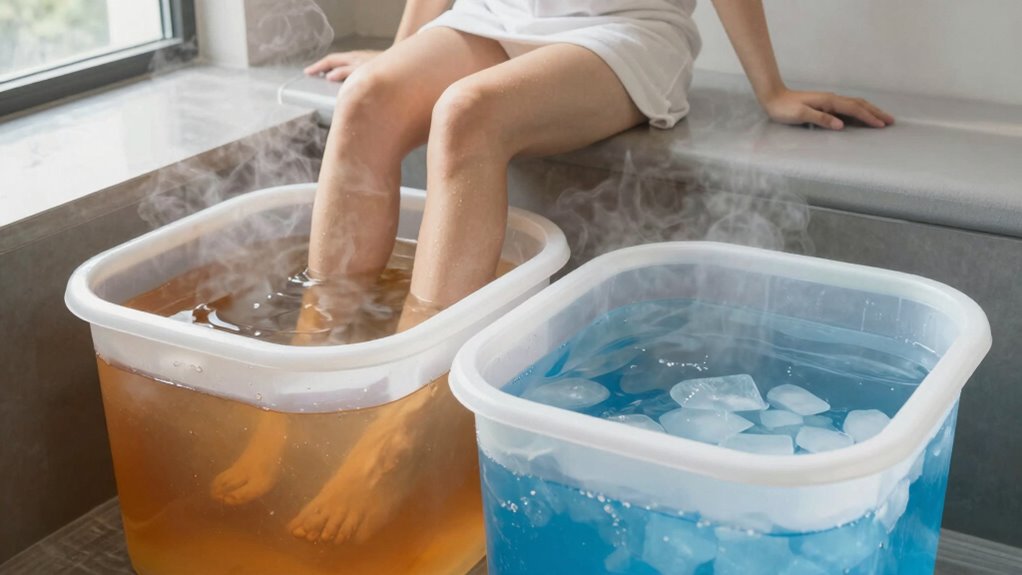
Determining the right number of contrast therapy rounds depends on your individual needs and tolerance. Generally, 2 to 4 cycles of alternating cold immersion and heat application are safe and effective. Too many rounds may cause overstimulation or discomfort, while too few might not yield benefits. Listen to your body and adjust accordingly. Here’s a simple overview:
| Number of Rounds | Duration per Cycle | Purpose |
|---|---|---|
| 2-3 | 1-3 minutes each | Basic recovery, relief |
| 4-5 | 1-4 minutes each | Enhanced circulation, healing |
| More | Varies, caution | Risk of overstress |
Stick to moderate rounds, and avoid extremes to maximize benefits safely. Additionally, understanding body responses can help you tailor the therapy to your comfort level. Incorporating proper techniques and recognizing how the Sun’s energy impacts circulation can further improve outcomes and safety during contrast therapy. Being aware of temperature variations can also help prevent adverse effects and optimize therapeutic benefits. Being mindful of your hydration levels is also essential to support your body’s response to therapy and prevent dehydration.
As an affiliate, we earn on qualifying purchases.
How Should You Structure Your Contrast Therapy Routine?
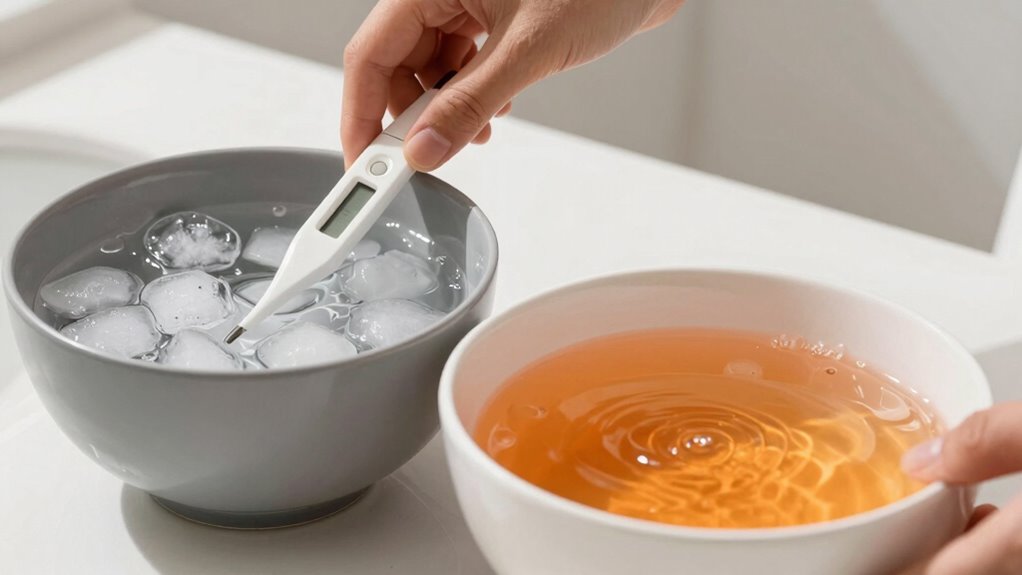
To structure your contrast therapy routine effectively, start by establishing a consistent schedule that fits your goals and lifestyle. Focus on contrast timing, balancing hot and cold sessions to maximize benefits without overdoing it. Typically, you might alternate between 1 to 3 minutes in each temperature, adjusting based on your comfort and response. Session frequency is key—aim for 3 to 5 times per week to build tolerance and see results. Keep track of how your body reacts and modify your routine accordingly. Avoid rushing through rounds or extending sessions excessively, as this can reduce effectiveness or cause discomfort. Proper technique ensures you get the most benefit while minimizing risks. Additionally, understanding tolerance development can help you gradually increase session intensity and duration safely over time. Developing a consistent routine is more effective than sporadic efforts, fostering gradual adaptation and long-term benefits. Incorporating gradual progression into your routine allows your body to adapt safely and sustainably. Moreover, paying attention to body signals helps prevent overexertion and supports safe progression.
As an affiliate, we earn on qualifying purchases.
How Do You Recognize If You’re Doing Too Many Rounds?
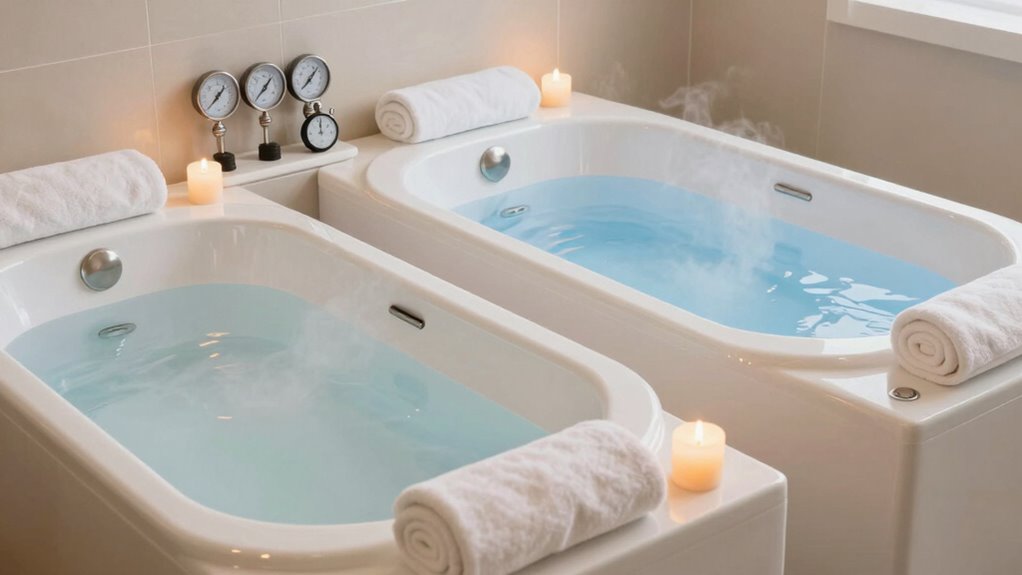
While establishing a consistent contrast therapy routine is important, paying attention to how your body responds helps prevent overdoing it. If you notice overtraining signs or fatigue indicators, it’s a clear sign you might be doing too many rounds. Common overtraining signs include persistent muscle soreness, decreased performance, or a sense of exhaustion that doesn’t improve with rest. Fatigue indicators, like feeling unusually drained or experiencing lingering tiredness, also suggest you need to cut back. If your body feels overly stressed or you’re not recovering between sessions, it’s a sign to reassess your routine. Monitoring your performance and recovery helps you avoid overtraining and ensures you gain the benefits of contrast therapy without risking burnout or injury. Additionally, understanding juice extraction techniques can support your overall wellness by incorporating nutrient-rich drinks into your routine. Incorporating proper hydration is also essential to maximize benefits and prevent dehydration during your therapy sessions. Recognizing signs of overtraining can help you adjust your routine before experiencing setbacks, ensuring consistent progress. Being aware of your body’s signals can further help you tailor your contrast therapy to suit your individual needs.
Tips From Experts: Finding the Balance Between Effectiveness and Safety
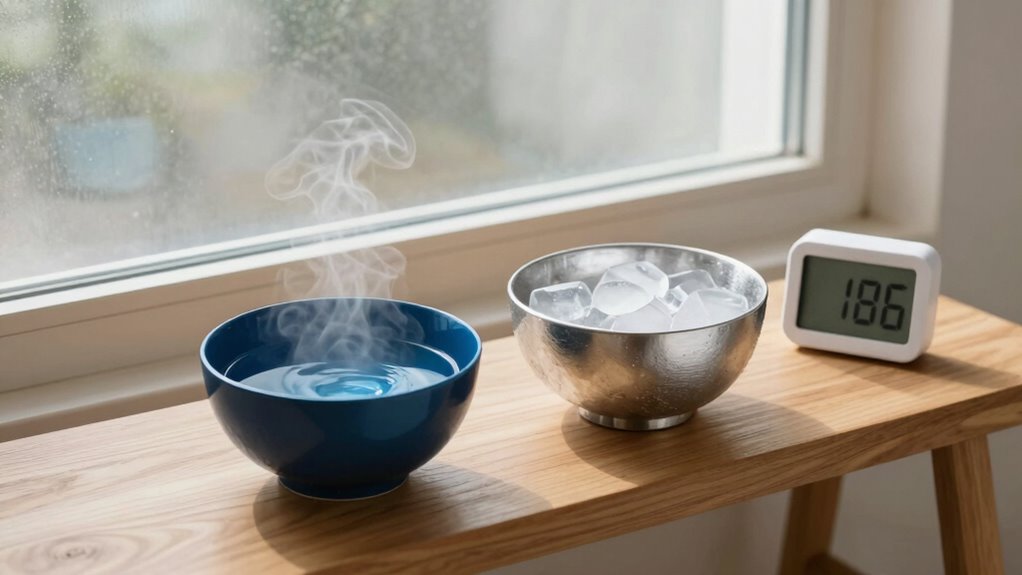
Balancing the effectiveness of contrast therapy with your safety requires careful attention and expert guidance. To maximize hydrotherapy benefits and safely incorporate cold therapy, follow these tips:
- Start slowly, gradually increasing the duration and intensity of cold and hot sessions to prevent overexposure.
- Listen to your body—if you experience dizziness, numbness, or discomfort, stop immediately.
- Consult a healthcare professional to personalize your routine, especially if you have underlying health conditions or sensitivities.
- Be aware of temperature regulation to ensure safe and effective sessions without risking thermal shock or adverse effects.
- Understanding how skin response varies with temperature changes can help you tailor your routine for optimal results and safety.
- Recognizing thermal tolerance levels can aid in adjusting sessions appropriately and avoiding overexposure.
Frequently Asked Questions
Can Contrast Therapy Be Combined With Other Recovery Methods?
Yes, you can definitely combine contrast therapy with other recovery methods. This integrated recovery approach enhances your healing process by using complementary techniques like stretching, foam rolling, or massage alongside contrast therapy. It’s effective because you target different aspects of recovery—reducing soreness, improving circulation, and promoting relaxation. Just make certain you listen to your body and balance these methods for ideal results without overdoing it.
How Long Should Each Contrast Therapy Session Last?
Your contrast therapy session should be no longer than 20 minutes to maximize benefits without overdoing it. Usually, the duration guidelines suggest alternating hot and cold treatments for about 1-3 minutes each, with 3-4 rounds. Keep each session balanced, listening to your body. This way, you avoid exhaustion and achieve ideal recovery. Remember, quality over quantity is key for effective contrast therapy.
Are There Specific Health Conditions That Contraindicate Contrast Therapy?
You should prevent contrast therapy if you have heart conditions or skin sensitivities, as the temperature changes can worsen these issues. People with cardiovascular problems may experience stress on their heart, while those with sensitive skin might develop irritation or allergic reactions. Always consult your healthcare provider before starting contrast therapy, especially if you have underlying health conditions, to ensure it’s safe for you.
What Signs Indicate That Contrast Therapy Is Not Suitable for You?
If you feel like your skin’s shouting for help or your cold sensitivity kicks into overdrive, it’s a sign contrast therapy isn’t right for you. Skin irritation, redness, or burning sensations are like warning flags waving wildly. Trust your body’s signals—if discomfort persists, pause and consult a healthcare professional. Your body’s messaging system is telling you to listen, so don’t ignore those signs that contrast therapy isn’t suitable.
How Does Hydration Impact the Effectiveness of Contrast Therapy?
Hydration levels considerably impact the effectiveness of contrast therapy. When you’re well-hydrated, your fluid intake helps your body better respond to temperature changes, promoting improved circulation and faster recovery. If you’re dehydrated, your body may struggle to adapt, reducing the therapy’s benefits and potentially causing discomfort. Make sure to drink plenty of fluids before, during, and after contrast therapy to maximize its positive effects and support your body’s natural healing process.
Conclusion
Remember, contrast therapy is like tending a delicate garden—you need the right balance to help it flourish. Too many rounds can choke its growth, while too few may leave it unbloomed. Listen to your body as you nurture your recovery, adjusting each session with care. When done wisely, contrast therapy becomes a guiding light, illuminating your path to strength and healing, reminding you that true progress blossoms from patience and mindful practice.
NFL season / tailgating Picks
team gear
As an affiliate, we earn on qualifying purchases.