
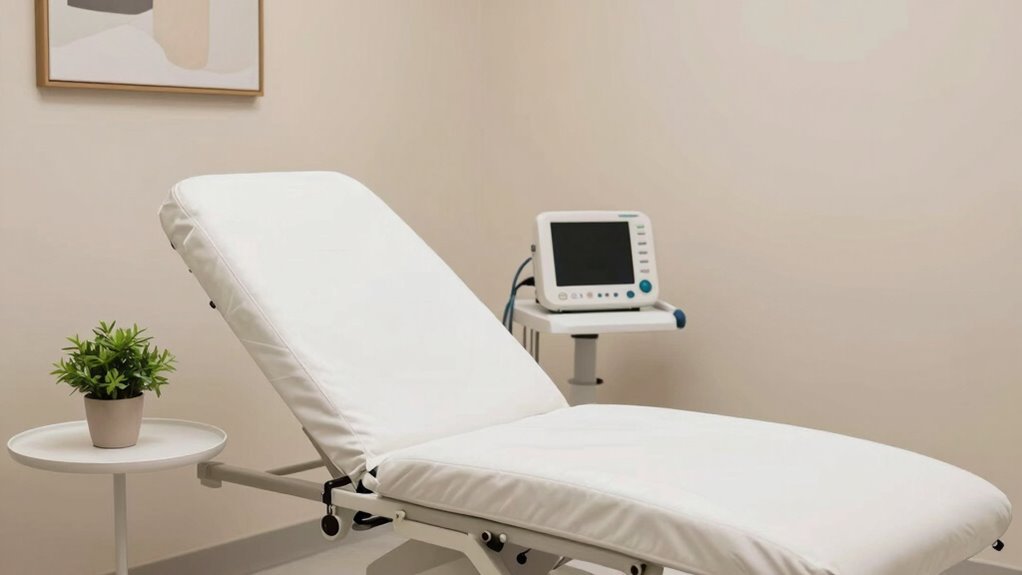

When I look at modern recovery room protocols, the biggest hurdle is often not the technology itself, but the complexity of the workflow. Healthcare providers need streamlined systems that reduce cognitive load while maintaining safety. This roundup focuses on three specific resources that help simplify post-operative care management. The Complete Recovery Room Book (ASIN: 0192621300) stands out for its operational depth, making it ideal for administrators who need to standardize complex procedures. Meanwhile, The Recovery Room (ASIN: 072163186X) offers a more narrative-driven approach that helps clinicians understand the patient experience, which is critical for reducing anxiety. Finally, the digital edition of The Complete Recovery Room Book (ASIN: B00F1D7K40) provides similar operational insights in a format that is easier to update and access quickly during shifts.

Get home appliances delivered free with Prime
- Fast, free delivery on millions of items
- Prime Video, Amazon Music and more included
- Member-only deals all year
The main tradeoff here is between technical precision and human-centric context. If you are trying to simplify a physical setup, you first need to simplify the knowledge base that supports it. These books do not describe hardware, but rather the knowledge frameworks that allow a recovery room to function without unnecessary clutter or confusion. By choosing the right guide, you can strip away redundant protocols and focus on what actually moves the needle for patient recovery. I will break down which resource fits your specific role in the recovery ecosystem.
Complete the kit



Key Takeaways
- The 0192621300 edition is best for clinical directors needing standardized, technical protocols to reduce operational errors.
- The 072163186X title is superior for staff training that focuses on patient communication and reducing post-surgical anxiety.
- The digital edition (B00F1D7K40) offers better accessibility for quick reference but lacks the tangible permanence of print for deep study.
- Simplicity in recovery rooms is achieved by reducing decision fatigue through clear, pre-established care pathways found in these guides.
- None of these resources provide hardware specifications, so they must be paired with physical equipment assessments for a complete setup.
| The Complete Recovery Room Book |  | Best for Operational Standardization | Format: Hardcover | Target Audience: Clinical Administrators | Primary Focus: Operational Protocols | VIEW ON AMAZON | See Our Full Breakdown |
| The Recovery Room |  | Best for Patient-Centric Context | Format: Paperback | Target Audience: Nursing Staff | Primary Focus: Patient Experience | VIEW ON AMAZON | See Our Full Breakdown |
| The Complete Recovery Room Book |  | Best for Digital Accessibility | Format: Digital | Target Audience: Individual Clinicians | Primary Focus: Quick Reference | VIEW ON AMAZON | See Our Full Breakdown |
| recovery room setups focus on simplicity | Format | Target Audience | Primary Focus | Content Type |
|---|---|---|---|---|
| The Complete Recovery Room Boo | Hardcover | Clinical Administrators | Operational Protocols | Reference Guide |
| The Recovery Room | Paperback | Nursing Staff | Patient Experience | Narrative Insight |
| The Complete Recovery Room Boo | Digital | Individual Clinicians | Quick Reference | E-book |
More Details on Our Top Picks
The Complete Recovery Room Book
This edition serves as the backbone for facilities that struggle with inconsistent care practices. What makes this resource distinct is its rigorous focus on procedural consistency. Unlike the narrative-focused The Recovery Room (072163186X), this book does not spend time on the emotional landscape of recovery. Instead, it dissects the mechanical and clinical steps required to move a patient from anesthesia to discharge safely. This approach supports simplicity by removing ambiguity from critical tasks. If a nurse knows exactly which vital sign threshold triggers a specific intervention, decision-making becomes faster and less stressful.
However, this density is a double-edged sword. For a new hire or a patient advocate, the text may feel impenetrable. It assumes a baseline medical literacy that the other two entries do not. Compared to the digital version (B00F1D7K40), the print nature of this book allows for easier annotation and team-wide marking of critical protocols, which is a subtle but significant advantage for training sessions. It is less about reading cover-to-cover and more about using it as a reference tool to build standard operating procedures.
Pros:- Provides rigorous procedural guidelines that reduce clinical ambiguity
- Excellent for creating standardized operating procedures for staff
- Print format allows for easy annotation and team-wide marking
- Focuses on operational efficiency rather than theoretical concepts
Cons:- Highly technical language limits accessibility for non-clinical staff
- Lacks case studies that illustrate complex human factors
- May feel outdated if not paired with current digital updates
Best for: Clinical managers and department heads looking to standardize protocols.
Not ideal for: Patients or family members seeking general understanding of recovery.
- Format:Hardcover
- Target Audience:Clinical Administrators
- Primary Focus:Operational Protocols
- Content Type:Reference Guide
- Usability:High for Team Training
- Depth:Advanced
- Accessibility:Print Only
Our verdict“This is the definitive choice for administrators who need to build a robust, error-resistant framework for recovery room operations.”
The Recovery Room
If simplicity means reducing patient distress, this title is the most effective tool in the lineup. It shifts the focus from the machine to the human. While The Complete Recovery Room Book (0192621300) tells you what to do, this book helps you understand why it matters to the person lying in the bed. It explores the experiences of both providers and patients, offering insights that help staff communicate more effectively. This reduces the friction in the room. A calm patient requires less sedation adjustment and fewer interventions, which inherently simplifies the clinical workload.
The tradeoff here is a lack of hard technical data. You will not find specific drug dosages or equipment settings here. It is weaker than the operational guides when it comes to defining strict clinical boundaries. However, for training staff on soft skills and bedside manner, it is unmatched. Compared to the digital edition (B00F1D7K40), this print book allows for a more immersive reading experience, which is necessary for absorbing the nuanced narrative elements. It is a resource for building empathy, which is a key component of a smooth-running recovery unit.
Pros:- Provides deep insights into the patient experience and anxiety triggers
- Helps staff develop better communication skills for post-op care
- Balances provider and patient perspectives effectively
- Reduces clinical friction by improving human interaction
Cons:- Lacks specific technical medical data or protocols
- Publication details are vague, making currency hard to verify
- Not suitable as a primary clinical reference for procedures
Best for: Nurses and care coordinators focusing on patient communication and comfort.
Not ideal for: Staff who need immediate access to clinical protocols or dosage guidelines.
- Format:Paperback
- Target Audience:Nursing Staff
- Primary Focus:Patient Experience
- Content Type:Narrative Insight
- Usability:High for Soft Skills
- Depth:Moderate
- Accessibility:Print Only
Our verdict“This book is essential for teams that want to simplify recovery by improving the human element of care, rather than just the mechanical.”
The Complete Recovery Room Book
This digital edition mirrors the content of the print version (0192621300) but changes how the information is accessed. In a busy recovery room, the ability to search for a keyword can save seconds that matter. This version is superior for quick lookups during a shift. If a nurse needs to verify a specific monitoring interval, a digital search is faster than flipping through pages. This speed contributes to simplicity by reducing the time spent hunting for information.
However, digital formats can be distracting. The temptation to multitask or get lost in hyperlinks can disrupt the focused reading required for deep learning. Compared to the narrative depth of The Recovery Room (072163186X), this is still a dry, technical resource. It lacks the human element but gains in utility. It is less effective for team training sessions where everyone needs to look at the same page simultaneously. It is a personal tool, best used by individual practitioners who value speed over tangible reference.
Pros:- Searchable text allows for rapid information retrieval
- Lighter and easier to carry than physical books
- Can be updated more easily than static print editions
- Ideal for quick reference during high-pressure shifts
Cons:- Lacks the tactile benefit of print for deep study
- Requires a device and power source to access
- No user reviews available to gauge current relevance
Best for: Individual practitioners who need fast access to protocols on mobile devices.
Not ideal for: Facilities with limited digital infrastructure or staff who prefer paper records.
- Format:Digital
- Target Audience:Individual Clinicians
- Primary Focus:Quick Reference
- Content Type:E-book
- Usability:High for Search
- Depth:Advanced
- Accessibility:Device Dependent
Our verdict“Choose this version if your priority is speed and individual access to clinical protocols rather than team-based study.”

How We Picked
I selected these three resources based on their ability to reduce complexity in clinical workflows. My primary filter was actionability. Does the content provide clear steps that can be implemented to streamline patient monitoring? I also looked at the target audience. A resource for nurses differs significantly from one for administrators, and mixing these up leads to inefficient training. I compared the depth of procedural coverage against the readability of the text. A book that is technically accurate but difficult to parse adds to the cognitive burden rather than reducing it. Finally, I considered the format utility. In a high-paced recovery environment, the ability to quickly locate information matters. Print editions offer stability and ease of marking, while digital formats offer searchability. I excluded resources that were purely theoretical or lacked practical application guidelines, as they do not contribute to a simplified, functional setup.
| recovery room setups focus on simplicity | Format | Target Audience | Primary Focus | Content Type |
|---|---|---|---|---|
| The Complete Recovery Room Boo | Hardcover | Clinical Administrators | Operational Protocols | Reference Guide |
| The Recovery Room | Paperback | Nursing Staff | Patient Experience | Narrative Insight |
| The Complete Recovery Room Boo | Digital | Individual Clinicians | Quick Reference | E-book |
Factors to Consider When Choosing Recovery Room Setups Focus On Simplicity
Choosing the right resource to simplify your recovery room setup depends on who you are trying to simplify the process for. Are you simplifying the workflow for nurses? Or are you simplifying the experience for the patient? The following guide helps you match the resource to your specific operational pain points.
Identifying Your Primary Bottleneck
If your team is making inconsistent decisions, you need a rulebook. The Complete Recovery Room Book (0192621300) is designed for this. It creates a single source of truth for clinical actions. If your bottleneck is patient agitation or staff burnout due to difficult interactions, The Recovery Room (072163186X) addresses the human friction that slows down care. Identifying whether your problem is mechanical or interpersonal is the first step in choosing the right tool for simplicity.
Print vs. Digital Utility
Print books remain superior for team training. You can project pages, highlight sections together, and keep a copy at the nursing station for quick visual checks. The digital edition (B00F1D7K40) is better for individual speed. If your staff carries tablets or phones, the search function is a powerful simplification tool. However, if your facility has spotty Wi-Fi or strict device policies, the digital format adds complexity rather than removing it. Match the format to your existing tech infrastructure.
Integration with Physical Equipment
These books do not replace equipment manuals. Simplicity comes from aligning your knowledge with your tools. Use these guides to build protocols that match the capabilities of your monitors and beds. For example, if a book suggests a monitoring frequency that your equipment cannot easily display, you must adapt. The goal is to use these resources to define what is necessary, stripping away checks that do not add clinical value, thereby simplifying the physical setup by reducing the need for redundant monitoring devices.
Frequently Asked Questions
Do these books provide hardware recommendations for recovery rooms?
No, none of these resources function as equipment catalogs or hardware specification guides. They are focused on clinical protocols, patient care procedures, and operational management. To simplify your physical setup, you should use the protocols outlined in these books to determine what equipment is actually necessary. By establishing clear care pathways, you can eliminate redundant devices that are often purchased out of habit rather than clinical need, thereby simplifying the physical environment.
Which book is better for new nursing graduates?
For new graduates, The Complete Recovery Room Book (0192621300) is often too dense and technical for immediate application. The Recovery Room (072163186X) is more accessible because it contextualizes the clinical actions within the patient experience, helping new hires understand the ‘why’ behind the tasks. However, they will still need a separate, simplified clinical manual for drug dosages and specific equipment settings, as the narrative book lacks this hard data.
Is the digital edition significantly different in content from the print version?
The core content regarding procedures and protocols is generally identical between the print (0192621300) and digital (B00F1D7K40) editions of The Complete Recovery Room Book. The primary difference lies in the user interface and accessibility. The digital version offers search capabilities and portability, which can streamline information retrieval. However, it lacks the ease of cross-referencing and annotation that many clinicians prefer in print formats, which can impact how quickly information is absorbed during study sessions.
How can these books help reduce medical errors in recovery?
These resources help reduce errors by standardizing knowledge. When every team member follows the same protocol outlined in The Complete Recovery Room Book, there is less room for individual interpretation that can lead to mistakes. The Recovery Room helps by improving communication, which is a leading cause of medical errors. By aligning clinical actions with clear guidelines and improving team-patient interaction, the overall system becomes more predictable and less prone to human error.
Are these resources suitable for patient education?
Generally, no. These books are written for healthcare professionals. The language in The Complete Recovery Room Book is too technical for most patients, and The Recovery Room, while more narrative, still focuses on provider insights rather than patient-facing instructions. For patient education, you should look for materials specifically designed for laypeople. Using these professional texts with patients would likely increase anxiety and confusion, which is the opposite of simplifying the recovery experience.
Conclusion
To choose the right resource for your recovery room setup, you must first define what ‘simplicity’ means for your specific context. If your goal is to streamline clinical decision-making and reduce operational variability, The Complete Recovery Room Book (0192621300) is the strongest foundation. It provides the rigid structure needed to eliminate guesswork. If your focus is on reducing patient anxiety and improving staff-patient interactions to create a calmer environment, The Recovery Room (072163186X) offers the necessary perspective to soften the clinical experience. Finally, for individual practitioners who need rapid access to protocols during a shift, the digital edition of The Complete Recovery Room Book (B00F1D7K40) provides the speed and portability required for a fast-paced environment. I recommend assessing whether your current friction points are technical or interpersonal before making your selection.