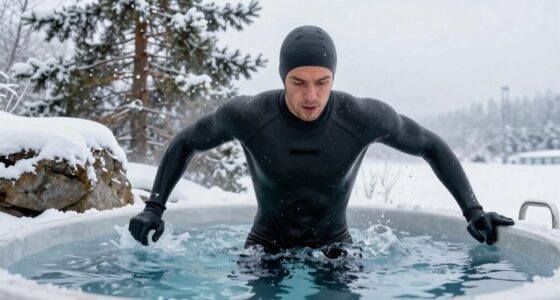
During taper week, whether to keep or pause cold exposure depends on how it affects your recovery and mental clarity. If cold therapy helps you relax, reduces soreness, and boosts confidence without disrupting sleep, it’s beneficial to continue light, gentle sessions. However, if it causes discomfort, stress, or hampers rest, consider pausing. Tailor your approach to your body’s response, and you’ll arrive race-ready—more insights come as you explore further.
Key Takeaways
- Continue cold exposure if it reduces soreness, improves recovery, and enhances mental calmness during taper week.
- Pause cold therapy if it causes discomfort, disrupts sleep, or increases stress levels.
- Adjust intensity and duration of cold routines based on individual response and recovery needs.
- Use cold exposure to support mental clarity, focus, and confidence ahead of race day.
- Prioritize overall comfort and rest, tailoring cold practices to optimize tapering and peak performance.

As you approach race day, taper week becomes essential for maximizing your performance, and incorporating cold exposure can offer additional benefits. During this critical period, your focus should be on fine-tuning recovery strategies and sharpening mental preparation. Tapering involves reducing your training volume while maintaining intensity, allowing your body to recover fully and arrive at the start line feeling fresh and energized. Cold exposure, like cold showers or ice baths, can complement these recovery strategies by reducing inflammation, easing muscle soreness, and speeding up the healing process. If you’ve been incorporating cold therapy in your training, taper week is the time to decide whether to continue or pause it, based on how your body responds.
Use taper week to refine recovery and mental focus, deciding whether to continue cold exposure based on your body’s response.
Cold exposure can help you manage residual soreness, making it easier to stay active and mentally sharp during this crucial period. It can also induce a sense of calm and mental clarity, helping you stay focused and confident for race day. However, it’s important to listen to your body. If cold therapy has been a source of stress or discomfort, or if it disrupts your sleep or recovery, it might be best to pause it during taper week. Conversely, if you’ve found that cold exposure enhances your recovery and mental readiness, maintaining a light routine can be beneficial. Just keep it gentle—extended cold exposure isn’t necessary and could interfere with your overall tapering goals.
Your mental preparation is equally essential during taper week. Use this time to visualize your race, review your strategy, and reinforce positive affirmations. Cold exposure can support mental readiness by helping you relax and ease anxiety, but it should complement your psychological routines, not replace them. Focus on calming techniques, such as deep breathing or mindfulness, alongside your physical recovery methods. The combination of good recovery strategies and mental preparation can boost your confidence, reduce pre-race nerves, and help you start strong. Additionally, understanding filtration systems can help you better optimize your recovery environment and ensure you’re getting the most benefit from your cold therapy routines.
In the end, the decision to keep or pause cold exposure during taper week depends on how it influences your recovery and mental state. If it’s working well, continue with a cautious approach. If it’s causing discomfort or disrupting your rest, it’s wise to pause and rely on other recovery and mental strategies. The goal is to arrive at race day feeling rested, confident, and mentally prepared—cold exposure can be a helpful tool in that process, but it should be tailored to your needs as you fine-tune your taper.
Frequently Asked Questions
Can Cold Exposure Enhance Taper Week Recovery?
Cold immersion can boost your taper week recovery by reducing inflammation and speeding up muscle repair. It also promotes mental clarity, helping you stay focused and calm before your event. Using cold exposure intentionally, like cold baths or showers, can aid your recovery process without overtaxing your body. Just be sure not to overdo it, as excessive cold immersion might interfere with your tapering goals.
Should I Adjust Cold Exposure During Taper for Optimal Results?
You should consider reducing cold exposure during taper to support muscle recovery and immune boost. While cold exposure can help with inflammation, it might also hinder your body’s natural recovery process if overdone. Adjusting it allows your muscles to heal properly and keeps your immune system strong for race day. Focus on moderation, and listen to your body — less cold exposure during taper could give you an edge.
Does Cold Exposure Impact Mental Focus During Taper Week?
Cold exposure can boost your mental clarity and reduce stress during taper week. By regularly exposing yourself to cold, you activate your nervous system, which sharpens focus and calms anxiety. This helps you stay mentally sharp and composed as you prepare for your event. Just make certain you don’t overdo it, as excessive cold exposure might lead to fatigue or stress, hindering your tapering progress.
How Does Cold Exposure Influence Energy Levels Pre-Race?
Cold exposure can boost your energy levels pre-race by enhancing mental clarity and reducing fatigue. Cold therapy activates your nervous system, increasing alertness and circulation, which helps you feel more energized and focused. It also promotes faster recovery, so you arrive at your race feeling refreshed. Incorporating safe cold exposure into your routine can give you that mental edge and physical boost you need for peak performance.
Are There Any Risks Combining Cold Exposure With Tapering Strategies?
Think of combining cold exposure with tapering like walking a tightrope over a stormy sea. The cold shock can boost your immune response, but it also risks overstressing your body, potentially impairing recovery. During tapering, your immune system is already sensitive. So, be cautious—avoid excessive cold exposure, as it might increase the risk of illness or fatigue, undermining your race readiness. Balance is key to stay safe and sharp.
Conclusion
So, should you keep cold exposure during taper week or hit pause? The answer isn’t clear-cut, and the decision could impact your performance more than you think. As you approach your big event, every detail matters—even the cold. Will it give you that extra edge or cause unforeseen setbacks? The choice is yours, but remember: sometimes, the smallest adjustments can make the biggest difference. Are you ready to take the risk?