
To prevent foot funk after cold plunges, it’s crucial to keep your feet clean, dry, and moisturized. Wash your feet thoroughly before immersion to remove sweat and bacteria, then dry them completely, especially between toes. Afterward, apply a moisturizer to combat dryness caused by cold water. Wearing breathable socks and shoes also helps maintain hygiene. Following these simple steps ensures your feet stay fresh and healthy—discover more tips that can keep odor and skin issues at bay.
Key Takeaways
- Always wash and thoroughly dry your feet before cold plunging to remove bacteria and sweat.
- Moisturize your feet immediately after the plunge to restore natural oils and prevent dryness.
- Use breathable footwear and moisture-wicking socks to reduce moisture buildup and odor.
- Limit cold plunge duration to avoid excessive skin dryness and irritation.
- Maintain a consistent foot hygiene routine, combining regular cleaning, drying, and moisturizing.

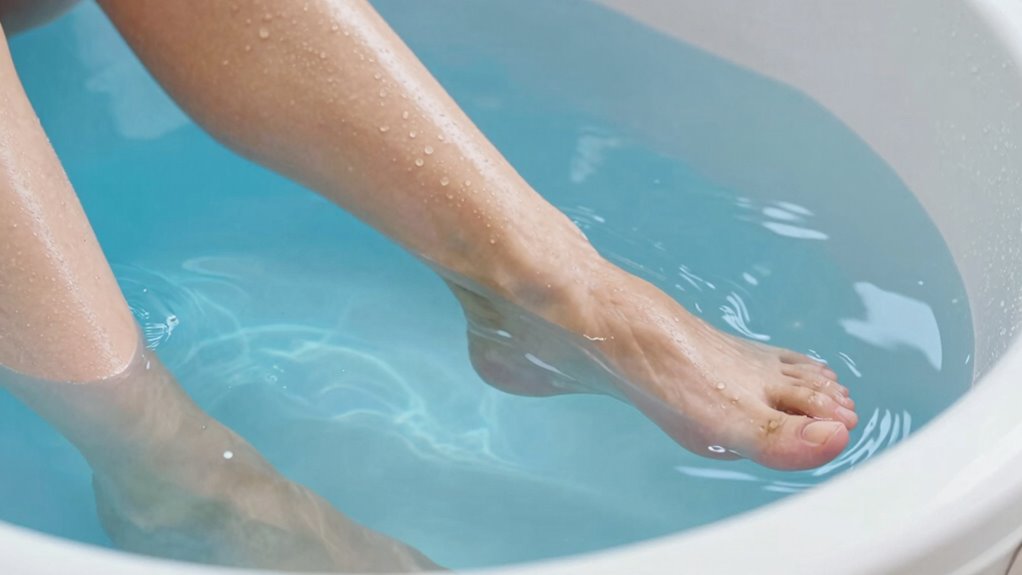
Have you ever wondered how cold plunges can improve your foot hygiene? It turns out, immersing your feet in cold water offers more than just an invigorating sensation; it can notably help prevent foot odor and maintain healthy skin. When you dip your feet into cold water, you stimulate blood circulation, which keeps the skin nutrient-rich and resilient. This enhanced circulation helps your body’s natural defense against bacteria that cause odor, reducing the chances of your feet smelling unpleasant after a long day. Additionally, cold plunges can slow down excessive sweating, a primary contributor to foot odor. Less sweat means fewer damp environments for bacteria to thrive, making your feet less prone to that familiar, unpleasant smell. Incorporating free floating techniques in your routine can further enhance circulation and overall foot health.
However, it’s vital to be mindful of skin dryness, which can sometimes occur with frequent cold water exposure. Cold plunges can strip away natural oils on your skin’s surface, leaving it feeling tight, flaky, or irritated if not properly managed. This dryness can compromise your skin’s barrier, making it more vulnerable to cracks, infections, or discomfort. To counteract this, it’s important to moisturize your feet after each plunge with a good, hydrating lotion. Proper hydration helps replenish lost oils, keeping your skin soft, supple, and resilient. When you follow a routine that includes moisturizing, you’ll find that cold plunges become a beneficial part of your hygiene regimen rather than a cause for concern about skin dryness.
Moisturize your feet after cold plunges to prevent dryness and keep skin soft and healthy.
Another tip to maximize the benefits is to keep your feet clean before and after the cold plunge. Washing your feet thoroughly removes dirt, sweat, and bacteria that can accumulate throughout the day, reducing the risk of odor and skin issues. Dry your feet completely afterward, paying close attention to areas between your toes, where moisture tends to linger and foster bacterial growth. Wearing breathable footwear and moisture-wicking socks also supports your efforts in maintaining fresh, healthy feet. Remember, consistency is key—integrating cold plunges into your regular routine, combined with proper foot care, can lead to noticeably cleaner, odor-free feet.
In short, cold plunges are a simple yet effective way to improve foot hygiene by controlling odor and supporting skin health. When paired with good hygiene practices and moisturization, they help you enjoy healthier feet without the worries of funk or dryness. Embrace this cool ritual, and your feet will thank you with freshness and comfort every day.
Frequently Asked Questions
How Often Should I Change My Cold Plunge Water?
You should change your cold plunge water at least once a week for best plunge maintenance. Regular water filtration helps keep the water clean and free of bacteria, but over time, contaminants build up. If you notice any odors or cloudiness, change the water sooner. Consistent maintenance ensures fresh, hygienic water, preventing funk and prolonging your plunge’s lifespan. Always monitor water quality to keep your plunge safe and enjoyable.
Can I Use Soap or Disinfectants in the Plunge?
You shouldn’t use soap or disinfectants in your cold plunge. Soap safety isn’t designed for this environment and can leave residues that may irritate your skin or disrupt your skin’s natural balance. Disinfectant risks are also high, as they can be harsh and potentially harmful if absorbed through your skin. Instead, regularly change the water and rinse the plunge thoroughly to keep it clean and safe.
What Footwear Is Best for Cold Plunge Foot Hygiene?
Did you know that wearing waterproof footwear and breathable socks can reduce bacteria buildup by up to 60%? For cold plunge foot hygiene, opt for waterproof shoes that keep your feet dry and prevent fungal growth. Pair them with breathable socks to allow airflow and moisture escape. This combo helps maintain cleanliness, prevents funk, and keeps your feet fresh after each plunge. Always choose well-ventilated, quick-drying footwear for best results.
Does Foot Hygiene Affect Overall Health Benefits?
Yes, your foot hygiene directly impacts your overall health benefits. If you neglect proper care, foot odor and skin infections can develop, leading to discomfort and potential spreading of bacteria. Keeping your feet clean and dry enhances your cold plunge experience and prevents these issues. Good hygiene guarantees you’re fully reaping the health benefits, like improved circulation and mental clarity, without the distraction of foot odor or infections.
Are There Signs Indicating My Foot Hygiene Needs Improvement?
A stitch in time saves nine, so watch for signs your foot hygiene needs work. If you notice persistent foot odor or fungal infections like itchy, flaky skin, it’s time to boost your routine. These issues indicate trapped sweat and dirt, encouraging bacteria growth. Regular washing, thorough drying, and changing socks can help. Don’t ignore these signs—your feet’s health impacts your overall comfort and well-being.
Conclusion
Keep your feet fresh and odor-free by embracing the simple rule of cold plunge foot hygiene. Picture your feet dipping into icy waters, washing away sweat and bacteria like a invigorating wave, leaving them revitalized and clean. By maintaining this easy routine, you’ll step confidently into your day, feeling cool and invigorated with every stride. Remember, a little cold water goes a long way—your feet will thank you for it, turning everyday hygiene into a refreshing ritual.