
Hard water contains high mineral levels like calcium and magnesium, which can cause buildup inside your ice maker. This mineral accumulation can clog components, reduce efficiency, and even cause leaks or failure over time. To protect your machine, it’s essential to install water softeners, replace filters regularly, and clean often. Want to keep your ice clear and fresh? Discover simple ways to stop hard water damage and extend your ice maker’s lifespan.
Prime for Young Adults — start your free trial
Fast free delivery, streaming and member deals for eligible 18–24 year olds.
As an affiliate, we earn on qualifying purchases.
Key Takeaways
- Hard water contains minerals that cause deposits and buildup inside the ice maker, reducing efficiency and causing damage.
- Mineral buildup from hard water can clog components, strain motors, and lead to leaks or machine failure.
- Signs of hard water damage include cloudy ice, smaller or misshapen cubes, and unusual noises during operation.
- Regular maintenance, water softening, and filter replacement help prevent mineral deposits and extend the ice maker’s lifespan.
- Using filtration systems like reverse osmosis ensures high-quality ice and protects the appliance from mineral-related issues.
As an affiliate, we earn on qualifying purchases.
What Is Hard Water and Why Does It Harm Your Ice Maker?
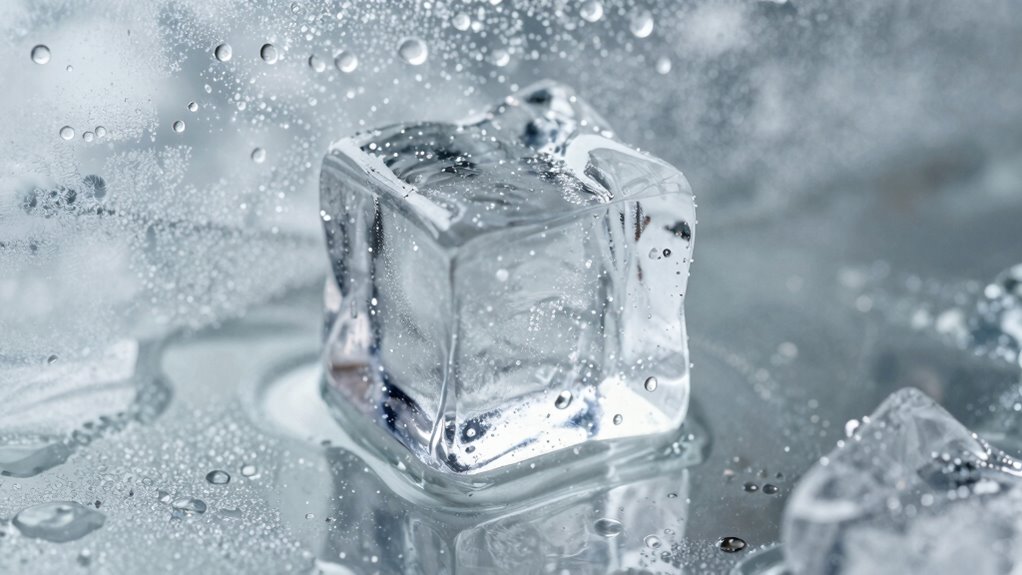
Hard water contains high levels of minerals like calcium and magnesium, which can cause problems for your ice maker. These minerals lead to mineral deposits that build up inside the machine, clogging components and reducing efficiency. Water softening helps remove or reduce these minerals, preventing the buildup that damages your appliance. Without softening, mineral deposits accumulate on the ice maker’s parts, such as the condenser and water lines, leading to blockages and poor ice production. Over time, these deposits can cause leaks, motor strain, and even complete failure of the machine. Understanding that hard water’s mineral content is the main culprit emphasizes the importance of water softening solutions. Proper maintenance and the use of natural filtration systems can further extend the life of your ice maker and improve ice quality. Recognizing mineral deposit buildup as a primary issue highlights the need for preventative care. Regularly monitoring water quality and implementing preventative maintenance can help keep your ice maker functioning optimally and prevent costly repairs. Additionally, understanding the effects of mineral deposits on appliance longevity underscores the importance of water treatment. Using appropriate water testing can help identify potential issues early and avoid costly repairs. Protecting your ice maker from mineral deposits ensures it runs smoothly and produces clean, clear ice.
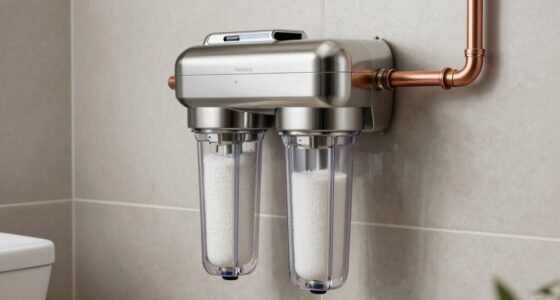
reverse osmosis water filtration system
As an affiliate, we earn on qualifying purchases.
As an affiliate, we earn on qualifying purchases.
How Can You Tell If Hard Water Is Damaging Your Ice Maker?
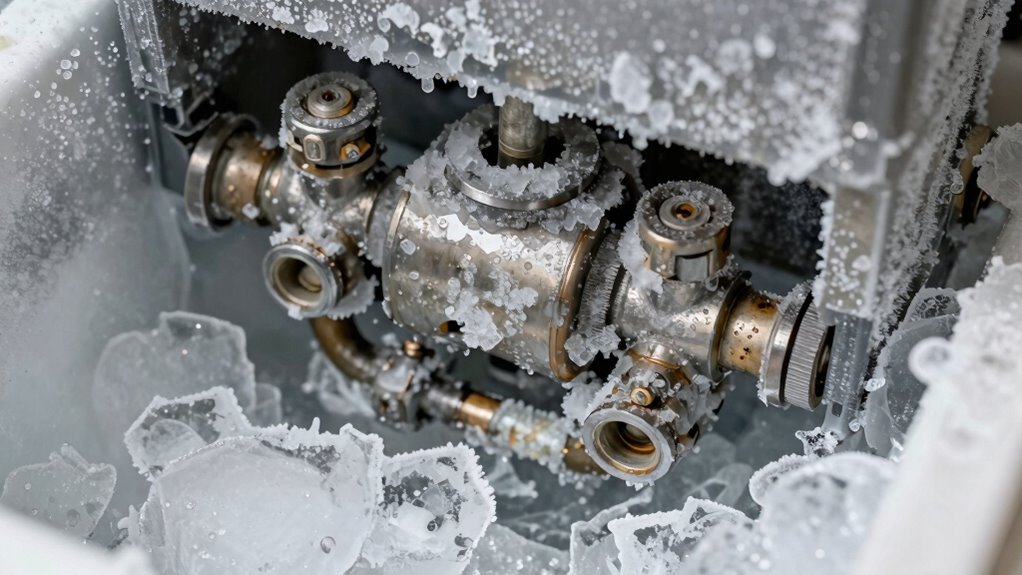
Since mineral buildup from hard water can silently damage your ice maker, it’s important to recognize the signs early. Poor water quality often leads to cloudy or discolored ice, indicating mineral deposits. You might notice your ice maker runs longer than usual or produces smaller, misshapen ice cubes, which can signal blockages or efficiency issues. Additionally, an increase in malfunctions or strange noises during operation can point to mineral buildup affecting internal components. Over time, these issues can reduce your appliance lifespan if left unchecked. Paying attention to the clarity of your ice, the machine’s performance, and any unusual sounds helps you catch hard water damage early, ensuring you can take steps to protect your ice maker before costly repairs become necessary. Regular maintenance, including descaling with appropriate cleaning agents, is essential to prevent mineral accumulation and extend the life of your appliance. Implementing hard water treatment can significantly reduce mineral deposits and safeguard your appliance’s longevity. Being aware of hard water effects can help you implement preventive measures more effectively. Detecting early signs of mineral buildup can also help you avoid costly repairs and keep your ice maker functioning optimally for years to come.
ice maker water filter replacement
As an affiliate, we earn on qualifying purchases.
As an affiliate, we earn on qualifying purchases.
How Hard Water Causes Buildup and Long-Term Damage
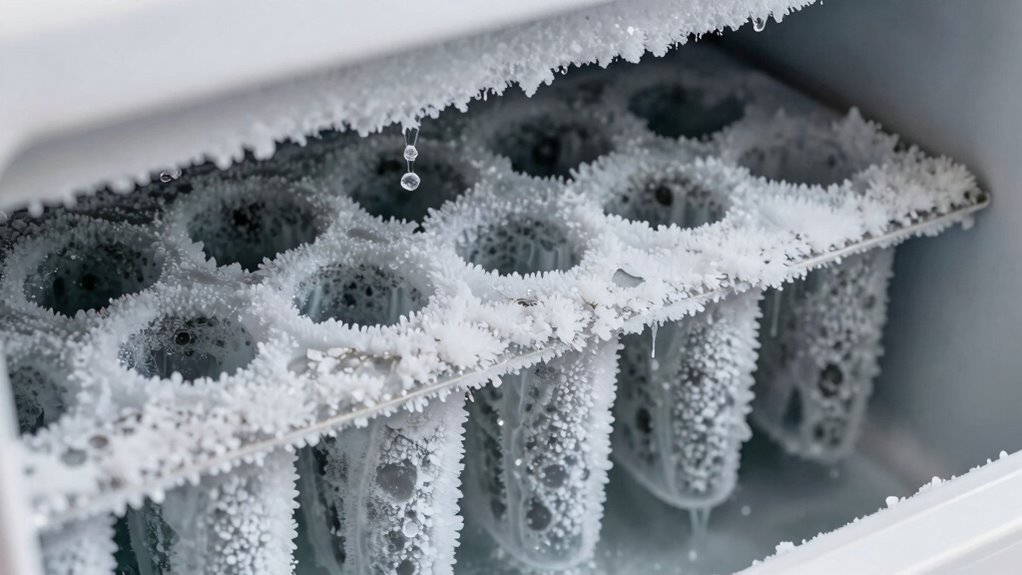
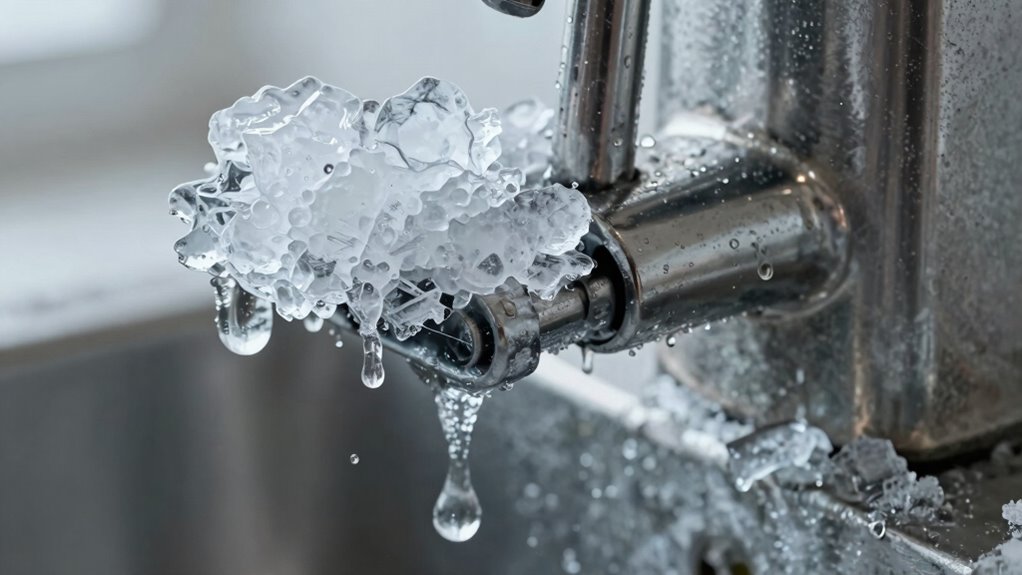
When mineral-rich water flows through your ice maker, the dissolved minerals—mainly calcium and magnesium—don’t just pass through; they settle and accumulate on internal surfaces. Over time, this causes scale buildup and mineral deposits that hinder your machine’s efficiency. This buildup can clog water pathways, impair ice production, and lead to long-term damage. To understand how this happens: 1. Mineral deposits form on the heating elements and sensors, reducing heat transfer and causing freezing issues. 2. Scale buildup narrows water channels, decreasing water flow and ice quality. 3. Continuous accumulation can corrode components, shortening your ice maker’s lifespan. Recognizing these signs helps you prevent costly repairs and maintain ideal performance. Proper protection against hard water is essential to avoid these damaging effects. Understanding mineral deposits is key to implementing effective preventative measures and ensuring your ice maker remains in optimal condition. Regular maintenance and water treatment can also help reduce mineral buildup, and incorporating water softening systems can significantly extend the life of your appliance. Additionally, performing periodic descaling procedures can help remove existing deposits and keep your ice maker functioning smoothly.
hard water mineral remover for appliances
As an affiliate, we earn on qualifying purchases.
As an affiliate, we earn on qualifying purchases.
Easy Ways to Prevent Hard Water Damage to Your Ice Maker
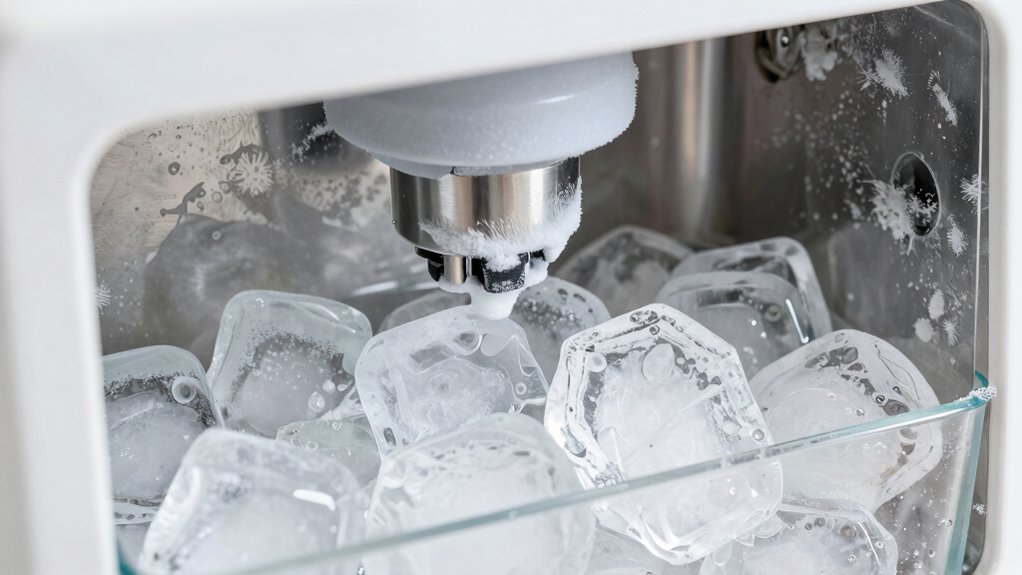
To prevent hard water damage to your ice maker, regular maintenance and simple preventative measures are key. Water softening is one effective method—install a water softener to reduce mineral buildup. Additionally, keep up with filter maintenance; change filters regularly to prevent mineral deposits from passing through. Here’s a quick guide:
| Action | Benefit |
|---|---|
| Use water softening systems | Reduces mineral content, preventing buildup |
| Replace filters promptly | Ensures clean, soft water flows into the maker |
| Regular cleaning | Removes existing mineral deposits |
| Monitor water quality | Detects hard water issues early and allows for timely intervention |
| Schedule maintenance | Keeps your ice maker functioning smoothly |
Consistent care minimizes damage and extends your ice maker’s lifespan. Proper filtration and softening are essential for water quality and ensuring your appliance operates efficiently over time. Regularly assessing your water hardness levels can help you determine when additional treatment is necessary. Regularly testing water hardness can also help in identifying when to upgrade or adjust your water treatment system.
Tips for Keeping Your Ice Clear and Fresh Despite Hard Water
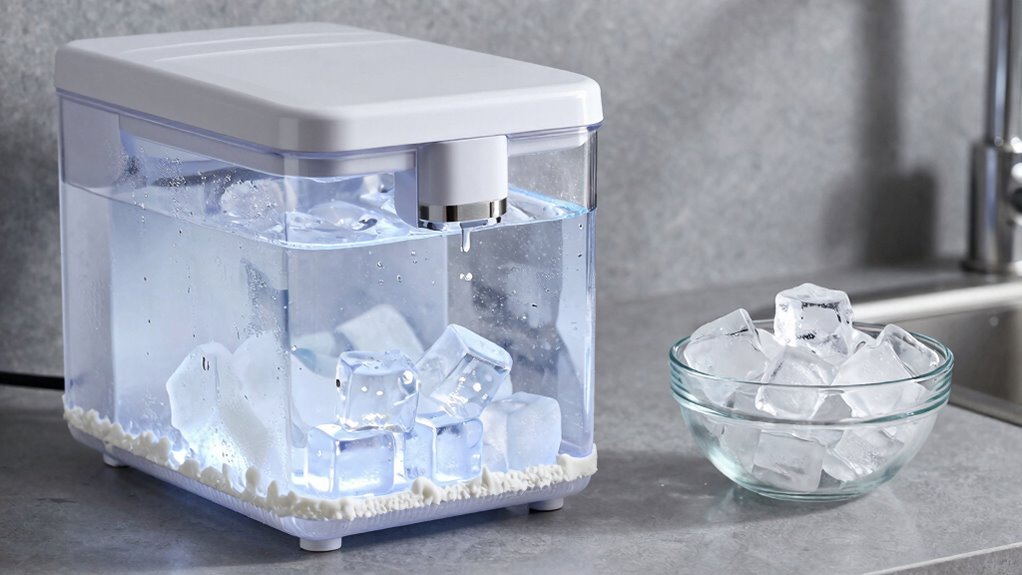
Maintaining clear and fresh ice despite hard water can be challenging, but small adjustments make a big difference. First, ensure your water softening system is functioning properly, as it reduces mineral buildup that clouds ice. Second, regularly clean and replace your ice maker’s filters; clean filters prevent mineral deposits and improve water quality. Third, consider using a pre-filter or additional filtration system to further reduce impurities before water reaches your ice maker. These steps help maintain ice clarity and taste. Consistent filter maintenance keeps your system efficient, and water softening minimizes mineral content. Proper water filtration is essential for achieving high-quality ice, especially in areas with hard water. Investing in a hard water treatment system can significantly enhance the quality of your ice by further reducing mineral levels. Additionally, choosing the right filtration system can provide ongoing benefits for your ice maker’s performance. Using a reverse osmosis system can almost eliminate mineral impurities, ensuring the clearest ice possible. By paying attention to these details, you’ll enjoy clean, fresh ice that looks and tastes great, even with hard water in your home.
Frequently Asked Questions
What Are the Signs That My Ice Maker Needs Professional Repair?
If you notice your ice maker produces small or misshapen ice, or stops making ice altogether, these are clear repair signs. Strange noises, leaks, or ice buildup also indicate ice maker issues. When these problems persist despite troubleshooting, it’s time to call a professional. Ignoring repair signs can worsen the problem, so prompt inspection guarantees your ice maker functions efficiently and lasts longer.
Can Hard Water Affect Other Appliances in My Home?
You might not realize it, but hard water can silently damage your appliances. It causes scale buildup inside your dishwasher, coffee maker, and even your water heater, leading to reduced efficiency and potential corrosion. Over time, this unseen threat weakens components, risking costly repairs. Stay vigilant—regular maintenance and water softening can protect all your appliances from the hidden dangers of hard water, ensuring they last longer and perform better.
Are Water Softeners Effective for Protecting Ice Makers?
Yes, water softeners are effective for protecting your ice maker. They provide water softener benefits by reducing minerals like calcium and magnesium, which cause hard water. These mineral reduction techniques help prevent scale buildup, improve ice quality, and extend your ice maker’s lifespan. Regularly using a water softener guarantees your appliance operates efficiently, saving you money on repairs and maintenance while providing you with cleaner, clearer ice.
How Often Should I Clean My Ice Maker to Prevent Buildup?
You should clean your ice maker every 3 to 6 months to prevent mineral buildup. Establishing a regular cleaning schedule helps keep mineral deposits from accumulating, which can affect ice quality and machine performance. If you notice cloudy or off-tasting ice sooner, increase cleaning frequency. Regular maintenance guarantees your ice maker runs smoothly, produces clear ice, and avoids costly repairs caused by mineral buildup from hard water.
What Are the Best Filters to Reduce Mineral Content in Tap Water?
If you want to reduce mineral content in your tap water, consider using a combination of reverse osmosis and activated carbon filters. For example, a household switched to reverse osmosis with activated carbon filtration saw clearer ice and fewer mineral deposits. These filters effectively remove impurities, with reverse osmosis targeting minerals and contaminants, while activated carbon improves taste and odor. Investing in these filters helps protect your ice maker from mineral buildup and prolongs its lifespan.
Conclusion
So, you thought your ice maker was invincible, right? Turns out, hard water’s silent assault can turn your crisp, clear cubes into cloudy, mineral-laden blocks. Ironically, the very water you rely on for invigorating drinks is quietly causing long-term damage. But don’t worry—by taking simple steps, you can keep your ice pristine. After all, it’s easier to prevent buildup than to scrape away the aftermath of neglect. Stay vigilant, and your ice will thank you.
Fall yard work Picks
leaf blowers
As an affiliate, we earn on qualifying purchases.