
To keep your water testing supplies accurate, store them in tightly sealed containers to prevent exposure to air and moisture. Keep them away from sunlight by placing them in a cool, dark area, which preserves reagent potency. Maintain a stable environment with consistent temperature and organize supplies with clear labels and expiration dates. Regularly inspect your materials for signs of deterioration and replace them when needed. Want to learn more tips to guarantee precise water testing?
Key Takeaways
- Seal reagents, test tubes, and supplies tightly after each use to prevent contamination and evaporation.
- Store supplies in a cool, dark, and temperature-controlled environment away from sunlight.
- Label containers clearly with contents and expiration dates to ensure proper usage.
- Keep supplies organized by type for easy access and to prevent mix-ups.
- Regularly inspect materials for signs of deterioration and replace expired or compromised items.
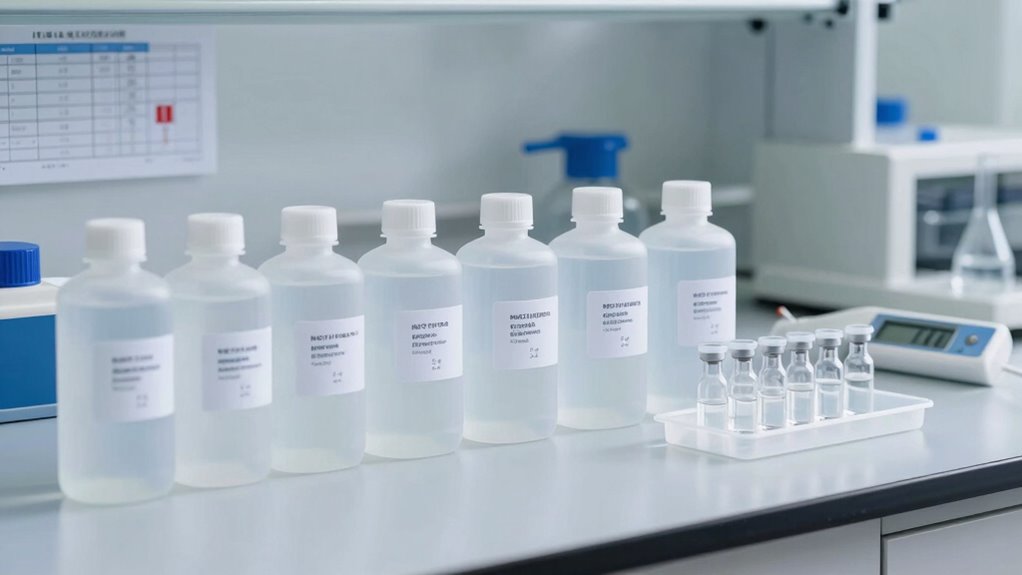
Proper storage of water testing supplies is crucial to guarantee their accuracy and longevity. One of the most important aspects is ensuring proper container sealing. When you seal your testing reagents, test tubes, and other supplies tightly, you prevent air, moisture, and contaminants from entering. Exposure to air can cause chemical reactions that degrade the reagents, making test results unreliable. Moisture intrusion can dilute solutions or cause chemical breakdowns, while contaminants can interfere with test accuracy. Always double-check that caps and lids are securely tightened after each use. Using containers with tight seals not only preserves the integrity of your supplies but also minimizes the risk of accidental spills or evaporation, which can compromise test results over time.
Equally critical is protecting your supplies from exposure to sunlight. Ultraviolet (UV) rays from sunlight can cause chemical reactions that degrade reagents, leading to inaccurate readings. When reagents are exposed to sunlight, they may change color or lose potency altogether. To prevent this, store your water testing supplies in a cool, dark place, such as a cabinet or a storage box away from windows or direct sunlight. If your supplies come in transparent bottles, consider transferring them into opaque containers or wrapping them in foil to block out light. Consistently shielding your testing materials from sunlight ensures that their chemical properties remain stable, maintaining their effectiveness for accurate testing. Additionally, choosing reliable storage methods can help extend the shelf life of your supplies and ensure precise results over time.
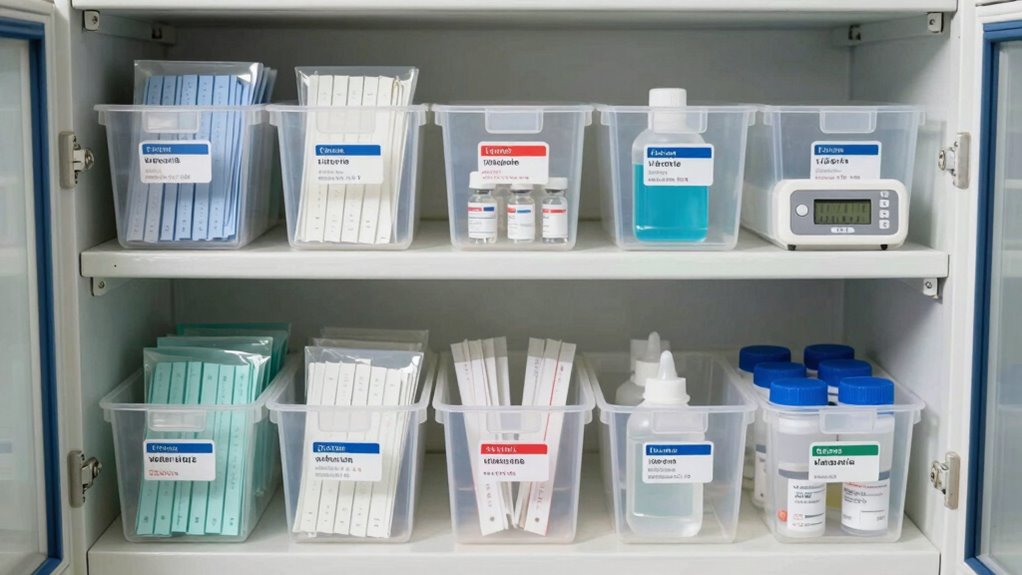
In addition to sealing and light protection, you should also keep your supplies in a stable, temperature-controlled environment. Fluctuations in temperature can accelerate chemical deterioration, so avoid storing supplies in places that experience extreme heat or freezing conditions. A dedicated storage cabinet or drawer in a climate-controlled area works well. Label your containers clearly and organize them by type and expiration date, so you always know what you’re using and when it needs replacing. Regularly inspecting your supplies for any signs of deterioration, such as discoloration, clumping, or strange odors, can save you from inaccurate test results later on.
Frequently Asked Questions
How Often Should I Replace My Water Testing Supplies?
You should replace your water testing supplies based on the reagent shelf life, typically every 6 to 12 months, or as recommended on the packaging. Regularly check storage containers to make certain they’re airtight and in a cool, dark place. If reagents change color or become cloudy, discard them. Keeping supplies stored properly and replacing them on schedule ensures accurate results and reliable water testing.
Can I Store Testing Supplies Outdoors?
Storing testing supplies outdoors isn’t ideal, as it exposes chemicals to temperature fluctuations and moisture, risking chemical stability. You might think outdoor storage is convenient, but it can lead to inaccurate results. Instead, keep your supplies indoors in a cool, dry place, away from sunlight. This preserves their accuracy and longevity, ensuring your tests remain reliable. Protecting your testing kits now saves you troubleshooting headaches later.
What Temperature Is Ideal for Storing Water Testing Kits?
You should store water testing kits at a temperature between 59°F and 86°F to guarantee accuracy. Maintaining temperature stability is vital, so avoid extreme heat or cold. Use proper storage containers that insulate and protect your supplies from temperature fluctuations. Keep them in a cool, dry place away from direct sunlight, and check regularly to prevent exposure to conditions that could compromise their reliability.
Do Different Tests Require Separate Storage Conditions?
Yes, different tests often need separate storage conditions. You should pay attention to storage humidity because high humidity can affect reagent stability, leading to inaccurate results. Store reagents and test kits according to manufacturer instructions, usually in a cool, dry place with consistent temperature. Keep reagents tightly sealed to prevent moisture ingress, and avoid exposing them to direct sunlight or temperature fluctuations that could compromise their accuracy.
How Can I Tell if My Supplies Have Expired?
You’ll notice expiration dates printed on your testing supplies, like bottles or strips, often in small print. Check these dates regularly; expired supplies might turn cloudy or show discoloration, indicating they’re past their prime. Using expired kits increases contamination risks and could give inaccurate results. If you see any signs of deterioration or the date has passed, it’s best to substitute them to ensure your water tests stay reliable and safe.
Conclusion
By storing your water testing supplies properly, you guarantee they stay accurate like a well-tuned instrument. Think of your supplies as tiny guardians of your water quality—if neglected, their power diminishes. Keep them in a cool, dry place and seal them tightly, so they remain ready when you need them most. Remember, in the world of water testing, proper storage isn’t just a choice—it’s the secret to trustworthy results that protect your health and environment.