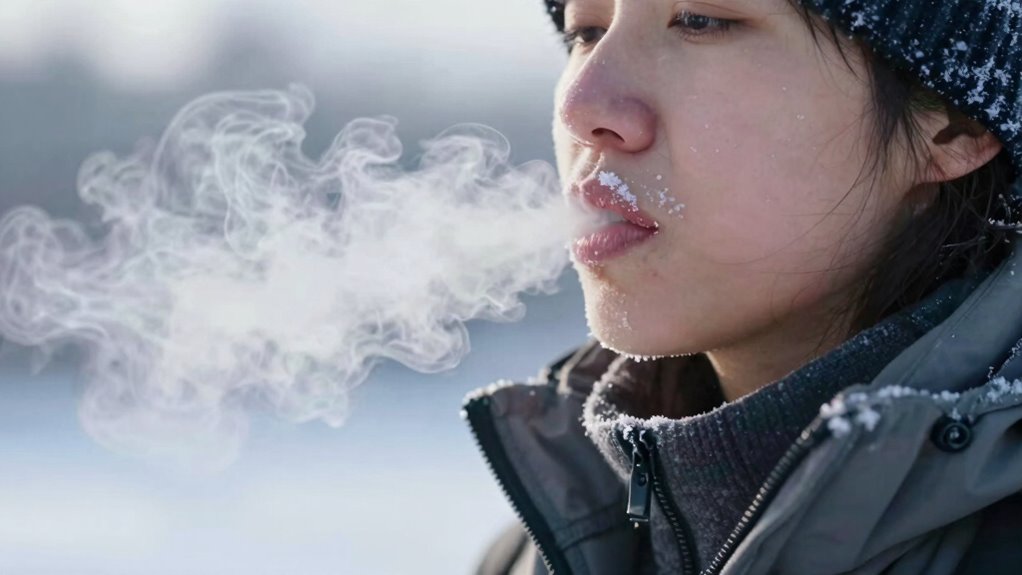

Mouth breathing and shallow, rapid breaths make cold exposure harder by bypassing nasal filtering and warming of air, which cools your blood and tissues faster. Relying on quick, shallow breaths reduces oxygen efficiency and causes your body to work harder to stay warm. Forgetting to breathe diaphragmatically also hampers your ability to maintain core temperature. Correcting these mistakes can markedly improve your cold resilience—keep exploring to learn how to optimize your breathing techniques.

Get home appliances delivered free with Prime
- Fast, free delivery on millions of items
- Prime Video, Amazon Music and more included
- Member-only deals all year
Key Takeaways
- Breathing through the mouth during cold exposure bypasses nasal warming and humidification, increasing cold sensitivity.
- Relying on shallow, rapid breaths reduces oxygen efficiency and accelerates heat loss.
- Ignoring diaphragmatic breathing limits deep oxygen intake, impairing your body’s ability to stay warm.
- Breathing patterns that promote stress and vasoconstriction decrease cold tolerance.
- Failing to practice nasal, diaphragmatic breathing hampers cold adaptation and resilience.
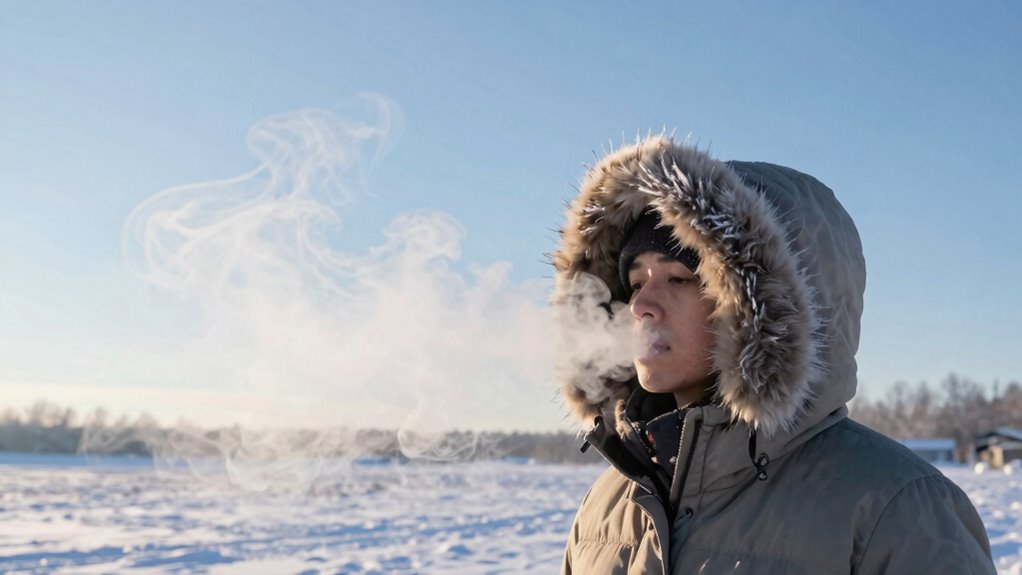
Have you ever wondered how your breathing habits can impact your body’s response to cold exposure? It’s more than just oxygen intake; it influences your core temperature regulation and your overall resilience to cold. Many people unknowingly make breathing mistakes that make enduring cold conditions much harder. One common mistake is relying on mouth breathing instead of diaphragmatic breathing. When you breathe through your mouth, you tend to take quick, shallow breaths, which don’t fully engage your diaphragm. This type of breathing can lead to increased breathing rate and decreased oxygen efficiency, making it harder for your body to conserve heat. Mouth breathing also bypasses the nasal passages, which are indispensable for filtering, humidifying, and warming the air you breathe. When cold air hits your lungs directly, it can cause rapid cooling of your blood and tissues, impairing your body’s ability to maintain warmth.
On the other hand, practicing diaphragmatic breathing helps you take slow, deep breaths that engage your diaphragm fully. This technique allows you to maximize oxygen intake while keeping your breathing calm and controlled. When you breathe deeply through your nose, your body warms and humidifies the air before it reaches your lungs, which helps maintain your core temperature and prevents cold-related stress. Diaphragmatic breathing also promotes relaxation, reducing stress hormones that can cause vasoconstriction—your body’s way of conserving heat but one that can backfire during cold exposure by reducing blood flow to extremities. By breathing diaphragmatically, you support a steady oxygen supply, which helps your body generate heat more efficiently and sustain warmth longer. Developing proper breathing techniques can also enhance your overall thermoregulation, making cold exposure more manageable. Many beginners naturally default to mouth breathing, especially during physical activity or cold exposure, because it feels easier or more instinctive. However, over time, training yourself to breathe through your nose and engage your diaphragm can remarkably enhance your cold resilience. It’s not just about taking in more air; it’s about optimizing each breath to support your body’s thermoregulatory processes. When you consciously focus on diaphragmatic breathing, you also help manage your overall stress levels, which is indispensable because stress worsens cold sensitivity. Remember, your breathing pattern directly influences how well your body adapts to cold environments, so making a habit of nasal, diaphragmatic breathing can be a game-changer for staying warm and comfortable during exposure.
As an affiliate, we earn on qualifying purchases.
Frequently Asked Questions
How Does Breathing Affect Cold Tolerance Over Time?
Your breathing directly impacts cold tolerance over time by influencing respiratory efficiency and oxygen absorption. When you breathe properly, you enhance oxygen intake, which helps your body stay warm and adapt better to cold environments. Conversely, shallow or irregular breathing reduces oxygen absorption, making you more susceptible to cold stress. Consistently practicing deep, controlled breaths boosts your resilience, improving your ability to withstand cold exposure over time.
Can Breathing Habits Influence Recovery After Cold Exposure?
Think of your breath as a river guiding your recovery. Breath control and lung capacity act like dams that regulate this flow, helping you recover faster after cold exposure. When you master steady, controlled breathing, you improve oxygen delivery, reducing recovery time. Good breathing habits strengthen your lungs, support circulation, and make it easier to bounce back from cold stress, turning your body into a resilient, flowing force.
Are There Specific Breathing Techniques Beneficial for Cold Adaptation?
Yes, certain breathing techniques can boost your cold adaptation. Practices like diaphragmatic breathing and box breathing help regulate your nervous system, making it easier to handle cold exposure. By focusing on slow, controlled breaths, you activate your parasympathetic response, reducing stress and improving circulation. Incorporate these techniques regularly to enhance your resilience, making cold exposure more manageable and supporting your overall cold adaptation process.
How Does Nasal Versus Mouth Breathing Impact Cold Exposure?
You’ll find nasal breathing more effective during cold exposure because it filters, warms, and humidifies the air, reducing nasal congestion and preventing cold shock. Mouth breathing, on the other hand, bypasses these benefits, allowing cold air to enter your lungs directly, which can cause rapid cooling and discomfort. By focusing on nasal breathing, you help maintain core temperature and improve your tolerance to cold environments.
Can Breathing Exercises Reduce Cold-Related Stress on the Body?
Yes, breathing exercises can improve your breathing efficiency and help reduce cold-related stress on your body. By practicing deep, controlled breaths, you activate your parasympathetic nervous system, calming your stress response. This lowers your heart rate and conserves energy during cold exposure. Regularly incorporating breathing exercises into your routine can make cold exposure more manageable, helping you stay relaxed and resilient in chilly conditions.
As an affiliate, we earn on qualifying purchases.
Conclusion
By avoiding these common breathing mistakes, you’ll open the full power of cold exposure—turning a chilly challenge into a potent tool for health. Mastering your breath isn’t just a small tweak; it’s like wielding a secret weapon against the cold. Don’t let faulty breathing sabotage your efforts—embrace proper techniques and watch your resilience soar to levels that seem almost superhuman. With the right breath, the cold becomes your ally, not your enemy.
cold weather breathing exercises
As an affiliate, we earn on qualifying purchases.
As an affiliate, we earn on qualifying purchases.
breathing technique for cold exposure
As an affiliate, we earn on qualifying purchases.
As an affiliate, we earn on qualifying purchases.
Fall yard work Picks
leaf blowers
As an affiliate, we earn on qualifying purchases.