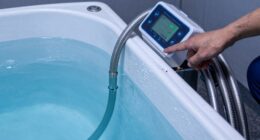

To tell the difference between hypothermia and normal cold, pay attention to symptoms. Normal cold causes mild discomfort, like shivering, sneezing, and a sore throat, with your core temperature staying near normal. Hypothermia, however, involves dangerously low body temperature, leading to intense shivering, confusion, slurred speech, and pale or blue skin. Recognizing these signs helps you respond quickly. Keep exploring to learn how to protect yourself and others from cold-related dangers.

Get home appliances delivered free — and shop member deals
- Fast, free delivery on millions of items
- Access to Prime Big Deal Days deals on October 6–7
- Prime Video, Amazon Music and more included
Key Takeaways
- Hypothermia involves a dangerously low core temperature below 95°F (35°C), impairing bodily functions, while normal cold causes mild discomfort with near-normal temperatures.
- Shivering and redness are common in both, but hypothermia causes confusion, slurred speech, and slowed breathing, unlike normal cold.
- Skin in hypothermia may appear pale or blue, especially in extremities, whereas normal cold often results in redness and slight skin warmth.
- Hypothermia affects the entire body and impairs mental status, while normal cold primarily causes localized discomfort and minor symptoms.
- Monitoring core temperature with a proper thermometer helps distinguish hypothermia from normal cold symptoms.
Key Differences Between Hypothermia and Normal Cold
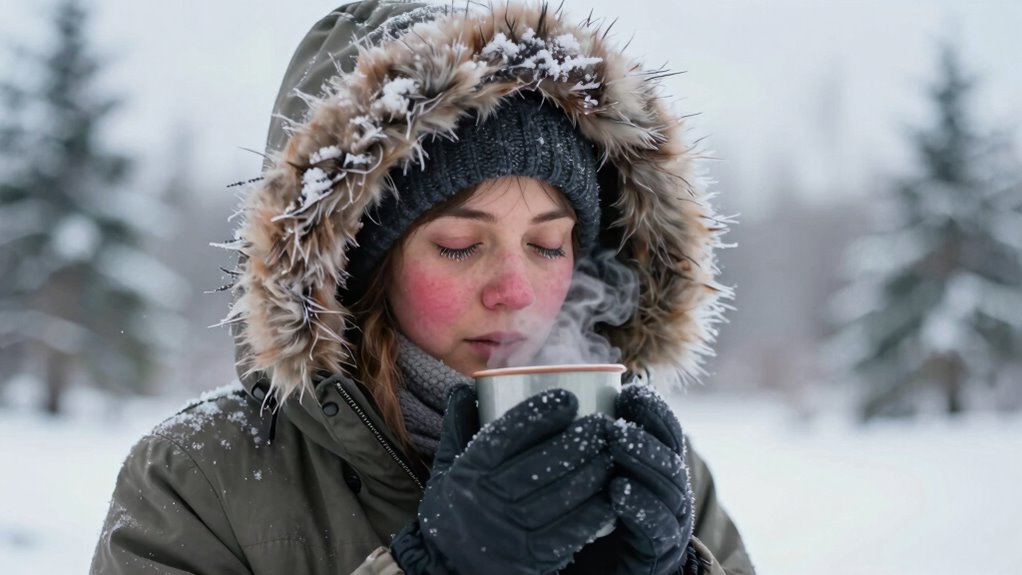
Have you ever wondered what truly sets hypothermia apart from just feeling cold? The key difference is severity and how your body responds. With normal cold, your body might shiver, and your fingers could turn red or pale—signs of frostbite awareness. Cold weather myths often exaggerate how long you can stay out without harm, but hypothermia develops when your core temperature drops dangerously low, impairing your judgment and bodily functions. Unlike feeling chilly, hypothermia causes confusion, slurred speech, and loss of coordination. Recognizing these differences helps you act quickly. Remember, frostbite affects extremities, but hypothermia impacts your entire body. Monitoring your body’s temperature regulation is essential for safety during cold weather, preventing minor discomfort from turning into a life-threatening condition. Being aware of the signs of hypothermia can make all the difference in emergency situations. Proper clothing and cold weather precautions can significantly reduce your risk of hypothermia.
Recognizing the Symptoms of Cold and Hypothermia
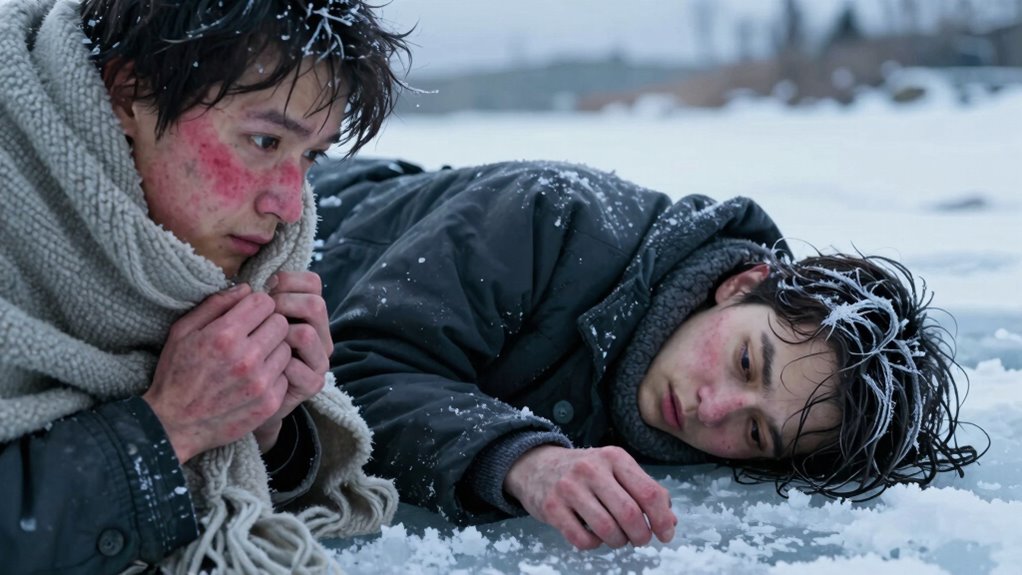
Understanding the symptoms of cold and hypothermia helps you respond quickly and appropriately. When you’re involved in winter sports or spending time outdoors in cold weather, knowing what to look for can prevent serious health issues. Symptoms of a normal cold include sneezing, a sore throat, runny nose, and mild fatigue. Hypothermia, however, presents with more severe signs like intense shivering, confusion, slurred speech, drowsiness, and slow, shallow breathing. You might notice someone’s skin turning pale or blue, especially on extremities. Early recognition of these symptoms allows you to take immediate action—such as moving to a warmer environment or providing warm fluids—to improve cold prevention and avoid escalation to dangerous hypothermia. Staying informed about water temperature and weather conditions can also help you prepare and prevent cold-related health issues. Recognizing the early warning signs of hypothermia is crucial for timely intervention. Stay vigilant and protect yourself during winter activities.
How Body Temperature Helps Distinguish Cold-Related Conditions
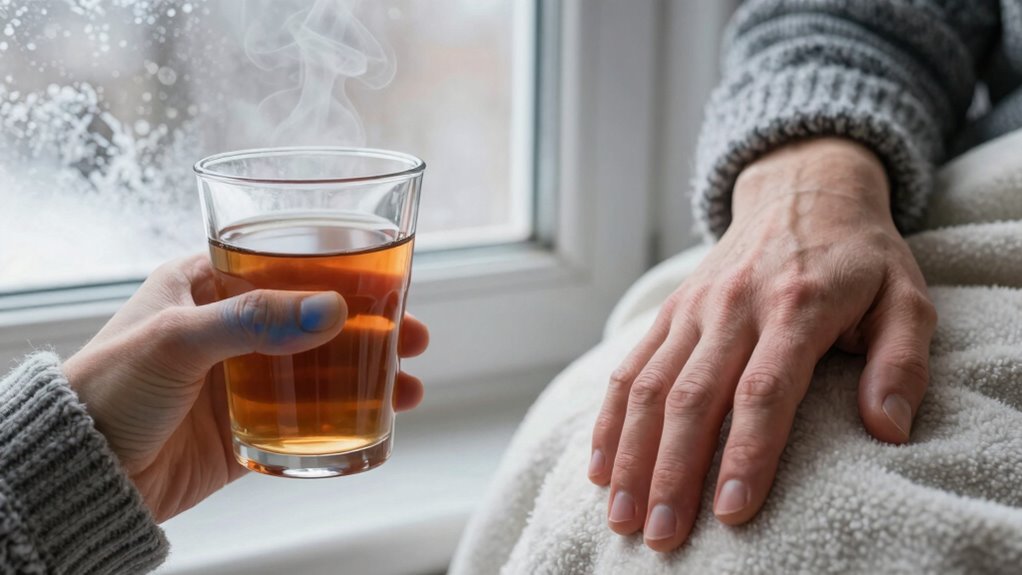
Body temperature is a key factor in distinguishing between a common cold and hypothermia. When you have a cold, your body temperature usually remains normal or slightly elevated due to your immune response. In contrast, hypothermia causes a significant drop in body temperature, often below 95°F (35°C). This decrease impairs your body’s ability to generate heat, leading to confusion and sluggishness. Cold perception also varies; with a cold, your skin feels chilled but not dangerously numb. With hypothermia, you may feel intense cold, but your body’s core temperature drops, making you less aware of the cold sensation. Monitoring your body temperature helps you recognize a serious condition early and respond appropriately. Cold perception alone isn’t enough; knowing your actual temperature is crucial. Additionally, vetted thermometers are essential tools for accurately assessing body temperature in emergency situations.
What Causes Cold and Hypothermia? Risk Factors Explained
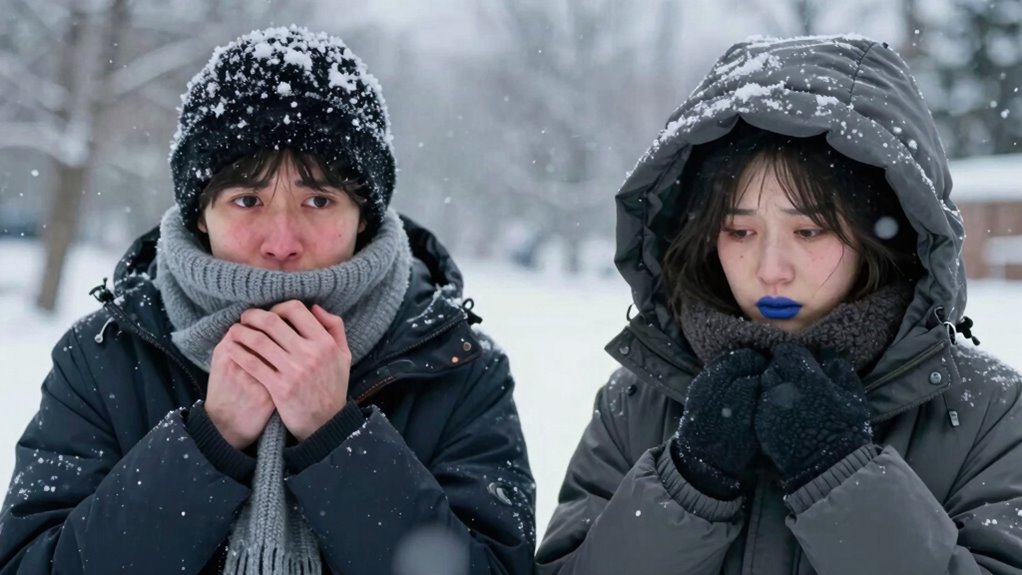
Your risk of feeling cold or developing hypothermia depends on several factors, like how cold the environment is and how long you’re exposed. Wearing inadequate clothing or spending time outside in chilly conditions increases those risks. Additionally, age and health issues can make some people more vulnerable to losing body heat quickly. Risk factors for hypothermia can also include certain medications that impair thermoregulation. Free floating elements in outdoor environments, such as wind and humidity, can further influence how rapidly your body temperature drops. Environmental conditions, such as humidity levels, play a significant role in heat loss and overall vulnerability to hypothermia.
Environmental Temperature Effects
Environmental temperature plays a pivotal role in determining how your body responds to cold conditions. When temperatures drop, your body needs to adapt quickly, especially during outdoor activities. If you’re exposed to sustained cold, your body works harder to maintain core temperature through shivering and increased metabolism, but prolonged exposure can overwhelm these defenses. Climate adaptation influences your risk, as living in colder regions may enhance your resilience, while sudden cold snaps catch others off guard. External factors like wind and dampness can intensify the cold’s effects, increasing the risk of hypothermia. Understanding how environmental temperature impacts your body helps you recognize when conditions are dangerous, so you can take proper precautions and avoid cold-related health issues.
Clothing and Exposure Risks
Clothing choices and exposure duration are key factors that determine your risk of cold-related health issues. Wearing inadequate clothing with poor insulation allows heat to escape more quickly, especially during prolonged exposure. The longer you’re outside, the greater your risk of hypothermia, as your body loses heat faster than it can produce it. Proper clothing insulation, such as layered fabrics and windproof materials, helps retain body heat and reduces risk. Keep exposure time in check; even brief periods in cold conditions can be dangerous without proper protection. To stay safe, consider these factors:
- Wearing layered, insulated clothing suited for the weather
- Limiting exposure duration in cold environments
- Protecting extremities to prevent heat loss
- Understanding heat retention strategies can significantly improve your safety in cold weather.
Additionally, being aware of body heat regulation techniques can help you better manage your temperature during exposure. Recognizing the importance of clothing insulation can further prevent heat loss and reduce hypothermia risk, especially since thermal regulation varies among individuals and conditions. Maintaining awareness of cold weather awareness can help you identify early signs of hypothermia and respond promptly to stay safe.
Age and Health Factors
Certain age groups and health conditions considerably influence how your body responds to cold environments. Age-related risks are significant; infants and the elderly have less effective thermoregulation, making them more vulnerable to cold and hypothermia. Young children’s bodies can’t conserve heat as efficiently, while older adults often have reduced circulation and slower metabolic responses. Thermal regulation can further increase the risk of hypothermia, especially when combined with inadequate clothing or prolonged exposure. Additionally, body temperature controls vary among individuals, impacting how they react to cold stress. Understanding the impact of health conditions such as diabetes, hypothyroidism, or cardiovascular issues is crucial, as these impair your body’s ability to maintain warmth. If you’re already dealing with illness or weakened immunity, your risk of cold-related problems increases. Recognizing these factors helps you understand why certain individuals are more susceptible and emphasizes the importance of taking extra precautions based on age and health status in cold environments.
When to Seek Emergency Help for Cold and Hypothermia?
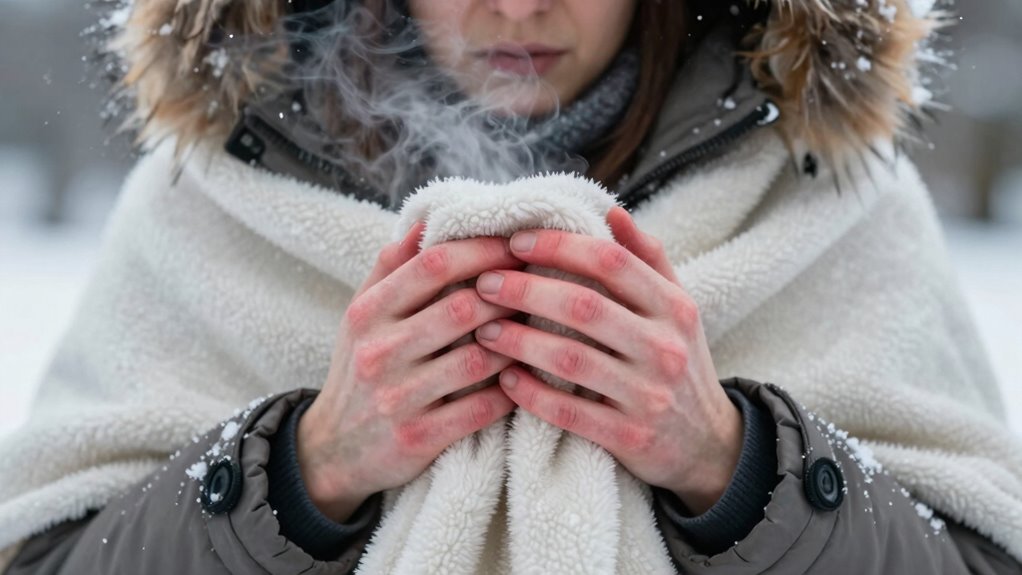
If you notice signs like intense shivering, confusion, or blue skin, it’s time to get emergency help. Don’t wait if symptoms worsen or don’t improve with warming efforts. Acting quickly can make all the difference in preventing serious health complications.
Recognizing Critical Symptoms
Recognizing when cold exposure has become a medical emergency is essential for your safety. If you notice symptoms like uncontrollable shivering, confusion, or loss of coordination, seek help immediately. Don’t fall for cold weather myths that delay action—frostbite prevention is important, but signs of hypothermia are different. Watch for skin that looks pale, waxy, or feels numb, which signals frostbite risk. Be alert for mental changes such as dizziness or slurred speech, indicating hypothermia. Understanding the effects of cold on the body can help you better identify when to seek emergency assistance. Being aware of how body temperature regulation functions under cold stress can also aid in recognizing the severity of exposure. Recognizing the signs of hypothermia early can prevent life-threatening complications and ensure timely medical intervention. It is also helpful to know that cold-related health risks can escalate quickly without proper response, emphasizing the importance of prompt action. Familiarizing yourself with cold weather safety tips empowers you to respond appropriately and seek prompt medical attention when necessary.
When to Call Emergency
Knowing when to seek emergency help is vital if you or someone else shows clear signs of hypothermia or cold-related injury. If symptoms worsen or don’t improve despite warming efforts, it’s time to act fast. Call emergency services immediately if you notice signs like confusion, slurred speech, or unconsciousness. Frostbite prevention is essential, especially in extreme cold; don’t delay seeking help if you suspect frostbite. Make certain you have proper cold weather gear to prevent worsening conditions. Keep these guidelines in mind:
| Symptom | Action Needed | Immediate Response |
|---|---|---|
| Severe shivering | Seek emergency help | Move to a warm environment |
| Confusion or disorientation | Call for help | Cover with dry, warm blankets |
| Cold skin, numbness | Get medical attention promptly | Do not delay any longer |
| Slurred speech | Emergency assistance required | Call 911 immediately |
| Unconsciousness | Immediate emergency response | Do not attempt to rewarm yourself |
First Aid Tips for Cold and Hypothermia Cases

When someone shows signs of cold exposure or hypothermia, taking immediate and effective first aid can make all the difference. Act quickly by moving them to a warmer place, removing wet clothing, and insulating them with blankets or clothing. Avoid giving them direct heat or hot drinks if they’re unresponsive. Remember, cold weather myths can be dangerous—don’t assume someone is fine because they’re only a little chilly. Instead, follow proven winter safety tips like layering clothing and monitoring their condition closely. Keep an eye out for shivering, confusion, or slurred speech, which signal worsening hypothermia. If symptoms worsen or don’t improve quickly, seek emergency help. Quick, informed action can prevent serious health consequences.
How to Prevent Hypothermia During Cold Weather
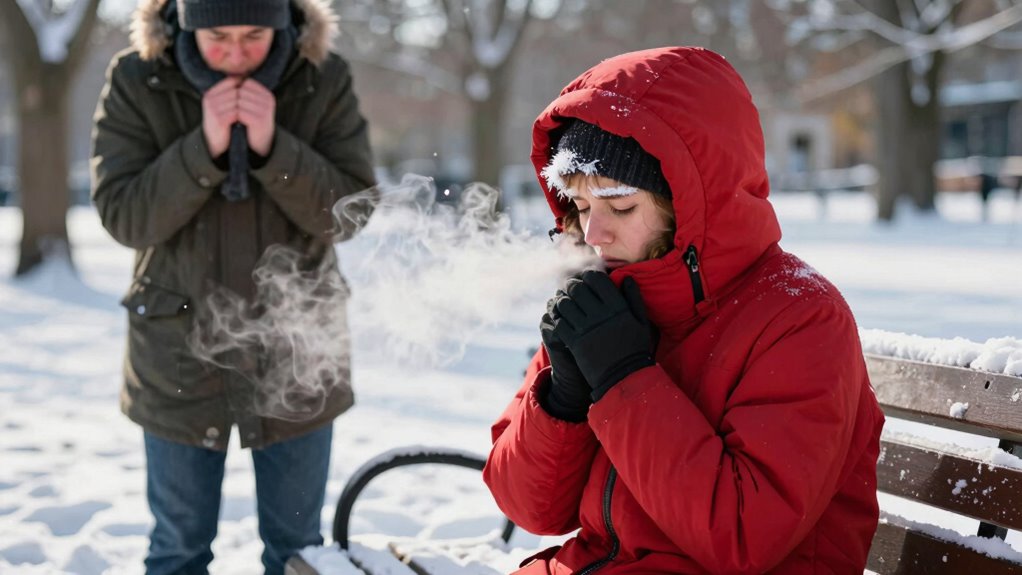
To prevent hypothermia during cold weather, you need to take proactive steps. Wearing layers helps insulate your body, while staying dry and windproof keeps the cold from penetrating your clothes. Recognizing early symptoms allows you to act quickly and avoid the risk of hypothermia. Using a high-quality airless paint sprayer can make outdoor painting projects more efficient and comfortable in cold weather conditions. Additionally, understanding lifevest safety and proper cold-weather gear can further protect you from cold-related health issues.
Dress in Layers
Dressing in layers is one of the most effective ways to prevent hypothermia in cold weather. It allows you to adjust your clothing as needed to maintain warmth and avoid overheating or sweating. Start with a base layer of moisture-wicking fabric to keep sweat away from your skin. Add an insulating layer made of fleece or wool to trap heat, ensuring proper insulation. Finish with a waterproof or windproof outer layer to block wind and moisture. Remember, layering helps you stay warm without overheating, and it’s easier to remove or add clothing if conditions change. Use layered clothing strategically, and always prioritize clothing that provides proper insulation for the cold. Staying warm and dry is key to avoiding dangerous hypothermia symptoms.
Stay Dry and Windproof
Staying dry and windproof is essential for preventing hypothermia in cold weather. Wet clothing quickly strips away your body’s thermal insulation, making it harder to stay warm. Wearing waterproof or water-resistant clothing helps keep moisture out, maintaining your body’s natural insulation. Windproof clothing acts as a barrier against cold gusts that can rapidly lower your core temperature. Layering with thermal insulation materials, like wool or synthetic fibers, adds extra warmth without bulk. Make certain your outer layers are tight-fitting but comfortable, preventing wind from penetrating. Keep your head, hands, and feet protected with appropriate gear, as these areas lose heat quickly. By staying dry and shielded from the wind, you considerably reduce your risk of hypothermia and stay warmer longer.
Recognize Early Symptoms
Being able to spot the early signs of hypothermia can make all the difference in preventing it from worsening. Early symptoms can be subtle but are vital to recognize. Watch for shivering that’s intense or uncontrollable, confusion, and fatigue—these are warning signs. Keep in mind, frostbite risk increases if you ignore cold injuries, so check exposed skin for numbness or discoloration. Staying properly hydrated during winter helps regulate body temperature and reduces hypothermia risk. Additionally, feeling drowsy or sluggish may indicate your body is struggling to stay warm. Remember, early intervention is key to preventing serious health issues. By paying attention to these signs and maintaining winter hydration, you can better protect yourself against cold-related dangers.
Medical Tests to Confirm Hypothermia vs. Cold Illnesses
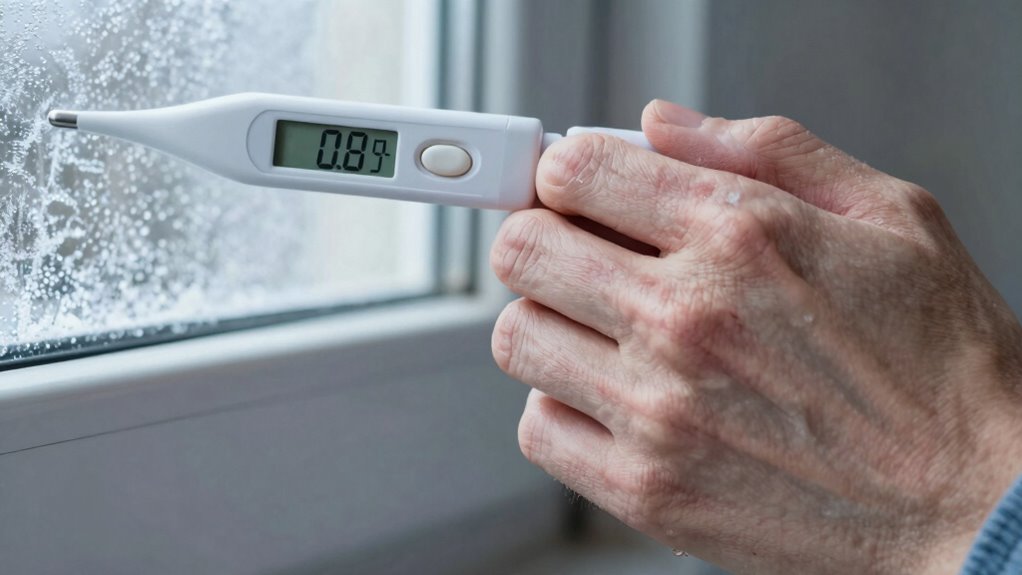
To distinguish hypothermia from other cold-related illnesses, medical professionals rely on specific tests to confirm the diagnosis. They typically start with physical examinations and take your vital signs, including body temperature. A key test involves measuring core body temperature using rectal, esophageal, or bladder thermometers, as these provide the most accurate readings. If you’ve recently experienced cold water immersion, your risk of frostbite and hypothermia increases, and doctors may examine affected areas for tissue damage. Blood tests can also reveal signs of hypothermia, such as electrolyte imbalances or low blood sugar. These tests help differentiate hypothermia from other illnesses caused by exposure to cold, ensuring you receive the appropriate treatment promptly.
Treating Cold and Hypothermia: Approaches and Advice
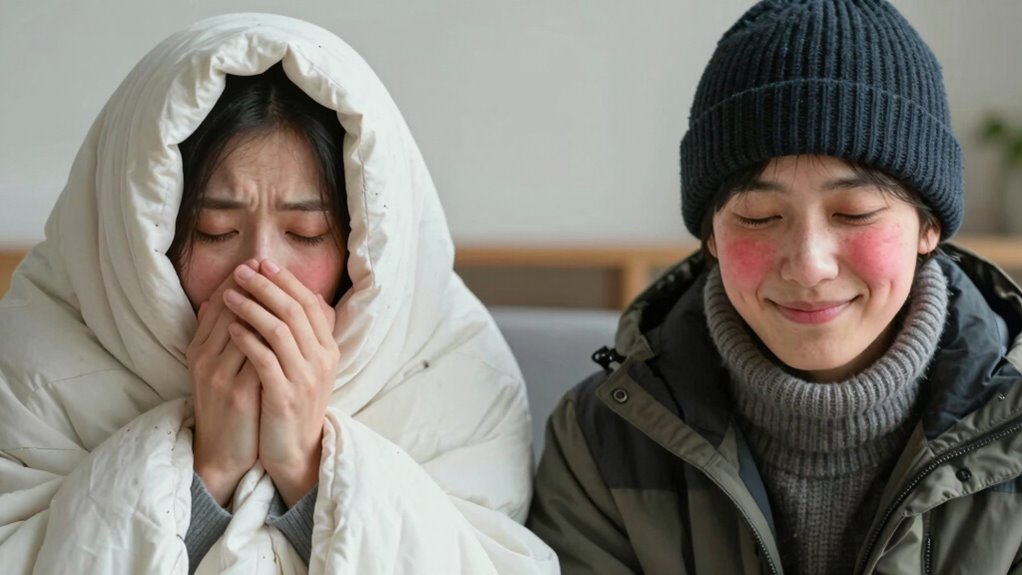
When treating cold and hypothermia, prompt and appropriate action can make the difference between recovery and serious health complications. Your first step is to get the person to a warmer environment and remove any wet cold weather gear. Cover them with blankets, including the head, and insulate their core. Avoid rubbing or massaging affected areas to prevent frostbite damage. To prevent frostbite, guarantee you wear proper cold weather gear, including insulated gloves, hats, and layered clothing. Keep the person dry and avoid further heat loss. If hypothermia is suspected, seek emergency medical help immediately. Remember, early intervention improves outcomes. You can also help by monitoring their breathing and pulse until professional help arrives. Properly managing cold exposure is essential for safety and recovery.
How to Educate Others About Cold-Related Risks
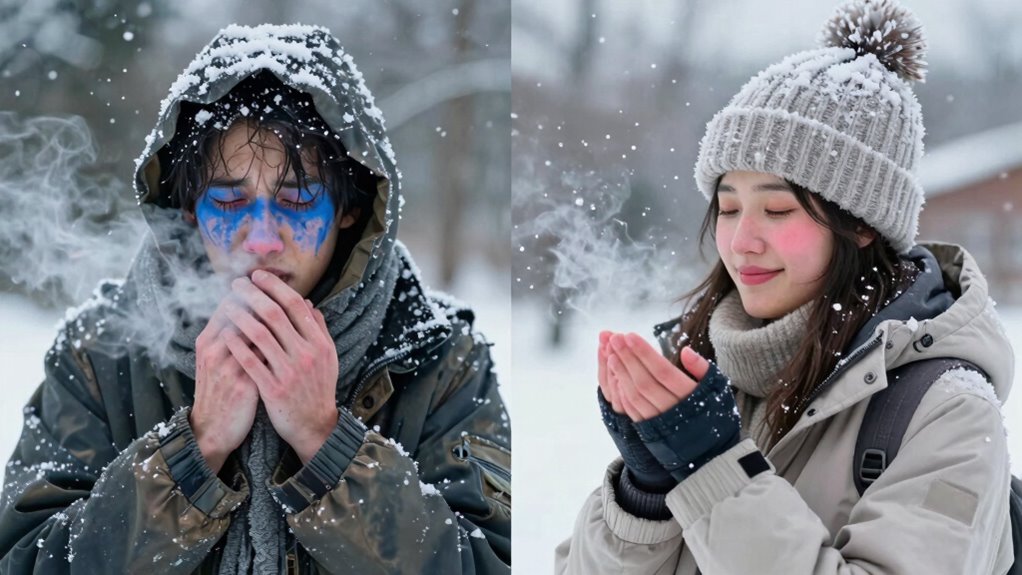
Educating others about cold-related risks is essential for preventing hypothermia and frostbite, especially during winter months or outdoor activities. You should emphasize the importance of proper cold storage to keep perishable items safe and avoid exposure to cold temperatures. Explain how thermal insulation helps protect the body by trapping heat and reducing heat loss in cold environments. Demonstrate how layering clothing, using insulated gear, and choosing appropriate outerwear can considerably reduce the risk of cold injuries. Encourage sharing knowledge about recognizing early signs of cold-related illnesses and the importance of quick action. By spreading awareness about cold storage techniques and thermal insulation benefits, you empower others to stay safe and avoid dangerous cold-related health issues.
Frequently Asked Questions
Can Mild Hypothermia Occur Without Feeling Cold?
Yes, mild hypothermia can occur without feeling cold because your body temperature drops gradually, and you may not notice a cold sensation right away. You might feel tired, confused, or have shivering that’s less intense, even though your core body temperature is lowering. This subtle change makes it tricky to recognize hypothermia early, so pay attention to other signs like dizziness or slow movement, not just cold feelings.
Are Children More Vulnerable to Hypothermia Than Adults?
You should know that children are more vulnerable to hypothermia than adults due to age-related risk factors. Their smaller body size, higher surface area to volume ratio, and less developed ability to regulate body temperature make them more susceptible. Child vulnerability increases in cold environments, especially if they’re exposed to wind, water, or inadequate clothing. Always monitor kids closely in cold weather, as they may not recognize or communicate symptoms early.
How Long Does It Typically Take to Develop Hypothermia?
They say, “A stitch in time saves nine,” and in cold weather, this couldn’t be truer. You might develop hypothermia in as little as 30 minutes if your body temperature drops dangerously low, especially in harsh conditions. Prolonged exposure to cold weather accelerates this process. Remember, if you start feeling numb, shivering uncontrollably, or confused, your body’s temperature is falling rapidly—don’t wait, act now.
Can Dehydration Increase the Risk of Hypothermia?
Dehydration effects can markedly increase your risk of hypothermia because it impairs your body’s temperature regulation. When you’re dehydrated, your blood flow decreases, making it harder to generate heat and stay warm. This can cause your body temperature to drop faster in cold environments. Staying well-hydrated helps your body maintain proper temperature regulation, so drink plenty of fluids, especially if you’re exposed to cold weather or engaging in outdoor activities.
What Are Long-Term Health Effects of Hypothermia?
You might think hypothermia only causes short-term problems, but it can lead to long-term health effects after cold weather exposure. Research suggests a gradual decline in physical and cognitive functions, potential nerve damage, or increased vulnerability to future illnesses. Even if you recover, lingering issues like fatigue, depression, or cardiovascular problems could persist. Always treat cold weather seriously to prevent lasting damage from hypothermia’s effects.
Conclusion
Understanding the difference between normal cold and hypothermia is like steering a storm—knowing when to seek shelter can save your life. By recognizing symptoms and taking preventive steps, you can stay safe even when the weather turns hostile. Remember, your body is a delicate compass; when it signals trouble, don’t ignore it. Stay informed, stay prepared, and keep yourself and others protected from the icy unknown.
Fall Picks
fall essentials
As an affiliate, we earn on qualifying purchases.