
To keep your home cold plunge safe and enjoyable, regularly test your water’s pH, alkalinity, and sanitizer levels using test strips or digital testers. Balancing these chemicals prevents irritation, bacteria growth, and equipment issues. Consistent testing helps catch imbalances early, allowing you to adjust chemicals promptly. Understanding water quality standards ensures your water stays within safe ranges. Keep up with routine testing, and you’ll maintain a healthy, invigorating plunge — there’s more to discover to optimize your experience.
Key Takeaways
- Regular water testing ensures proper pH, alkalinity, and sanitizer levels for safe cold plunge experiences.
- Using test strips or digital testers provides quick, accurate results for maintaining water quality.
- Adjusting chemicals based on test results prevents bacterial growth, irritation, and equipment damage.
- Understanding water quality standards helps interpret test results and keep water within safe ranges.
- Consistent testing frequency allows early detection of imbalances, ensuring ongoing safety and water clarity.
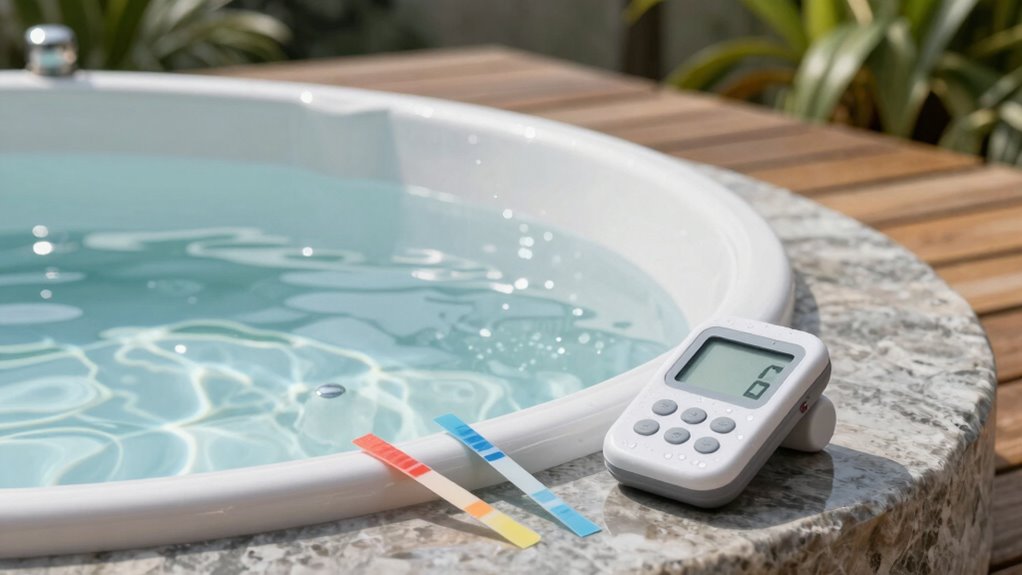
Have you ever wondered if your home cold plunge water is truly safe? Maintaining safe water isn’t just about filling your tub and hoping for the best. It requires ongoing attention to chemical balance and proper filtration systems. Without these, you risk not only ineffective cold plunging but also potential health hazards. Confirming the water’s chemical balance is key; if the pH levels are off, your skin and eyes could become irritated, or worse, bacteria could thrive. Regular testing helps you keep the water’s pH, alkalinity, and sanitizer levels within safe ranges. This isn’t a one-and-done task—you need to be consistent. Using test strips or digital testers allows you to quickly check these levels and make adjustments as needed. When the chemical balance is off, adding the right chemicals, like pH adjusters or sanitizers, restores safety and comfort. Proper water testing methods are essential for maintaining a healthy plunge environment, and understanding water chemistry can help you better interpret your test results and ensure optimal safety. Additionally, understanding water quality standards can help you better interpret your test results and ensure optimal safety. Regularly testing and understanding your water’s chemical balance helps prevent issues before they become serious problems, ensuring a safer and more enjoyable cold plunge experience. Incorporating testing frequency into your routine can further improve water quality management.
water test strips for hot tubs and pools
As an affiliate, we earn on qualifying purchases.
As an affiliate, we earn on qualifying purchases.
Frequently Asked Questions
How Often Should I Test My Cold Plunge Water?
You should test your cold plunge water at least once a week to guarantee proper pool maintenance and water safety. Regular testing helps you monitor pH levels, chlorine or sanitizer levels, and detect contaminants early. If you notice cloudiness, odor, or skin irritation, test more frequently. Consistent water testing keeps your cold plunge safe, clean, and enjoyable, preventing bacteria buildup and maintaining ideal water quality for your health.
What Are the Cheapest Water Testing Options Available?
You can find affordable water testing options like test strips or DIY kits that measure pH, chlorine, and bacteria levels, making them cost-effective for maintaining safety protocols. These options allow you to quickly assess water quality without expensive lab tests. Regular testing helps you monitor water treatment effectively, ensuring your cold plunge remains safe and clean. Just follow the instructions carefully to keep your water safe and maintain proper safety protocols.
Can I Test Water Quality Myself Without Professional Equipment?
Yes, you can try DIY testing, but it’s tricky without proper equipment. Start by comparing simple, affordable test kits online to see which suits your needs. These kits typically test for pH, chlorine, and bacteria, helping you gauge water quality. However, keep in mind that DIY testing might lack accuracy, so for precise results, professional testing remains the most reliable route.
What Specific Contaminants Should I Be Concerned About?
You should be concerned about contaminants like bacteria, algae, and chemical pollutants. Focus on algae prevention by regularly cleaning your cold plunge and using appropriate algaecides. Also, monitor and balance the pH levels to prevent harmful growth and maintain water clarity. Testing for these specific issues helps guarantee your water remains safe, clean, and enjoyable. Regular checks help you catch problems early and keep your cold plunge in top condition.
How Do I Interpret Water Test Results Accurately?
To interpret water test results accurately, focus on water pH levels and bacterial contamination. If pH levels fall outside the safe range (typically 6.5 to 8.5), it indicates imbalance that could harm your skin or equipment. Check for bacterial contamination—if bacteria are present, it signals unsafe water. Address any issues promptly by adjusting chemicals or filtering to guarantee your cold plunge remains safe and clean.
digital water tester for pH and sanitizer levels
As an affiliate, we earn on qualifying purchases.
As an affiliate, we earn on qualifying purchases.
Conclusion
While some believe water testing for cold plunges is unnecessary, the truth is, regular checks can prevent infections and guarantee safe dips. Think of it like your car’s oil change—simple but essential. Skipping testing might save time, but it risks health. So, don’t buy into the myth that water quality doesn’t matter; instead, embrace routine testing as your best shield for a safe, enjoyable cold plunge experience.
cold plunge water chemical test kit
As an affiliate, we earn on qualifying purchases.
As an affiliate, we earn on qualifying purchases.
pool and spa water testing strips
As an affiliate, we earn on qualifying purchases.
As an affiliate, we earn on qualifying purchases.