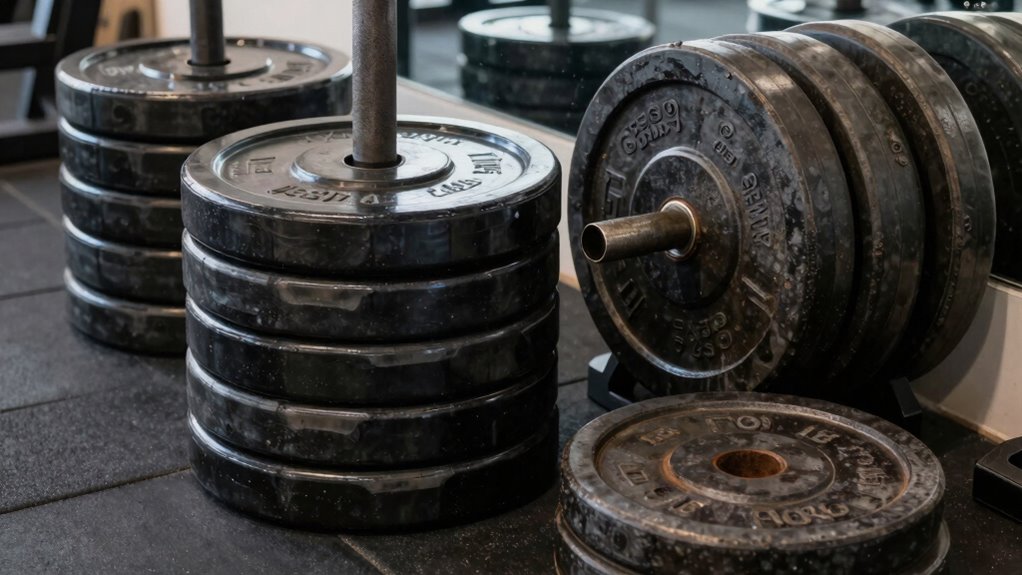
Bumper plates are made from rubber or urethane, which dampen noise, absorb impact, and protect your floors, making them safer and quieter for high-impact lifts. Iron plates are denser, produce loud clattering, and can cause floor damage over time if mishandled. They’re durable but may wear faster with heavy use. Choosing the right plates depends on your goals and space—keep exploring to find what best suits your workout needs.
Key Takeaways
- Bumper plates dampen noise and reduce floor impact due to their rubber or urethane construction.
- Iron plates generate more noise and can cause floor damage over time if mishandled.
- Bumper plates absorb shock, extending floor and equipment lifespan, whereas iron plates may cause cracks with repeated drops.
- Bumper plates are safer and easier to handle for high-rep lifts, lowering injury risk.
- Iron plates are more durable long-term but require careful maintenance to prevent rust and damage.

CAP 100lb Economy Olympic Bumper Plate Weight Set
100 LB ECONOMY BUMPER PLATE SET – Includes pairs of 10 lb, 15 lb, and 25 lb bumper…
As an affiliate, we earn on qualifying purchases.
As an affiliate, we earn on qualifying purchases.
What Are Bumper Plates and Iron Plates, and How Do They Differ?
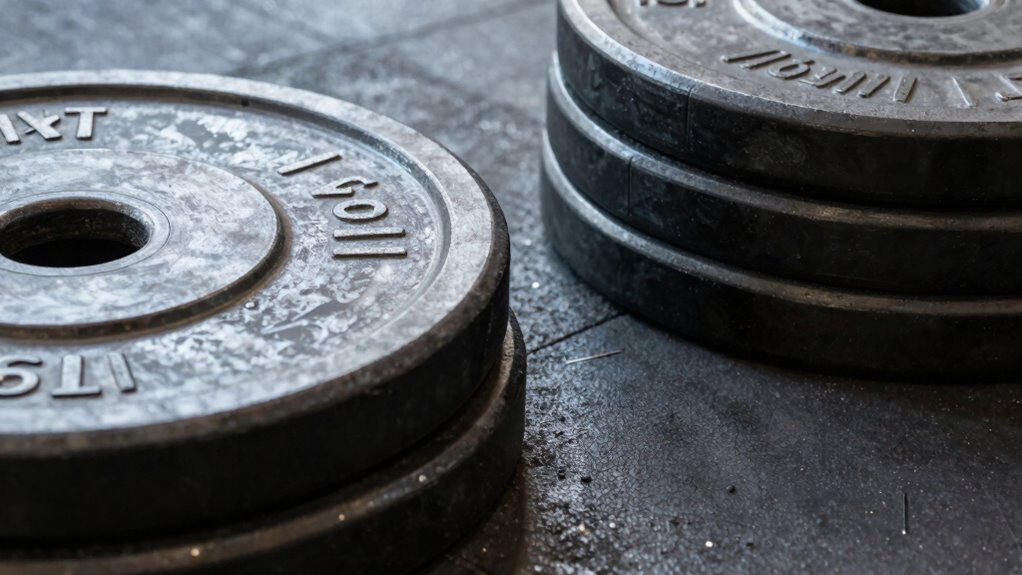
Bumper plates and iron plates are essential tools for weightlifting and strength training, but they serve different purposes and have distinct features. The key difference lies in their plate material, which stems from their manufacturing processes. Bumper plates are made from dense rubber or urethane, allowing them to absorb impact and reduce noise. Their manufacturing typically involves molding rubber around a steel or composite core, ensuring durability and a smooth finish. These plates are especially suitable for Olympic lifts and dynamic exercises due to their shock-absorbing properties. Additionally, the shock absorption and floor impact of bumper plates make them favorable for high-impact training environments, minimizing damage to flooring and equipment. Iron plates, on the other hand, are crafted from cast or forged steel or iron, resulting in a solid, dense weight with a smooth or textured surface. The manufacturing process for iron plates involves casting or forging, which produces a sturdy, long-lasting product. These material differences influence their performance, durability, and ideal training environments. Additionally, the material properties such as shock absorption and floor impact can significantly affect their suitability for different training settings. Furthermore, the durability of bumper plates makes them more resistant to damage from drops, while iron plates may chip or crack over time if mishandled. Additionally, the long-term wear and maintenance requirements can influence their cost-effectiveness, affecting how often they need replacement or repairs over time.
CAP 100lb Economy Olympic Bumper Plate Weight Set
100 LB ECONOMY BUMPER PLATE SET – Includes pairs of 10 lb, 15 lb, and 25 lb bumper…
As an affiliate, we earn on qualifying purchases.
As an affiliate, we earn on qualifying purchases.
How Do Bumper and Iron Plates Compare in Noise Levels When Lifting?
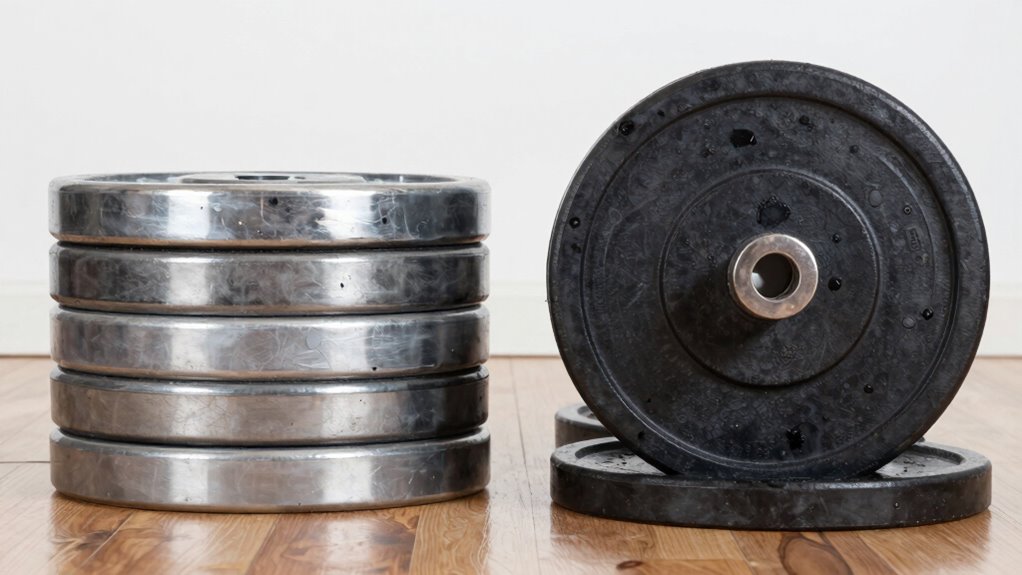
When you lift iron plates, you’ll notice they produce a noticeable clatter and clang, especially during repetitions or drop sets. The plate material contributes heavily to noise levels, making every lift sound loud and disruptive. In contrast, bumper plates are designed with noise reduction in mind; they’re made from rubber or urethane, which dampens sound considerably upon impact. This difference can affect your workout environment, especially in shared spaces. Additionally, the impact on floor durability varies between the two types, influencing long-term safety and maintenance.

Rendpas Premium Color-Coded Rubber Bumper Plates Set – 2 Inch Noise Reducing Olympic Weight Plates for Cross Training (100LB)
Stronger, Safer, Quieter Workouts: Rubber Bumper Plates are made from premium rubber, ensuring low noise and safe use;…
As an affiliate, we earn on qualifying purchases.
As an affiliate, we earn on qualifying purchases.
What Is the Impact of Plates on Your Floor and Durability Over Time?
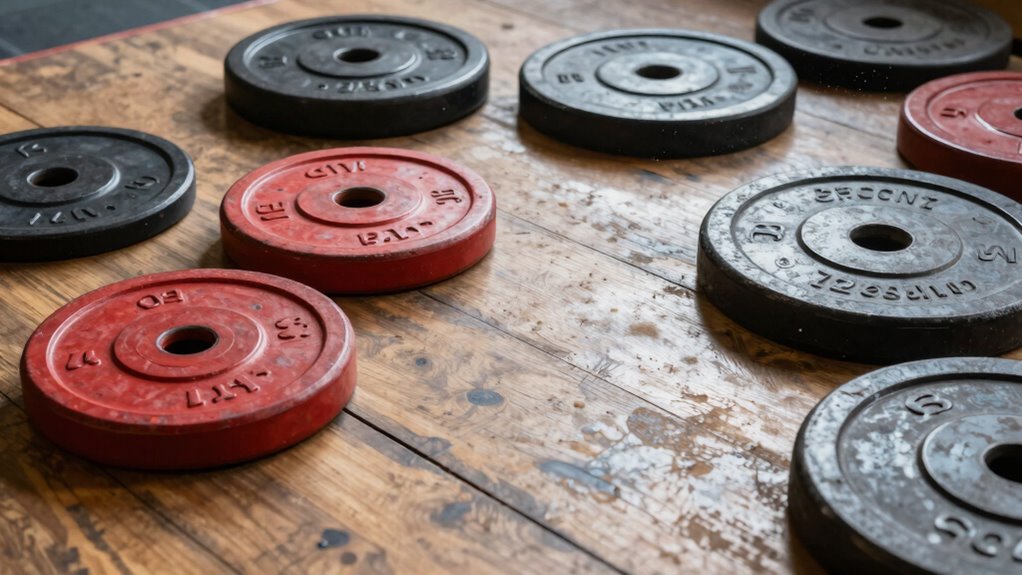
While plates are essential for strength training, their impact on your flooring and their durability over time are critical considerations. Heavier plates, especially iron ones, can cause wear and tear on your subfloor if not used carefully. Repeated drops or impacts may compromise subfloor protection, leading to cracks or damage that reduce overall equipment longevity. Bumper plates, designed to absorb shock, generally protect your flooring better, extending the life of your gym setup. Proper flooring, like rubber mats, can further shield your subfloor from damage. Regularly inspecting your plates and flooring helps prevent long-term issues. Additionally, understanding material composition can help you choose the most suitable plates for your environment and minimize floor impact. Investing in impact-absorbing plates and protective flooring not only preserves your equipment but also ensures a safer, more durable workout space over time. Considering flooring materials when setting up your gym can further enhance durability and reduce maintenance needs. Using shock-absorbing flooring options can further minimize the impact on your subfloor and prolong your equipment’s lifespan. Selecting appropriate plates can also reduce noise and vibration, contributing to a more comfortable workout environment.

Body-Solid Standard Black Iron Weight Plate – Perfect for Strength Training, Home Gym, and Barbell Workout – Fits 1" Bars – 5lbs.
INDUSTRY LEADER: For 30+ years, Body Solid has held the widest array of products designed to meet the…
As an affiliate, we earn on qualifying purchases.
As an affiliate, we earn on qualifying purchases.
Which Plates Are Safer and Less Likely to Disrupt Your Workout?
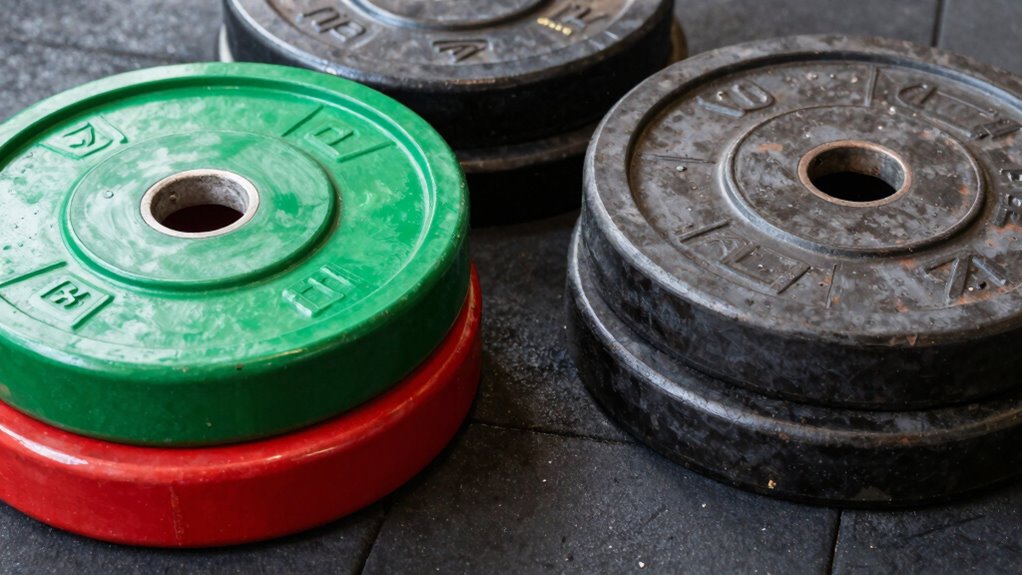
Choosing plates that are safer and less likely to disrupt your workout depends on their design and how you handle them. Plate safety is vital to minimize injury risk and ensure smooth lifting sessions. Bumper plates are generally safer because they’re made with rubber, reducing the chance of slipping or damaging your body if dropped. Their consistent shape and low profile make handling easier and safer, especially during high-rep or rapid lifts. Iron plates, by contrast, can be more dangerous if not handled carefully—they’re heavier, harder to grip securely, and can cause more injury risk if dropped or mishandled. Proper technique and attention to handling are imperative regardless of plate type, but bumper plates tend to be safer overall, especially for beginners or those concerned about injury risk during intense workouts. Additionally, safety features in some advanced gym equipment can help users improve their lifting form and safety protocols. It’s also important to consider impact on flooring, as bumper plates tend to be gentler on gym surfaces compared to iron plates.
How Should You Choose Between Bumper and Iron Plates for Your Goals and Space?
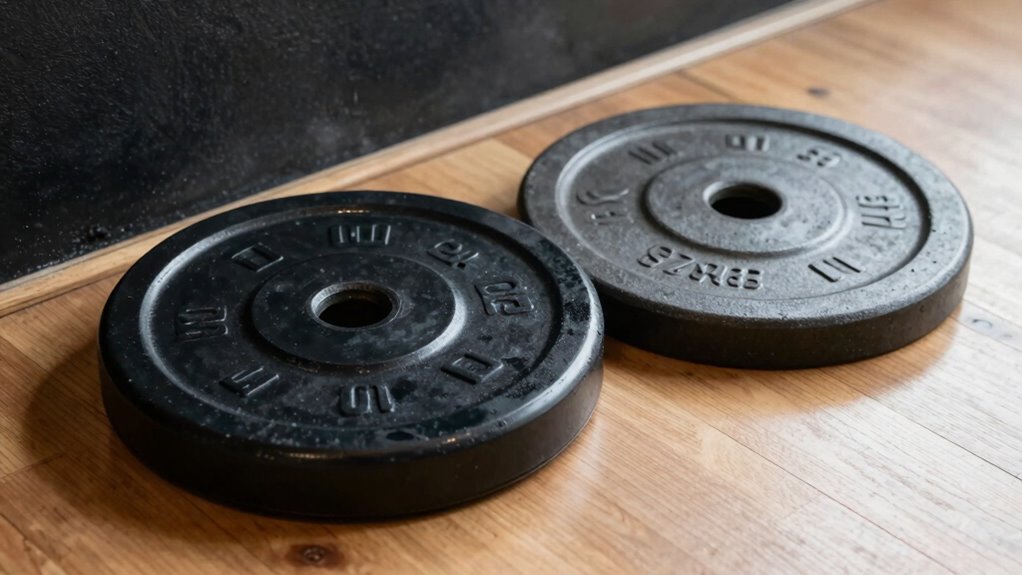
Your decision between bumper and iron plates should align with your specific goals and the space you have available. Consider how plate color coding can simplify your workout by quickly identifying weights, especially if you’re lifting heavy or multiple sets. Think about material maintenance: bumper plates require less upkeep but can wear down over time, while iron plates may need rust prevention. If noise and floor impact matter, bumper plates absorb shocks better, making them ideal for shared spaces. Conversely, iron plates are more durable for long-term use if carefully maintained. Your space constraints also influence your choice; bumper plates are bulkier but safer for high-impact lifts. Additionally, understanding the material properties of each type can help you select the best option for longevity and performance. Weigh these factors carefully to select the plates that best support your training and environment.
Frequently Asked Questions
How Does Plate Material Affect Vibration Transfer During Lifts?
You’ll notice that plate material directly impacts vibration transfer during lifts. Bumper plates, made of rubber, have better vibration damping and less resonance, reducing noise and floor impact. Iron plates, being metal, transmit more vibrations and resonate more, which can create more noise and strain on the flooring. So, choosing rubber bumpers minimizes vibration transfer, making your lifts quieter and easier on your equipment and floor over time.
Are There Specific Maintenance Tips to Prolong Bumper or Iron Plate Lifespan?
You can prolong your bumper or iron plates’ lifespan by practicing rust prevention and proper storage. Keep them in a dry, climate-controlled area to prevent corrosion, and wipe them down after each use to remove sweat and debris. Use protective coatings or mats during storage to avoid floor impact. Regularly inspect for signs of wear, and address rust early with appropriate treatments to guarantee your plates stay in top condition longer.
What Are the Environmental Impacts of Manufacturing Bumper Versus Iron Plates?
You should consider that manufacturing bumper plates often involves recycling processes that reduce environmental impact, as they are made from recycled rubber. Iron plates, on the other hand, require extensive material sourcing, which can lead to higher resource extraction and energy consumption. Choosing products made from sustainably sourced materials or those that incorporate recycling processes can minimize your environmental footprint and promote more eco-friendly fitness equipment options.
Can Different Brands of Bumper or Iron Plates Vary Significantly in Noise?
Yes, different brands of bumper or iron plates can vary markedly in noise due to differences in manufacturing quality and brand consistency. Higher-quality plates typically have tighter tolerances and better materials, reducing noise during lifts. Cheaper or inconsistent brands may produce more rattling and sound, affecting your workout environment. So, investing in reputable brands ensures more consistent noise levels, making your lifting experience smoother and more controlled.
How Do Plate Designs Influence Ease of Handling and Storage?
You’ll find that plate designs greatly influence handling and storage. Nearly 60% of lifters prefer plates with grip handles, making plate stacking and unstacking easier. Plates with ergonomic grip handle design allow you to lift and move them safely, reducing injury risk. Additionally, plates with uniform shape and size streamline storage, saving space. Choosing plates with these features enhances your workout efficiency and keeps your gym organized and accessible.
Conclusion
Choosing between bumper and iron plates isn’t just about your current setup—it’s about what’s coming next. Will you prioritize silence and floor safety, or focus on long-term durability? The decision shapes your workout experience in ways you might not expect. So, which plates will you trust to elevate your lifts and your space? The answer isn’t obvious, but one thing’s for sure—your choice could change everything. Are you ready to make it?